Petrikivka
UA

Support · what the money does

Money here records the masters while they can still teach

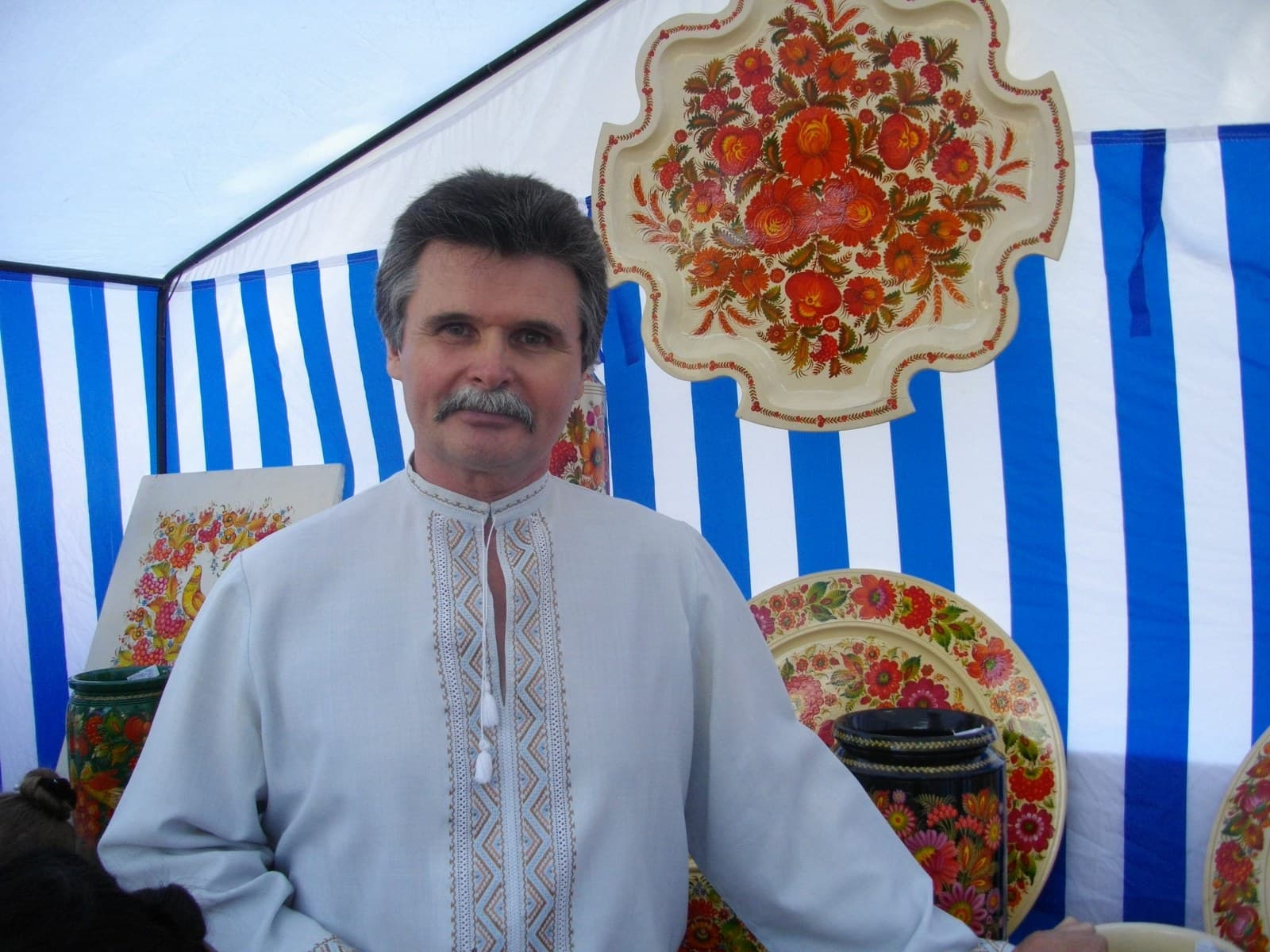
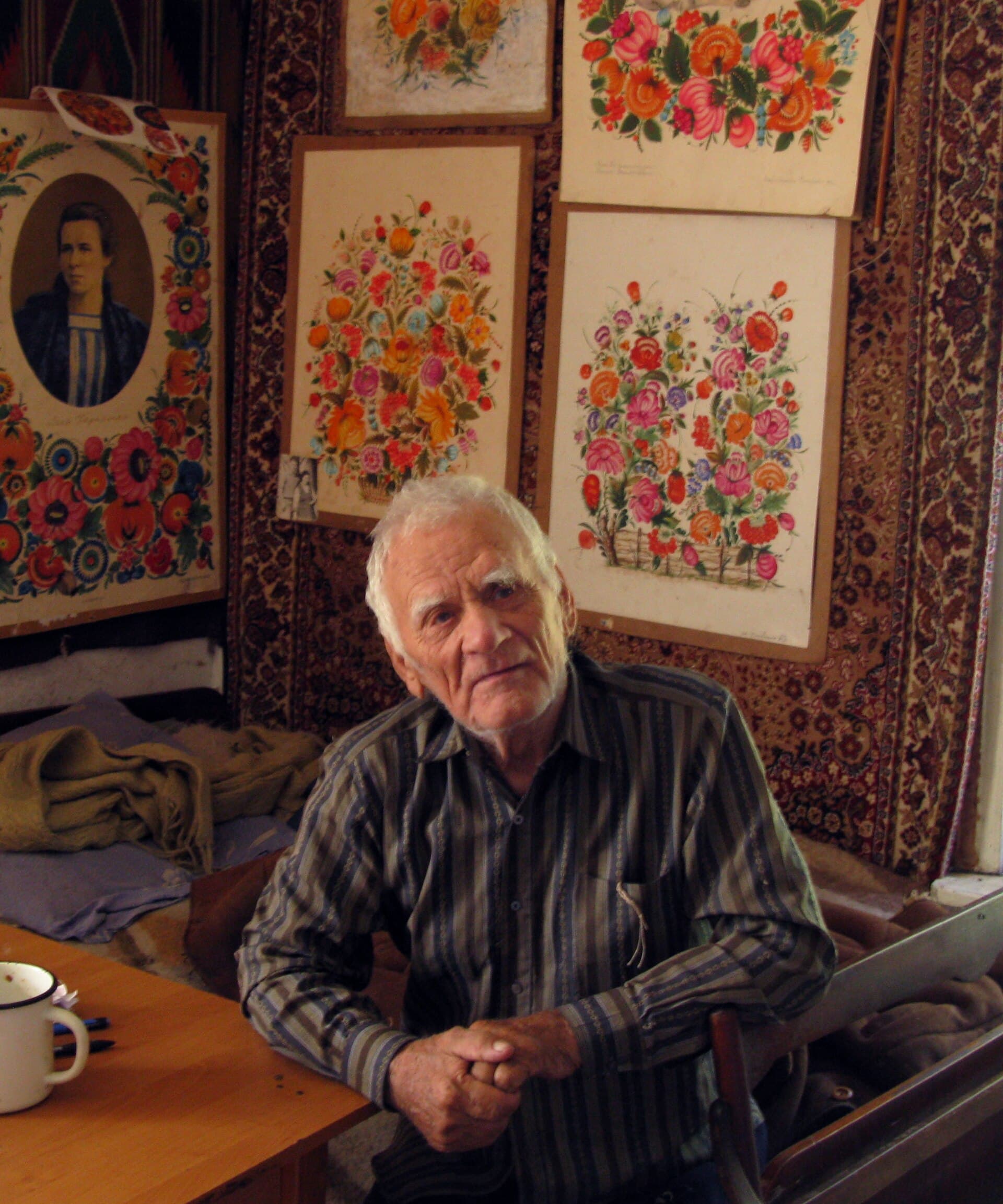
Andrii Pikush in an embroidered shirt among his painted wooden trays and plates
Andrii Pikush with his work · Centre of Folk Art «Petrykivka»

Twenty-eight living masters on the public roster of this tradition were born before 1956. The same money verifies who they are, so a buyer can tell whose hand made a work, and it pays for the teaching that carries the craft to the next pair of hands. Every figure below carries the source it was read from and the date it was read.

What the money protects

Four objects, four hands, one school

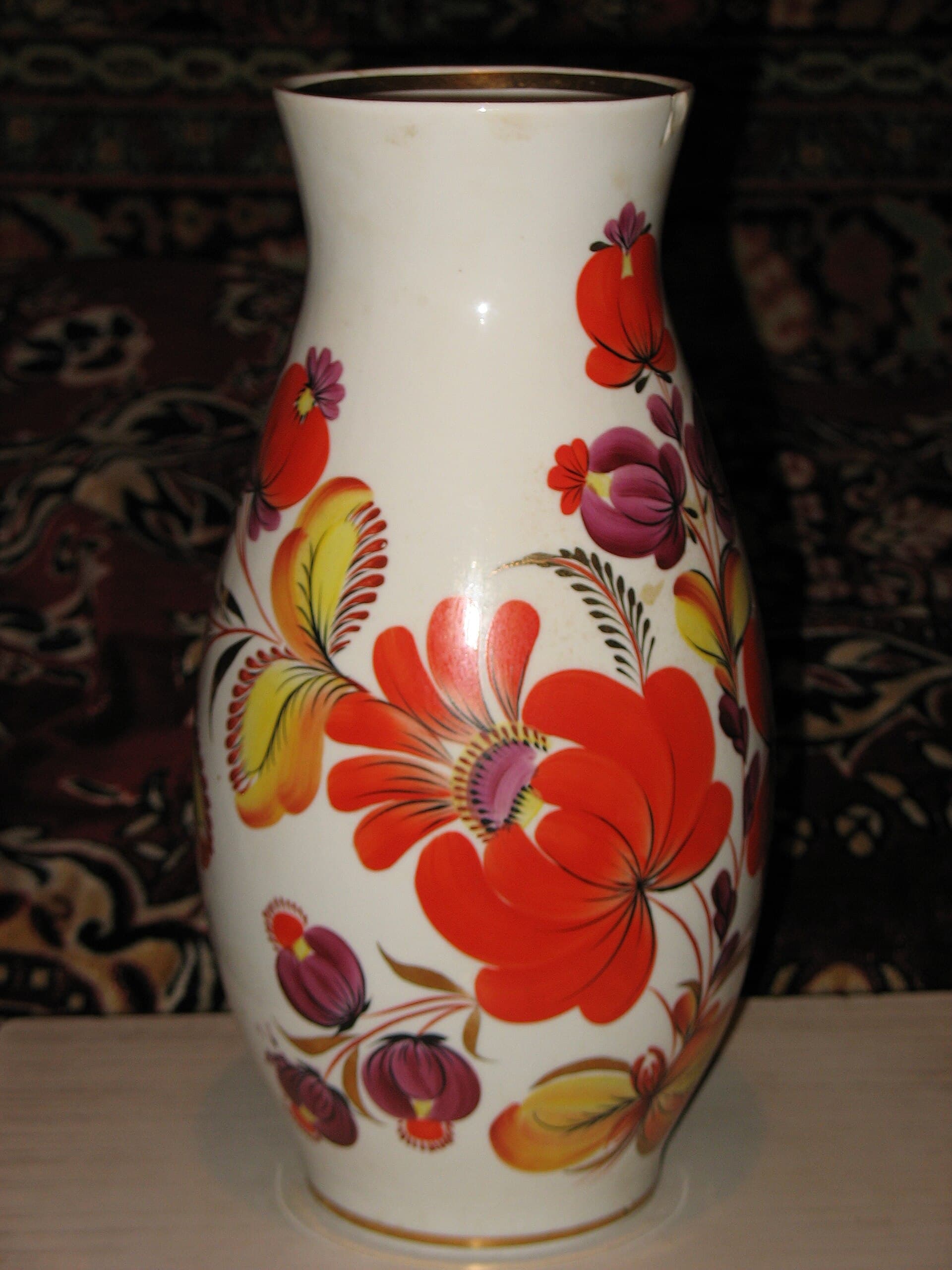
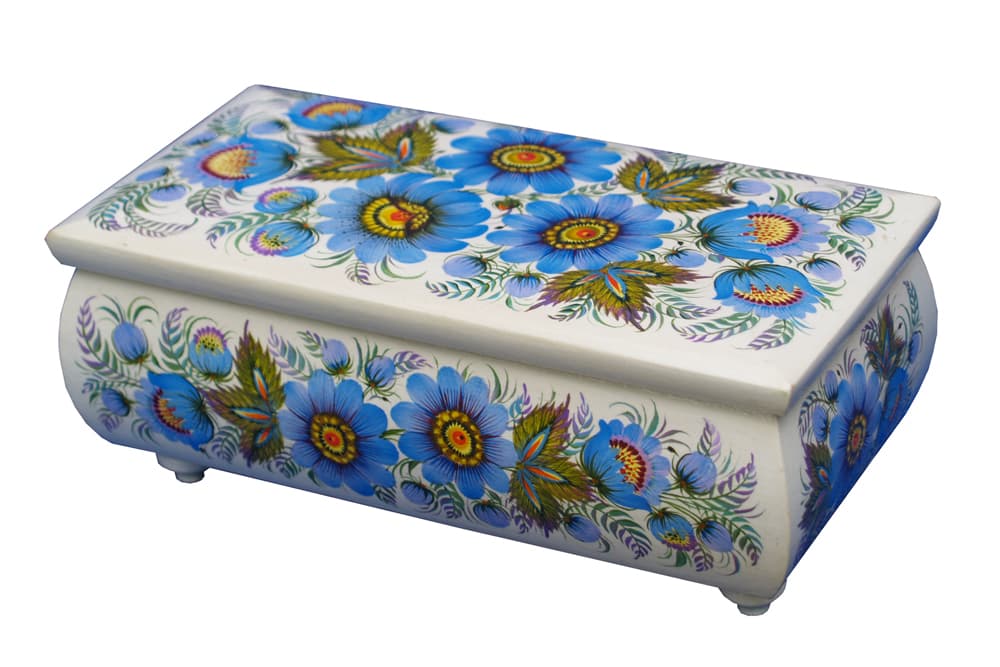
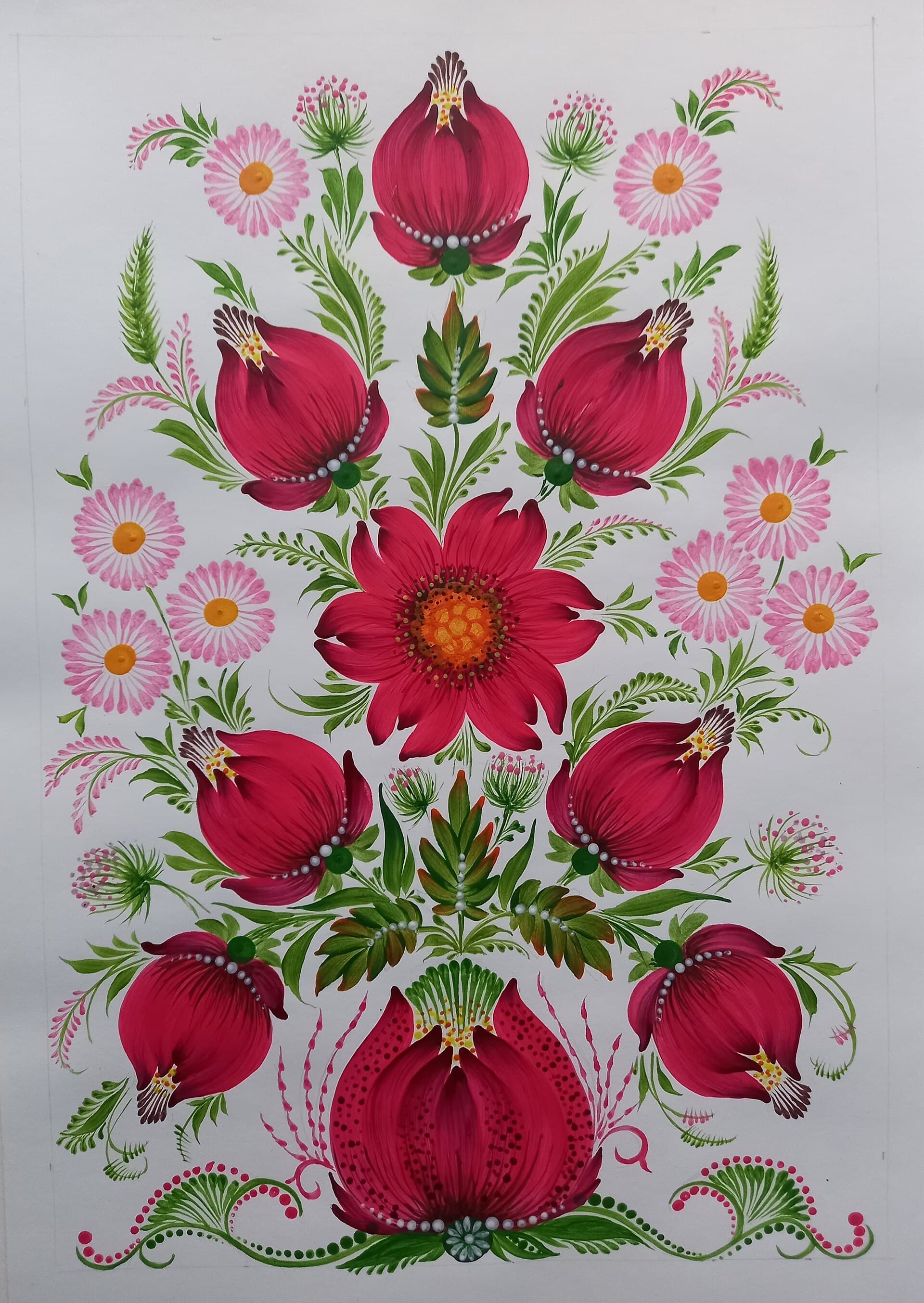
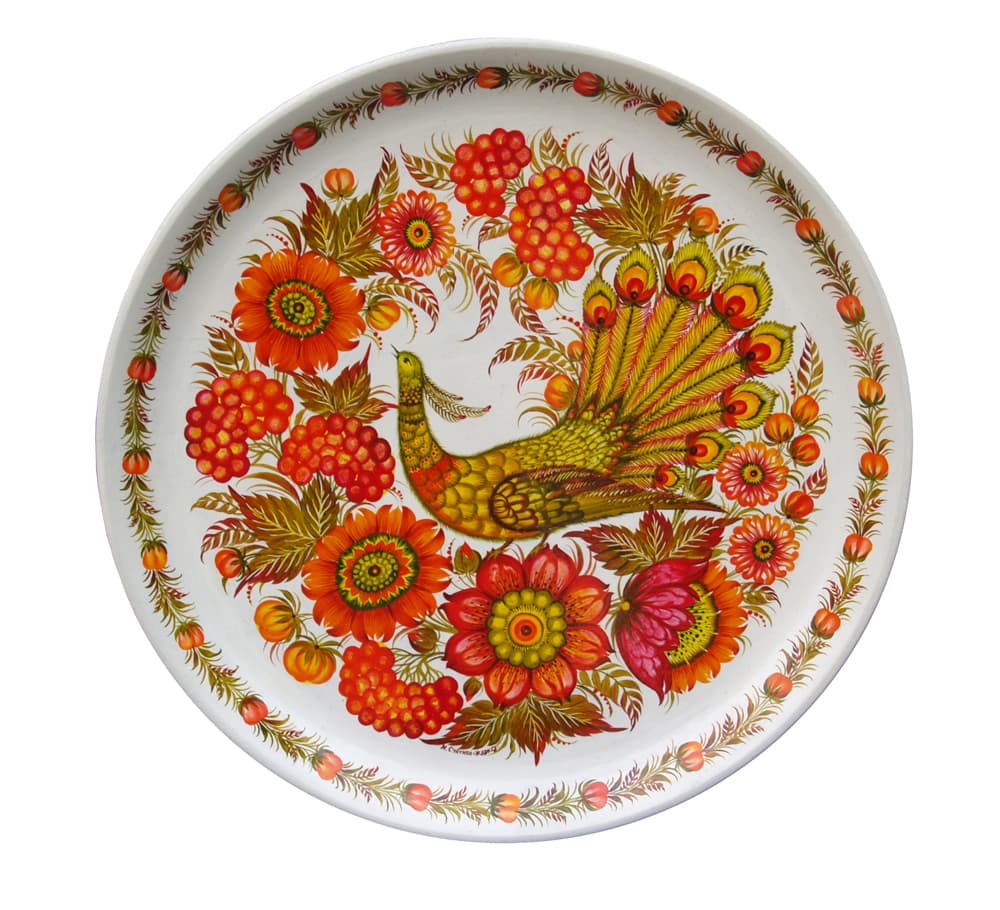
A vase fired at a Kyiv factory, a chest painted in cool blue, a vazon on plain white paper, a wooden plate ringed by a running border. Two of the four carry the name of the woman who painted them; the other two are waiting for a family to recognise the hand, and that recognition is a line item further down this page.

Porcelain vase

Porcelain vase

Painted by Marfa Tymchenko

Overglaze painting on porcelain, made at the Kyiv experimental ceramic-art factory in the second half of the twentieth century.

AnnaTroicka · CC BY-SA 3.0

Chest, «Blue flowers»

Chest, «Blue flowers»

Painted by Nataliia Statyva-Zharko

A painted wooden chest in a cool blue range, away from the red-and-gold the factory made familiar.

Nataliia Statyva-Zharko · CC BY-SA 4.0

Rose vazon on white

Rose vazon on white

The vertical vazon in its plainest form, on the historic white ground.

Sunshine ND · CC BY-SA 4.0 · painter unrecorded

Plate, «August»

Plate, «August»

A wooden plate with a peacock at its centre, ringed by a running border.

Zharko140 · CC BY-SA 3.0 · painter unrecorded

Each plate above links back to the file it came from and to the licence it travels under, so any figure on this page can be checked without asking us for a document.

Where it goes

Four workstreams, each with a unit you can count

Each range below is a planning model from our own funding research, and the first three sessions will replace it with invoices. We would rather show you the model and its margin of error than a tidy number nobody can stand behind.

01

Recording a master

Planning cost €900–€1,600 per master · about €45,000 for forty

A videographer works to a fixed protocol: a life interview of 45 to 90 minutes in Ukrainian, then 30 to 60 minutes of over-the-shoulder technique at 4K with a macro pass on brush loading and on the perekhidnyi mazok (the transitional stroke), then 10 to 30 works photographed at archival resolution, then a signed consent covering archive, publication, teaching and licensing.

One unit is one master, all in: the fee to the master, the videographer day rate, travel, transcription, translation, editing and storage. Each session is deposited three times — here, with a Ukrainian institution, and on an offshore mirror. Of the masters on the public Ukrainian-language roster who have no recorded death year, 28 were born before 1956.
02

Verifying and publishing a profile

Planning cost €4,000–€6,000 for forty profiles

Four to eight hours of coordinator time per master: outreach, intake, photo triage, translation, and the approval chain that carries a profile from submitted to identity checked to practice evidenced to confirmed. Forty masters is roughly 250 hours of that work.

This is the line that answers machine-made imitation. Marketplaces for handmade work are filling with generated listings faster than they can be policed, and the only durable reply is a named living person with a documented practice, consent on file and a date on the record.

03

Teaching material

Planning cost €8,000–€15,000 for the first curriculum

Ten modules in Ukrainian and English, cut from the recorded footage: history, vocabulary, loading the brush, leaves and berries, flowers, birds, composition. Free to Ukrainian schools and to schools hosting refugee children, licensed to everyone else.

UNESCO’s own inscription text records that local schools in Petrykivka teach the fundamentals of the painting from pre-school upward. Transmission through teaching is the stated reason the element is on the list, which is the argument for building this properly.

04

A residency place

Planning cost €2,500–€5,000 per place · two places in year one

Stipend, materials and the master’s fee for a younger practitioner to study with a named master aged seventy or over for three to six months, on the condition that recorded teaching material goes into the archive at the end of it.

Grant committees score transmission above everything else on this page, because transmission is what a safeguarding listing actually asks of a state. A place filled is one more hand that can do this in twenty years.

Who the four workstreams are about

Seven of the masters, already photographed

Every portrait here was taken by someone who travelled to the master and published the photograph under a free licence. A recording session turns one of these faces into a life interview, an hour of technique at 4K and a signed consent that outlives all of us.

Vasyl Sokolenko

Vasyl Sokolenko

Pata's pupil and the teacher of Andrii and Maria Pikush, photographed in 2016, two years before his death at 96.

Igor Balashov · CC BY-SA 4.0

Volodymyr Hlushchenko

Volodymyr Hlushchenko

Another of Sokolenko's pupils, in his workshop.

Igor Balashov · CC BY-SA 4.0

Hanna Samarska

Hanna Samarska

Honoured Master of Folk Art of Ukraine.

Igor Balashov · CC BY-SA 4.0

Tetiana Harkava

Tetiana Harkava

Honoured Master and the author of the fullest illustrated manual of the painting.

Igor Balashov · CC BY-SA 4.0

Viktoriia Tymoshenko

Viktoriia Tymoshenko

At work in the studio.

Igor Balashov · CC BY-SA 4.0

Valentyna Nosenko

Valentyna Nosenko

A master of the painting with her work.

Olga Loboda 0806 · CC BY-SA 4.0

Valentyna Karpets-Yermolaieva

Valentyna Karpets-Yermolaieva

Teaching the «Sun in the palm» circle; in 2025 a Shevchenko Prize laureate alongside Andrii and Maria Pikush.

Iryna Hordiieva (piramidaresource.dp.ua) · CC BY-SA 4.0

Hosting, storage for multi-terabyte masters and their mirrors, email and domain are modelled at €1,800 in the first year. Coordinator time in Ukraine, editing, subtitling and transcription sit inside the per-unit ranges above rather than being charged twice.

A cracked eggshell and a yolk on a small dish beside a stone pestle and a heap of dry ochre earth pigment
Grinding pigment · interpretation, photographed for this site

Patron tiers

Four ways to stand behind it

Each tier is priced against a countable heritage unit — a master’s season, a digitised collection, a named programme, a year of the whole operation. Underneath all four lies one unit: a master recorded end to end, CAD $1,800 of videographer days, travel, transcription and storage, which sits in the middle of the euro range above. The ladder is built up from that figure, the four amounts below are the ones we publish, and a conversation settles which workstream a gift goes to.

Master’s Circle

CAD $250

One named master’s documented output for a season.

  • Named support on that master’s own page
  • A studio visit or a session by video link, where the master agrees to it
  • The season’s recordings and photographs as they are published

Collection Sponsor

CAD $1,000

Roughly 150 to 300 works catalogued, rights-cleared and photographed.

  • A named collection page that stays in place
  • Credit on every object record inside it
  • One commissioned work by a master from the register

Heritage Partner

CAD $5,000

One master-and-apprentice pairing carried for a full year.

  • The programme carries the partner’s name
  • Credit on the programme pages and in the annual report
  • A co-produced content series and two commissioned works

Founding Patron

CAD $15,000

One year of the whole editorial and digitisation operation.

  • Category exclusivity
  • A presented-by lockup on the platform and on one touring exhibition
  • A named collaboration edition with a master, and an executive briefing

The sponsorship policy is published because it is part of what is being bought.

A sponsor alters, restyles or derives ornament from a master’s work only with that master’s written licence and fee. No sponsor logo appears on the image of a work. Attribution to the individual master outranks the sponsor’s name everywhere the two appear together.

In-kind support is worth more than cash at this stage in several places: colour-managed scanning and photographic equipment, cloud and CDN capacity, legal help on image rights, shipping and logistics for touring works, and translation. We log all of it at fair market value, because several funders count it as matched contribution.

A squared stack of cut white sheets weighted down by a smooth grey river stone on a bare wooden table
A season’s paper · interpretation, photographed for this site
Pink and yellow paint being worked together on a white saucer with the tip of a soft brush
Mixing the pair one brush will carry · interpretation, photographed for this site
A windowsill with jars of brushes, a clouded water glass and finished sheets drying in flat daylight
A working windowsill · interpretation, photographed for this site

The part with a clock on it

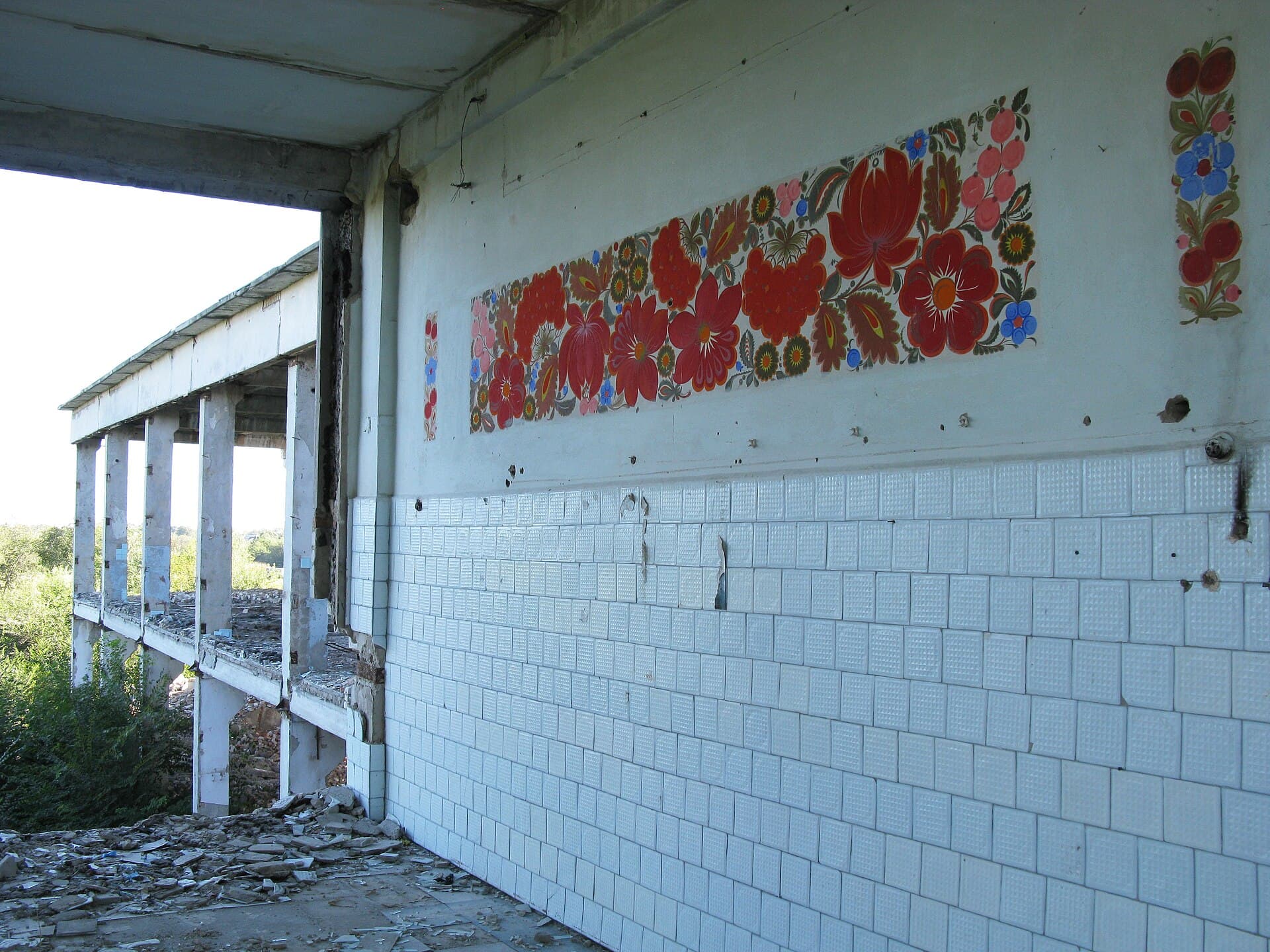
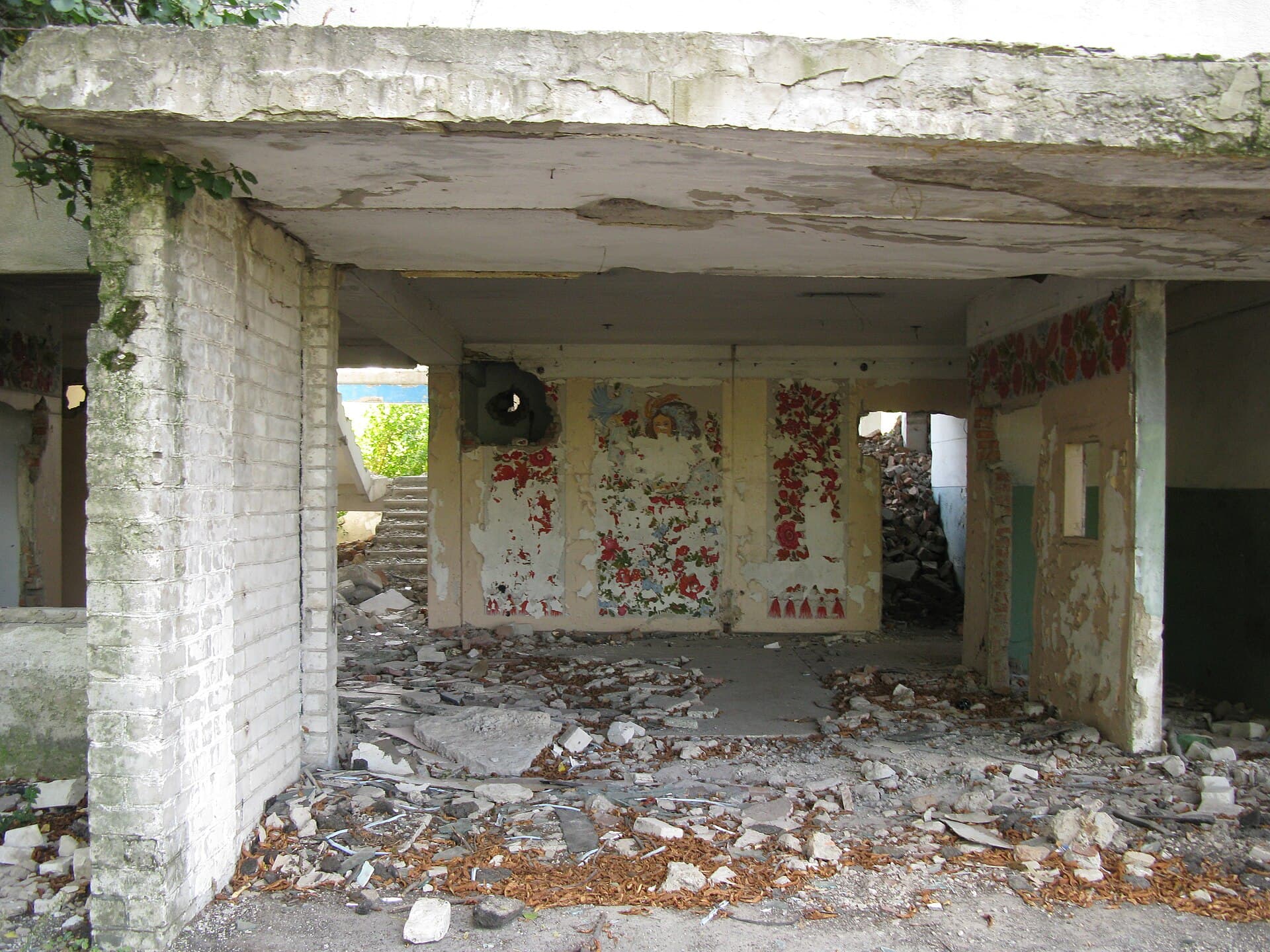
The factory that held ninety painters is a shell

The Petrykivka painting factory was stripped between 2001 and 2011, and by 2014 the walls were all that stood. The tradition came through that because it lives in people, which is the whole reason the people have to be recorded while they are here to be recorded.

The gate photographed alongside belonged to a plant that employed ninety painters at once. When it emptied, the training line inside it emptied with it, and what carries the work now is a handful of households teaching at kitchen tables and the village schools named in the UNESCO file.

That is the shape of the risk being funded here. A building can be raised again from photographs. A stroke that only ever passed from one hand to the next goes when the last hand that could make it goes, and twenty-eight of those hands on the public roster were born before 1956.
Both photographs were taken by someone who went to the site, and both travel with the credit and the licence their source attaches to them.

What is left of the painting factory

What is left of the painting factory

The Petrykivka factory was stripped between 2001 and 2011; by 2014 only walls remained.

Igor Balashov · CC BY-SA 4.0

The factory entrance

The factory entrance

The gate of the works that once employed ninety painters.

Igor Balashov · CC BY-SA 4.0

For foundations and public funders

What we can apply to, and what needs a partner

Most of these funders decide on which legal body applies rather than on the idea, so each entry below says plainly who may sign it.

Two legal vehicles open two different pools. A Ukrainian registered NGO (hromadska orhanizatsiia) whose stated purpose is safeguarding Petrykivka painting opens the Ukrainian and EU money; a North American nonprofit opens diaspora and Canadian public funding. Registration age is the gate on most of it, and the two-year bars below start counting from the day of registration.

Petrikivka is run by Oksana Pikush as a private project, based in the Greater Toronto Area. It is not yet an incorporated body and it holds no charitable registration, so a gift made here is a gift and carries no tax receipt.

Institutional grants that require a registered body are applied for with a partner organisation named on the application. The Centre of Folk Art «Petrykivka» is the first partner we are approaching.

A letter from the Centre of Folk Art «Petrykivka» and from named masters outweighs a polished budget with almost every heritage funder, because community ownership is scored directly. Gaude Polonia, to take one example, requires at least two recommendations from recognised creators in the field.

Deadlines below were correct on 16 September 2026. Re-verify each one against the funder’s own page before a word of an application is written.

01

Ukrainian Cultural Foundation

Ukraine-registered body · two-year bar on the best lot

The main Ukrainian public grant body, running about eleven programmes in parallel. “Cultural Heritage” (Kulturna spadshchyna), Lot 2, funds cross-sector heritage projects at 500,000 to 2,000,000 UAH with no co-financing required, and names digital heritage products as eligible; the applicant must be a legal entity or sole proprietor (FOP) registered in Ukraine for at least two years. The last cycle ran 15 December 2025 to 15 February 2026 against a programme budget of 45 million UAH.

The near-term lot for a younger body is “Cultural Horizons” (Kulturni horyzonty), lot “Artistic Debuts” (Mystetski debiuty), 250,000 to 715,000 UAH, a one-year registration bar and an EU partner required, closing 5 October 2026. Every application is signed with a Ukrainian qualified electronic signature, which takes weeks to obtain and should be in hand first.

Programme pages · Ukrainian Cultural Foundation ↗
02

House of Europe — Cultural Heritage Digitisation

Ukraine-registered body · no minimum age

€10,000 to €20,000 over six months, open to museums, archives and civil society organisations working on cultural heritage, with no minimum years of existence — the one major European grant a newly registered Ukrainian body can win immediately. It covers scanning equipment, server and cloud storage, photogrammetry consultants, software and honoraria for the project team, and it names artefacts as digitisable. That is the recording workstream above, paid for line by line.

No fixed deadline is published; calls go out through their newsletter. Their Cultural Institutes Cooperation line, up to €20,000, runs on a rolling deadline on the last day of each month at 15:00 Kyiv and needs a European cultural institute alongside the Ukrainian applicant.

The digitisation call · House of Europe ↗
03

Ukrainian Institute — Visualise

Ukraine-registered body and a foreign host · 1 November 2026

Up to 1,500,000 UAH for one exhibition project abroad, closing 1 November 2026 at 23:59 Kyiv. The project must pair a Ukrainian and a foreign institution, take place in one of the programme’s priority countries, and start no earlier than 1 March 2027. It funds the exhibition itself; this platform becomes the documented digital layer that outlives the tour. A working foreign exhibition partner is the gate here.

Open call Visualise · Ukrainian Institute ↗
04

Creative Europe — European Cooperation Projects

EU consortium required · realistic route is 2027, as a partner

Ukraine is an associated country, with full participation agreed in Brussels on 11 December 2024. Small Scale gives a maximum EU grant of €200,000 at a funding rate up to 80%, with at least three independent entities from three eligible countries, and the coordinator must have existed legally for two years at the deadline. The 2026 call closed on 5 May 2026. Its award weighting — relevance 30, quality of content 30, project management 20, dissemination 20, pass mark 70 — is the template the reporting below is built to satisfy.

The 2026 call page · European Commission, culture ↗
05

ALIPH

Ukraine-registered body · rolling, by email

Between March 2022 and March 2026 ALIPH disbursed USD 8.3 million to nearly 500 Ukrainian organisations in over 140 locations. Emergency Relief is capped at USD 75,000; projects adopted inside an Action Plan carry no fixed budgetary limit. Applications go by email year-round with a decision typically in one to two months. Their Ukrainian money follows physical protection and documentation of collections at risk, so a Petrykivka application has to be shaped around the works and archives in the oblast rather than around a website.

Grants page · ALIPH Foundation ↗
06

Cultural Emergency Response

Open to heritage practitioners · rolling, €15,000–€35,000

Locally-led protection of heritage under threat: material needs, research missions to identify relief actions, first-aid-to-heritage training, and awareness of damage to culture during an ongoing crisis. Already working in Ukraine. Applications are accepted at any time, which makes this the most realistic first international win for a young organisation.

First aid to heritage · Cultural Emergency Response ↗
07

Ukrainian Canadian Foundation of Taras Shevchenko

Canadian body, or a Canadian citizen or permanent resident

The most directly usable diaspora grantmaker, organised in Arts, Education and Community Development pillars. Its Community Development / National Projects sector explicitly encourages partnerships and digital technologies, which is the nearest thing in the diaspora world to a grant line for a platform; the Visual Arts sector covers exhibitions, commissioned work and public art tied to Ukrainian Canadian heritage.

Sector definitions, grant sizes and the closing date of each cycle are published on the foundation’s own site, and those are the figures an application here is built on; anything that reaches us through a grants aggregator stays out of the paperwork. Every application we send to this foundation will arrive with money already committed against it, which is one of the jobs the patron tiers above do.

Grant sectors · Shevchenko Foundation ↗
08

UNESCO Intangible Cultural Heritage Fund

Closed to us · open to Ukraine as a State Party

International Assistance from the ICH Fund is granted to States Parties rather than to organisations, covering safeguarding of listed elements, inventories, capacity building and preparatory assistance, with preparatory requests due before 31 March each year. At the third Bureau meeting of the 21st session, on 9 June 2026, just over US$320,000 was granted across six requests. This platform cannot apply. Ukraine can, and the useful role available to us is drafting partner for a Ukrainian request on Petrykivka safeguarding.

Requesting assistance · UNESCO ↗

Two more are read by hand before a word about them is printed. The Canada Ukraine Foundation serves its funding pages in a form automated retrieval cannot open, so its criteria, grant sizes and dates come straight off the foundation’s own site. The World Monuments Fund runs its Ukraine Heritage Response Fund through organisations it already works with and publishes no application route for anyone else, so the approach there is a letter of introduction through a partner.

A scrubbed pine table in flat daylight carrying finished painted sheets, a jar of brushes and saucers of bright paint
The table a digitisation grant actually pays for · interpretation, photographed for this site

What a funder gets from us

The artefacts, and the numbers we will actually publish

Applications here are assembled from live data rather than written from memory the night before a deadline. Each artefact below is something the platform emits on a schedule.

The rights register

One export, one row per work

Every work we publish carries the master, the reference of the consent document, the licence granted and the state of its rights review. It exports as a single file. Funders and museums both ask the same question before any other, which is whether we are legally entitled to publish what we are showing, and this is the artefact that answers it in one page instead of a conversation.

The quarterly count

Masters, hours, works, minutes, schools

Per period: masters onboarded with signed consent, works catalogued, works photographed to archival standard, minutes of oral history recorded, apprenticeships supported, schools and workshops reached, languages published.

Year-one targets, against a baseline of zero: 40 masters recorded, 60 hours of technique footage captured and transcribed, 1,200 works photographed at archival resolution, 2,000 learners completing four or more curriculum modules, two residency places filled with a master aged seventy or over teaching.

Deposit copies

100% of the archive, in two jurisdictions

Every recording is mirrored outside Ukraine as well as held inside it. ALIPH released a USD 200,000 emergency envelope in June 2026 after strikes in May and June damaged museums, monuments, religious sites, film institutions and libraries in Kyiv, Kharkiv and Dnipro; Dnipropetrovsk oblast, where Petrykivka sits, is attacked daily. An archive that exists on one shelf, in one village and in one museum storeroom is a single strike away from a permanent gap.

The open glossary

Free, no login, no licence fee

The named strokes of the school with their Ukrainian names, how the hand makes each one, and what it is for — published openly and linked from every lesson. Anyone may use it, including the institutions we are asking for money. A reference that sits behind a paywall stops being a safeguarding instrument.

The money numbers

Published quarterly, including the awkward ones

At least 70 cents of every euro a buyer spends reaches the artist. That floor is written into the covenant, and the share is reported every quarter. No master is ever charged to appear, to be verified or to be certified. We publish the total transferred to masters and their households, the number of masters receiving any income through the platform, and the median per master alongside the total, because a total on its own can hide one good year for one person.

The sourcing rule

100% of editorial claims carry a citation

Every claim about the tradition carries the source it came from, contested claims are flagged and the count of them is published, and symbolism appears only as what the UNESCO nomination file states or as what a named master says about her own motifs. A jury reads that as method. It also happens to be the reason the family behind this platform agreed to it.

Small heaps of dry ground pigment in rust, ochre and deep red on a dark board
Dry pigment before it is bound · interpretation, photographed for this site
A single sheet of rough handmade paper lying on dark wood, its deckled edge lifting at one corner
One blank sheet · interpretation, photographed for this site
A black lacquered wooden plate catching a single highlight along its rim
The lacquered ground the factory made famous · interpretation, photographed for this site

One conversation

Write, and name the workstream you want to pay for

A patron conversation starts with the workstream and settles the tier afterwards. For a foundation or a public funder, the first thing that comes back is the rights register and the current count, so you can see what already exists before a form is opened.

Write to us about support

The register as it stands today

Eighteen of the thirty-nine already catalogued and credited

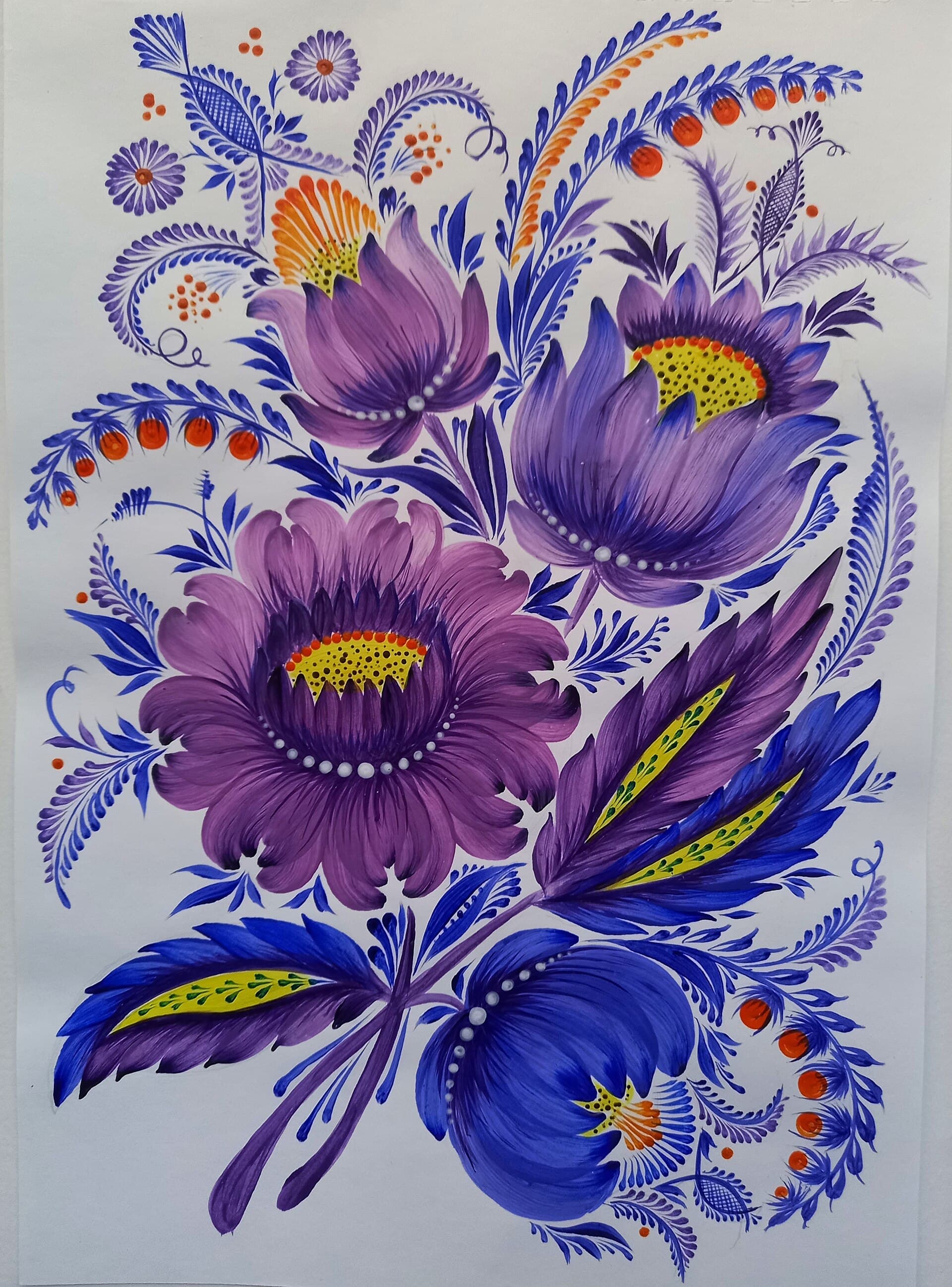
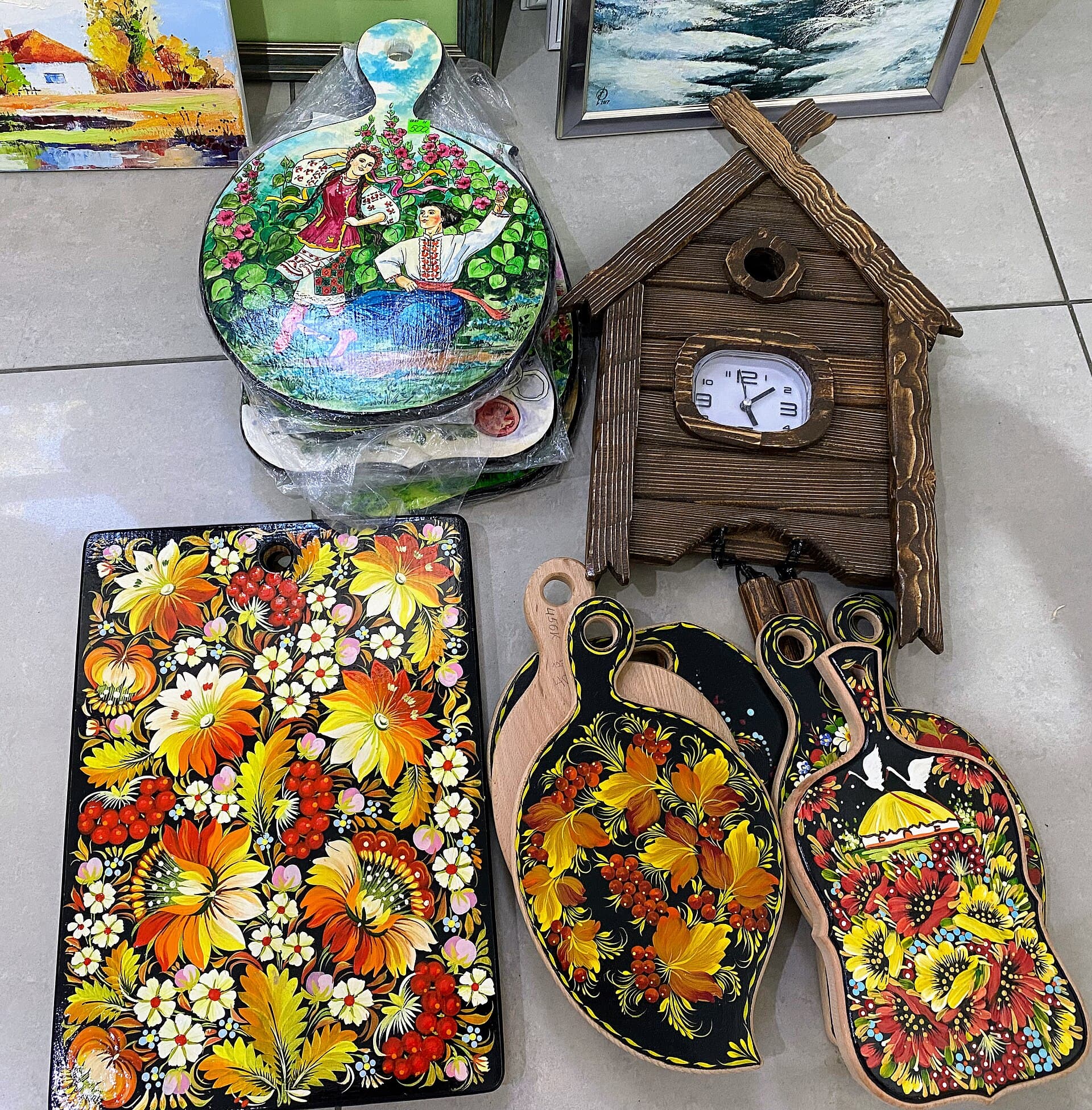
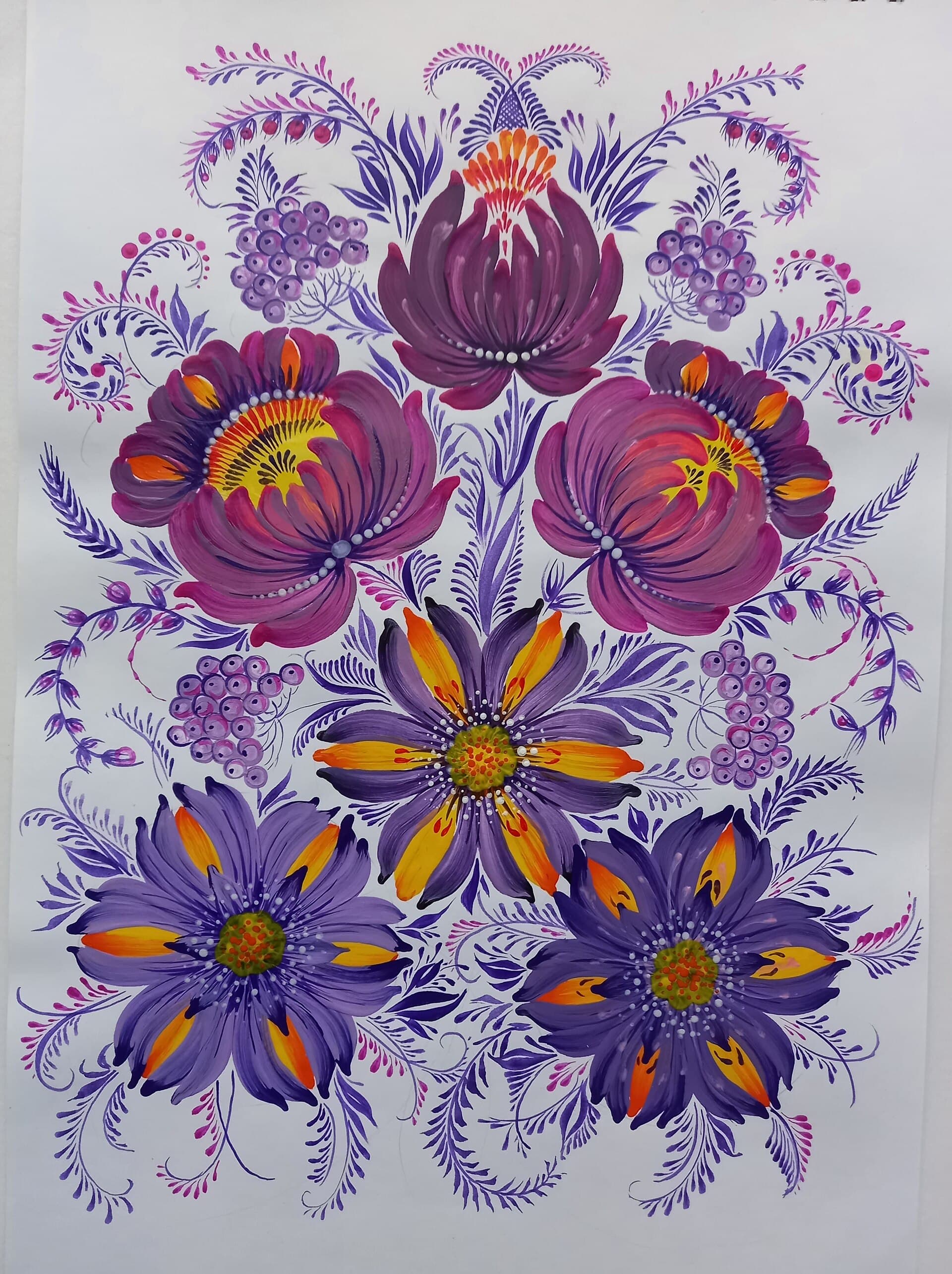
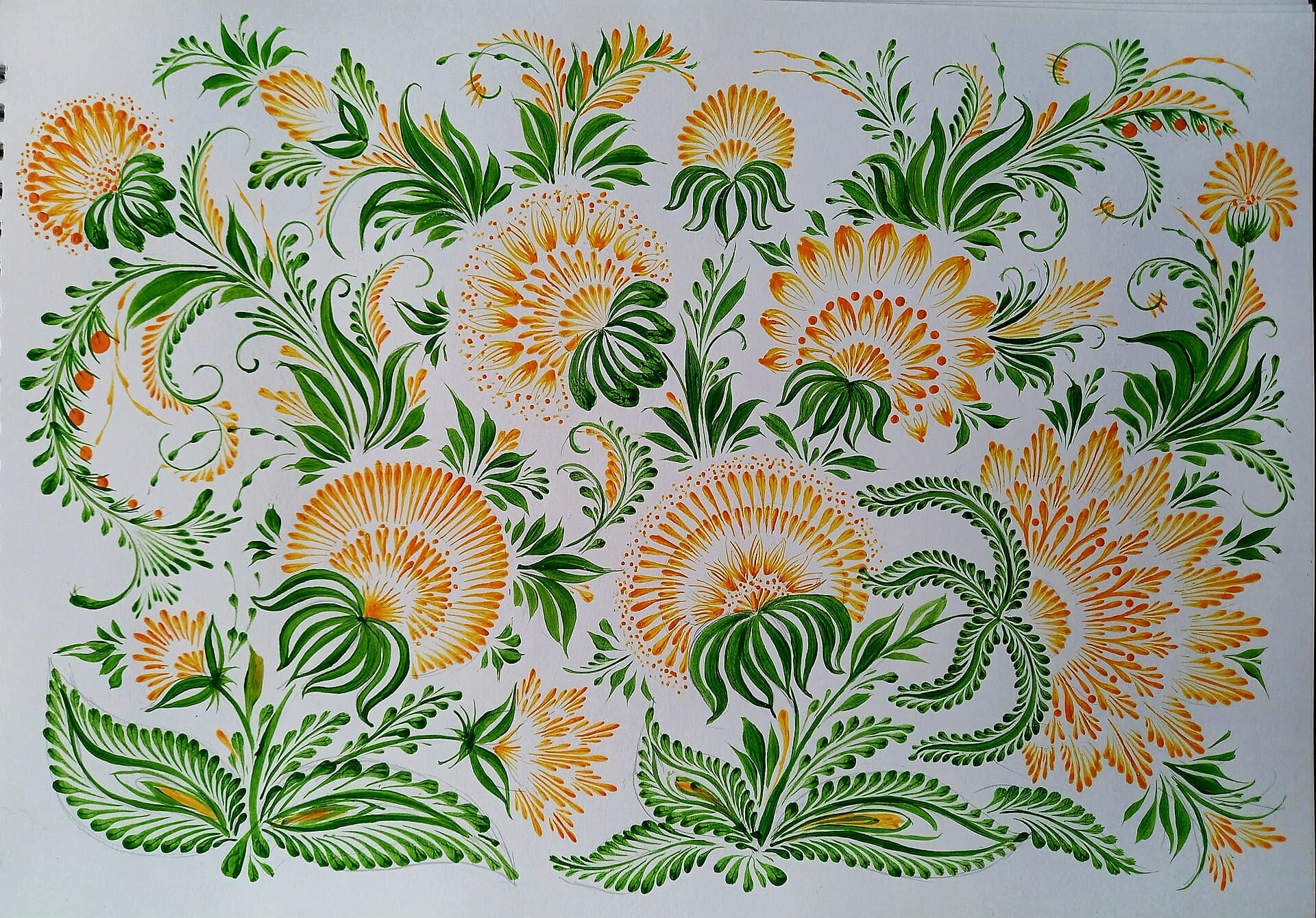
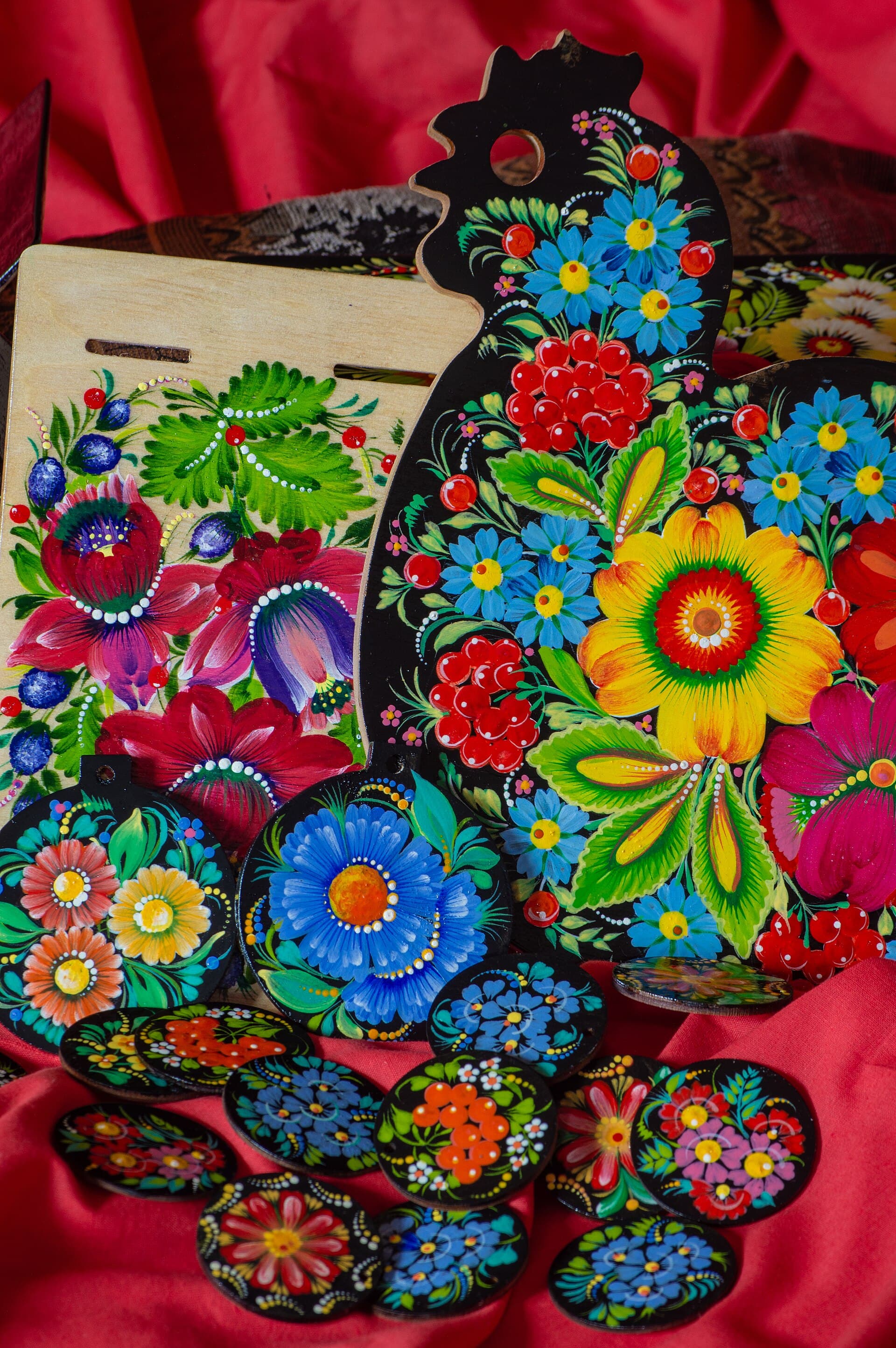
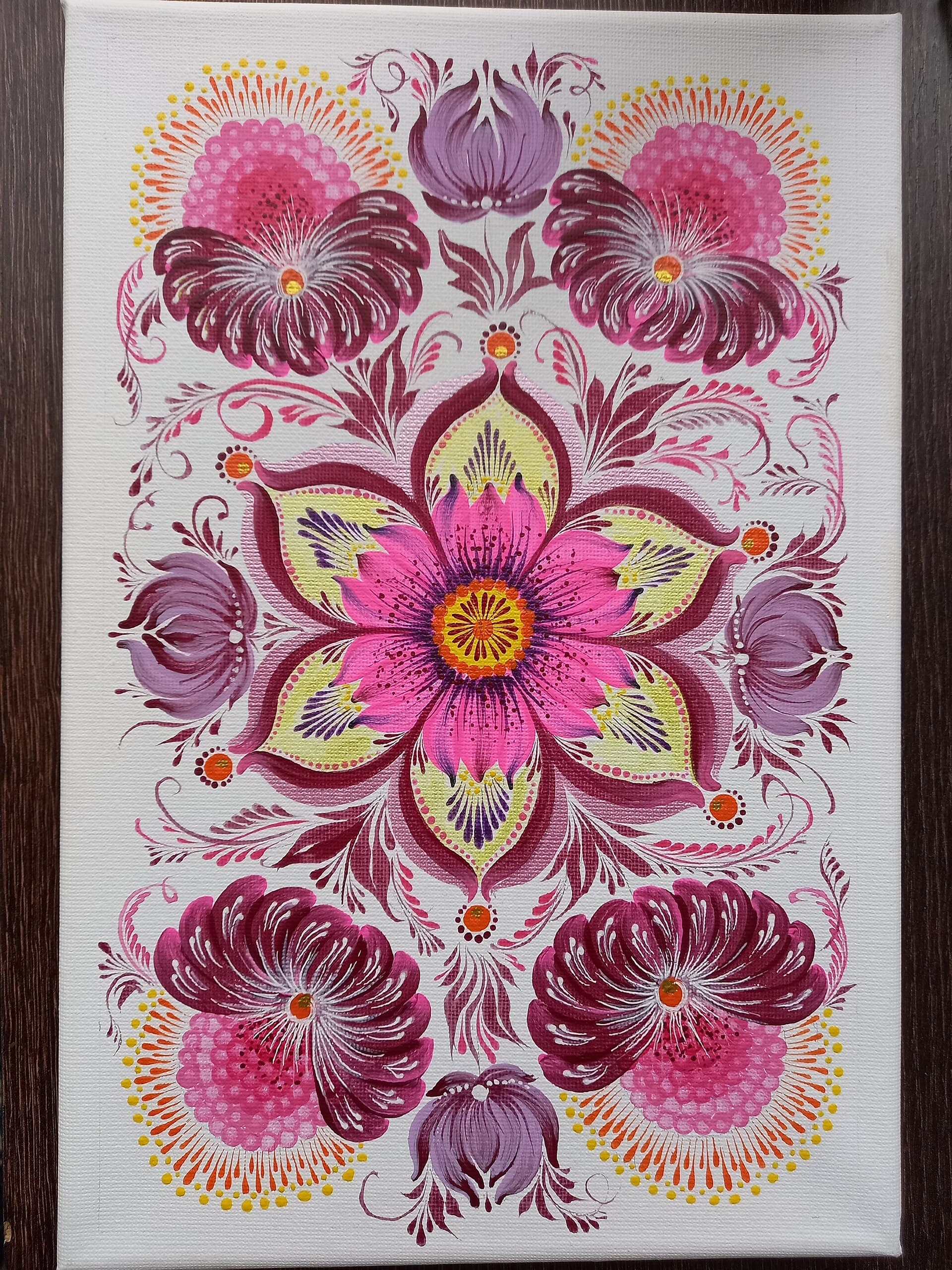
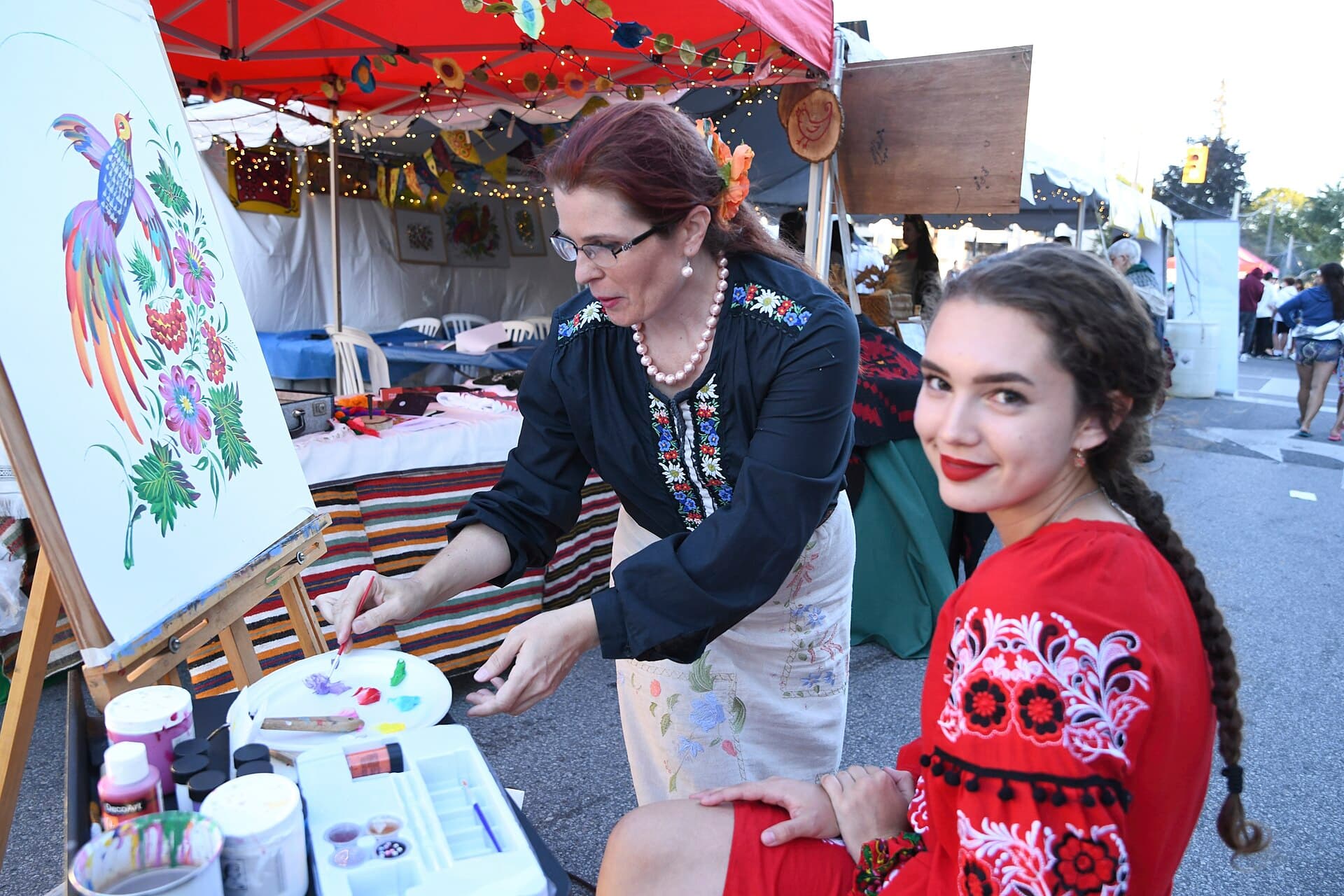
Sheets of paper, painted boards, medallions, caskets, baubles, a market stall, a village wall and a public workshop table. Each one carries its painter where the source names one, the credit its licence requires and a link to the file it came from. This is the state of the register before a single grant has been signed, which is the baseline the quarterly count moves from.

Bird in a green wave
Medallions
Wreath of tulips and dark blooms
Painted boards on a market stall
Blue and violet bouquet
Kitchen boards, Poltava 2025
Carpet of poppies and asters
Painting on a wall
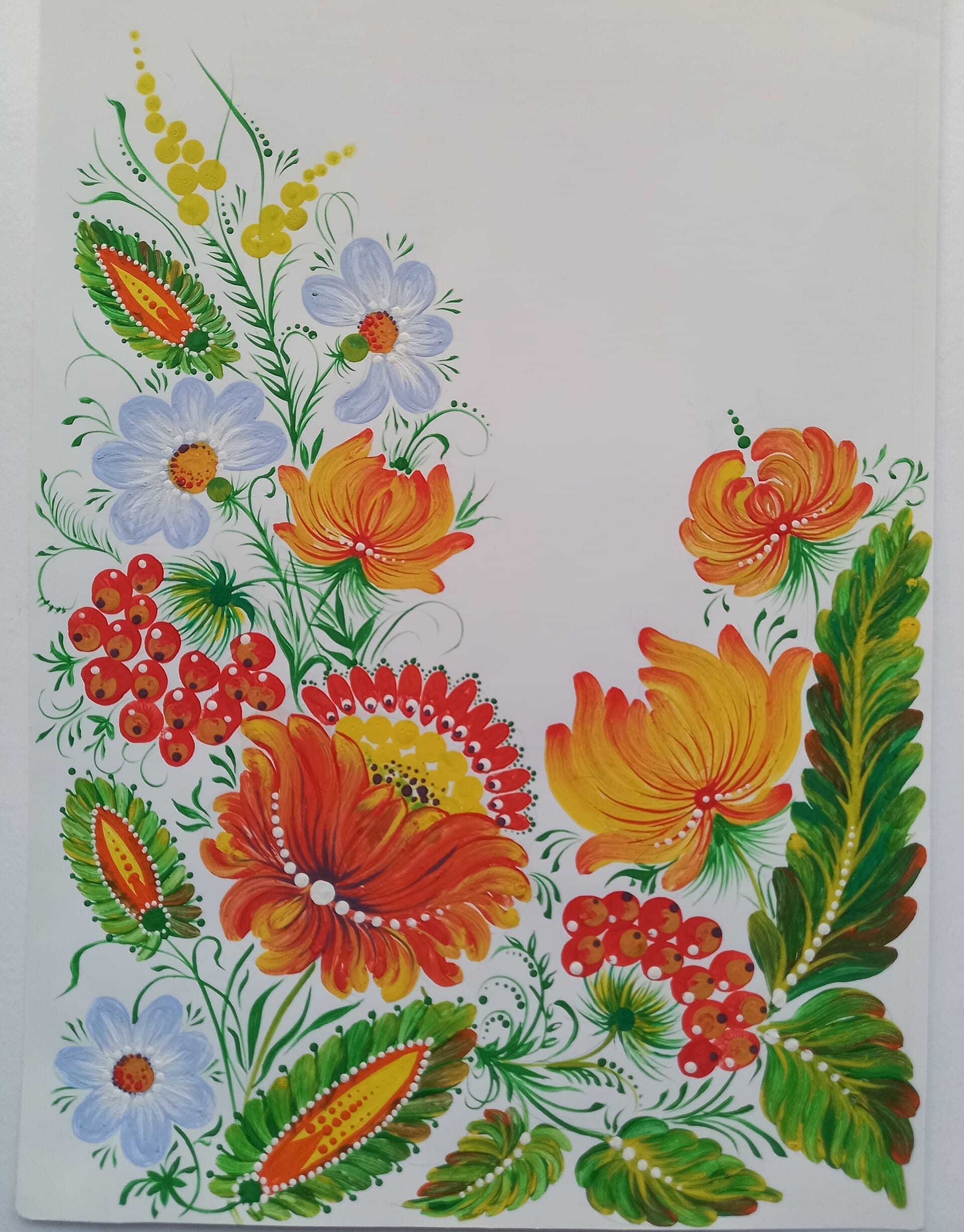
Corner spray with grasses
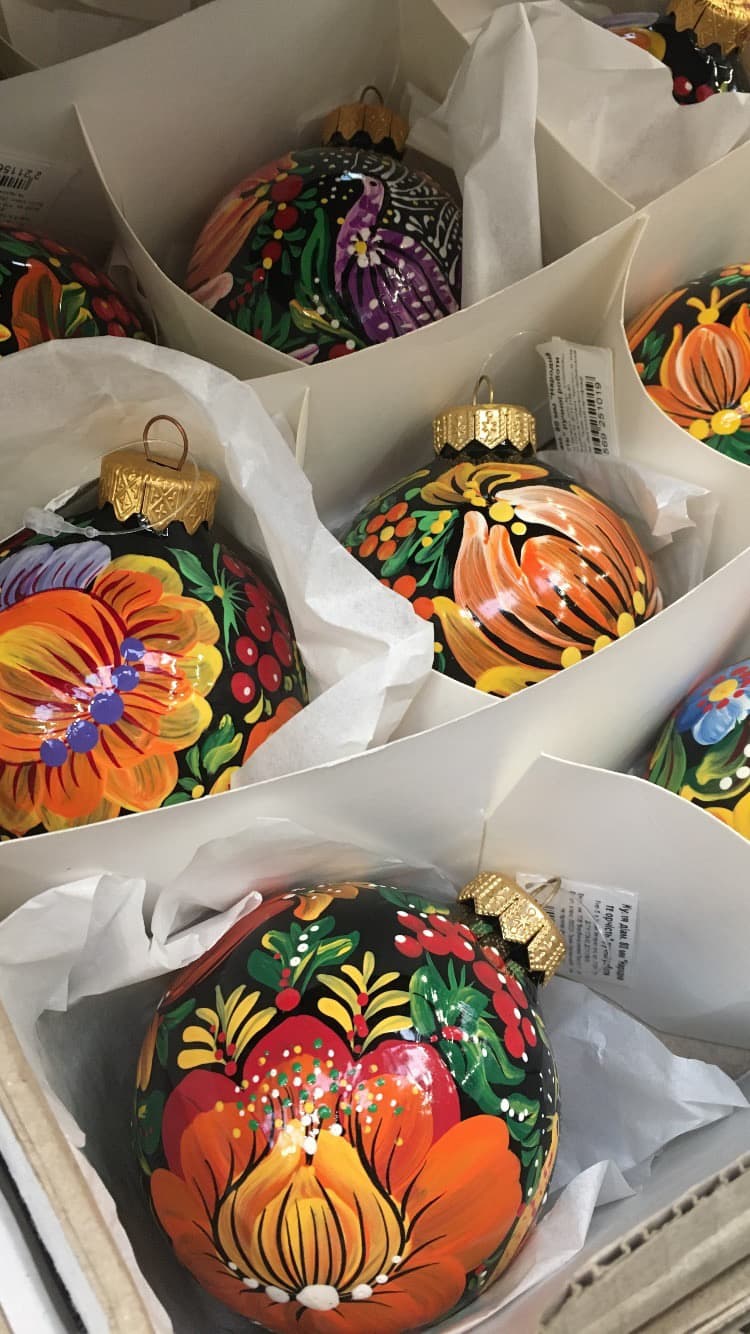
Painted Christmas baubles
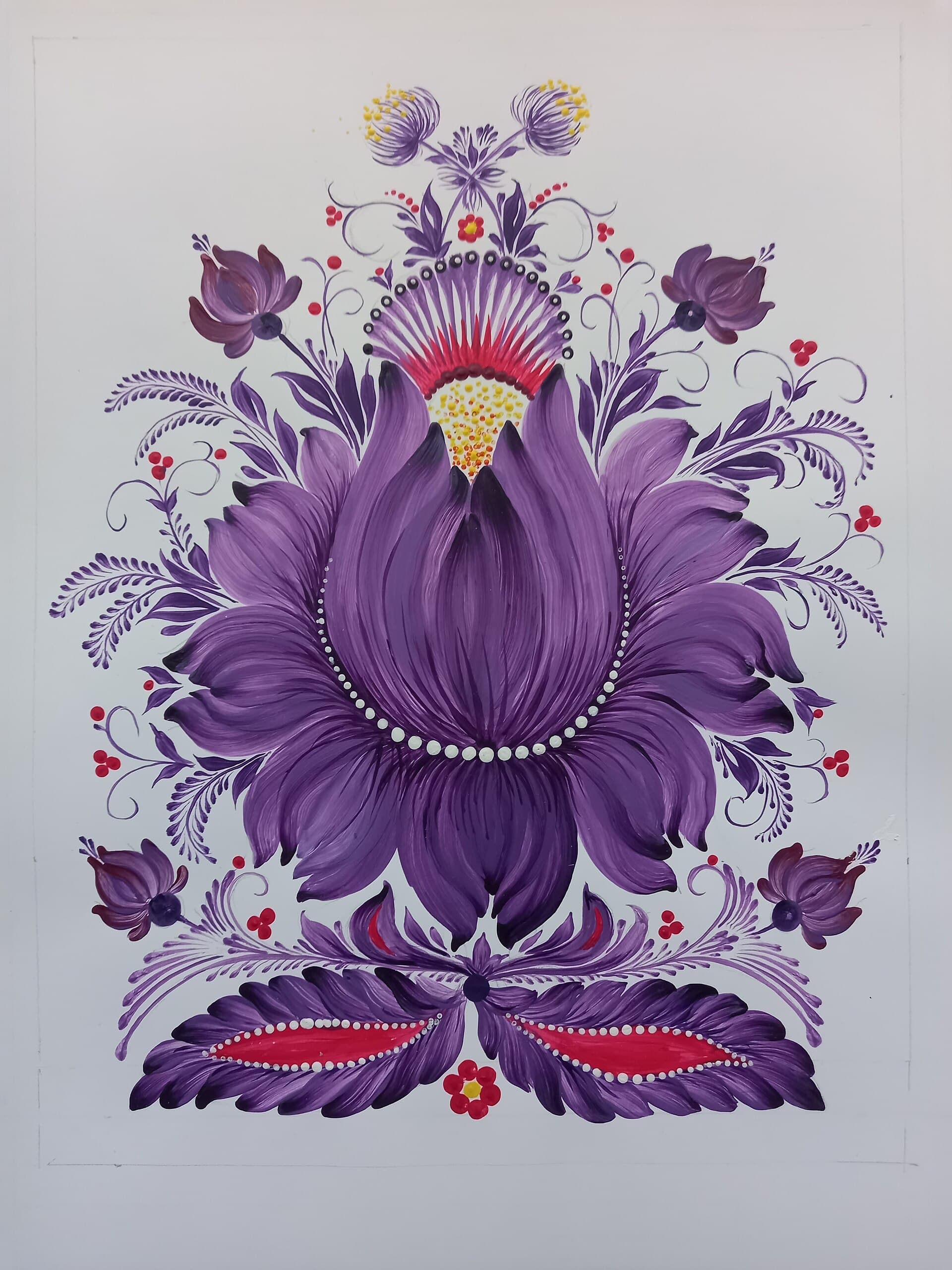
Violet crown
Blue frieze along a wall
Ochre and green frieze
A figured board and medallions
Pink panel
A workshop table
Casket with viburnum, 1980s
Casket with a bird, 1980s
Open the full gallery →

Petrykivka · Oksana Pikush

Write to Oksana

What it's about