Petrikivka
UA

Commission · interiors, objects, brands

Painting put onto the thing you actually use

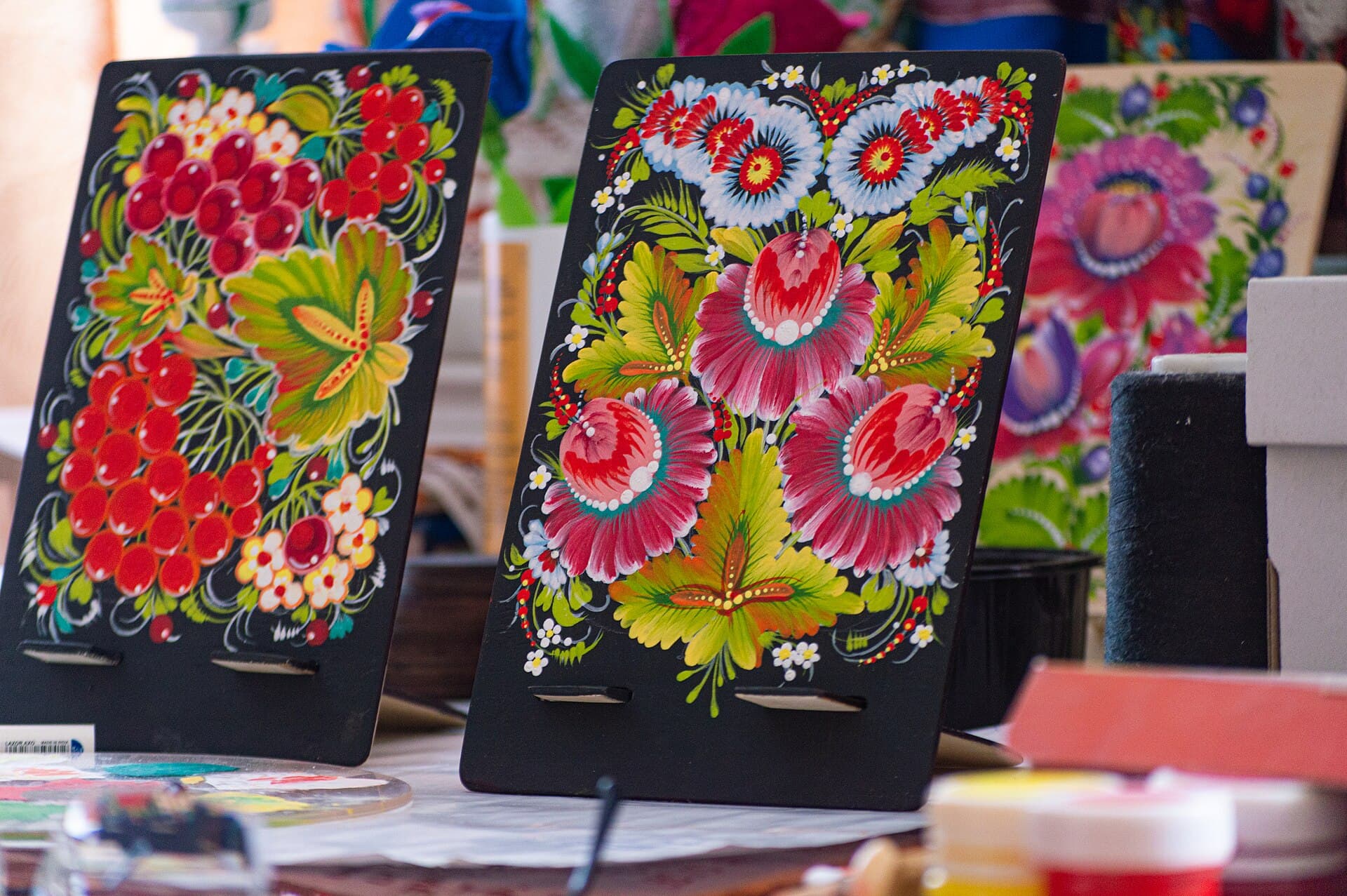
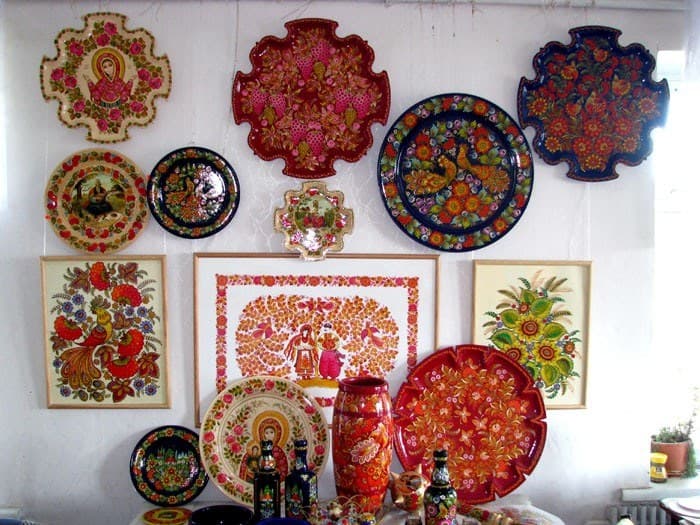
Painted plates and panels hung together at the Centre of Folk Art «Petrykivka»
At the Centre of Folk Art «Petrykivka»

Oksana Pikush was born in Petrykivka and works in interior décor and mural painting. A brief here settles the surface, the rights and the credit in writing, and the finished work carries the signature of the person whose hand made it.

Five formats

What can be painted

Petrykivka has gone onto a restaurant stove in Kyiv, a business school in Georgia, a children’s playground, eleven school buses and a tractor, and a Mural Arts project shown in Philadelphia. These five are what can be commissioned here.

01

A wall or a ceiling

In a home · on site

Suits
The room a family lives in, a stairwell, the ceiling over a landing. This is the surface the painting came from: UNESCO’s own description of the element records that people in the village decorate their living quarters, their household belongings and their musical instruments, and that every family has at least one practitioner. Limewashed walls were painted over and painted again each year, so a wall has always been treated as a living surface rather than a finished one.
From you
The wall dry, finished and free of the furniture in front of it. A photograph taken in daylight, the measurements of the room, and the height of the light source. A decision on whether the finished painting is sealed so it can be wiped clean.
Time
CAD $650 a day on site, with paints and the painter’s own handmade brushes inside the rate. The wall is quoted in painting days as soon as the measurements and the photograph are in, and the day count is fixed in the quote. Work starts 4 to 8 weeks after the agreement is signed. Travel within 150 km of the Greater Toronto Area is carried by the day rate.
UNESCO element 00893 ↗
02

A room or a shopfront

Commercial · on site, around trading hours

Suits
A café, a bakery, a restaurant, a shop window, a foyer. The precedents are real and dated: a Petrykivka-painted stove at the restaurant «Shchekavytsia» in Kyiv, and a business school in Georgia painted during the touring project «Petrykivka, the Soul of Ukraine» (Petrykivka — dusha Ukrainy) curated by Nina Burnevych in 2014–2015. Mural Arts Philadelphia worked with Ukrainian artists on Petrykivka Garden through a 2023–2024 exchange, shown at Drexel University in March 2025.
From you
A floor plan, your trading hours, and one named person who can approve the composition. Agreement in writing on how the painting is credited in your own photographs, menus and signage, since a shopfront is photographed by strangers every day.
Time
From CAD $4,500 for a room or a shopfront, built out of days on site at CAD $650 a day and worked around your trading hours, including evenings and the days you are closed. Allow 8 to 12 weeks from signature, since a commercial surface waits on your own fit-out and the paint has to cure before the doors open.
Mural Arts Philadelphia, Petrykivka Garden ↗
03

Furniture and objects

In the studio · the object comes to the paint

Suits
A door, a chest, a cradle, a headboard, a turned wooden plate, a lacquered box, a porcelain piece. The Centre of Folk Art “Petrykivka”, whose board Andrii Pikush chairs, works across turned and carved wood, furniture, ceramics, blown glass, batik and metal, and takes individual commissions for objects and interiors. Black lacquer on wood is the ground most people picture, and it belongs to the second half of the twentieth century.
From you
The object itself, delivered, or agreement that we source it. A note on how it will be used afterwards: a plate that hangs, a box that is opened daily and a table that takes hot cups each need a different finish.
Time
From CAD $900 per object, set by the painted area and by the finish the object has to survive — a plate on a wall and a table that takes hot cups are priced differently for that reason. 4 to 8 weeks in the studio, counted from the day the object arrives.
Centre of Folk Art «Petrykivka» ↗
04

A one-off piece for a collector

Paper, board or canvas · signed

Suits
A single authored work, signed, with its record kept in the archive here. For a sense of the market it sits in, comparable original Petrykivka work was selling on 16.09.2026 at $325 a piece on Saatchi Art (Maryna Salagub, acrylic on paper, 9×12 in), at $435–592 through Jose Art Gallery, and between CAD $450 and CAD $7,300 in Kateryna Kryvolap’s own Canadian catalogue.
From you
A size, a ground and a decision on framing. The composition stays with the painter — a brief that specifies every flower yields a drawing of the brief, and the whole technique rests on marks laid without correction.
Time
CAD $700 for a medium sheet of 30 to 60 cm, signed and entered in the archive here, with framing quoted separately once you choose it. Work on board or canvas, and anything larger than a sheet, starts at CAD $900. 4 to 8 weeks from the agreed size to a finished painting in your hands.
Jose Art Gallery, observed 16.09.2026 ↗
05

A licensed pattern for a product

Painted once by hand, then reproduced

Suits
Textile, packaging, a printed run, a surface applied by machine. Ukrainian brands already do this and say so: Vyshyvana Fashion describes its prints as an authored Petrykivka work by a member of the National Union of Artists of Ukraine, and TM byMe researched the painting of Podniprovia for a collection. The pattern is painted by hand first, then photographed at the resolution your production needs.
From you
The product family, the territory, the term, the print run, and the credit line — all five named in the agreement before painting starts. See the licensing section below for what a licence covers and where it stops.
Time
From CAD $1,500 for one product family in one territory for one year, plus 5 per cent of net sales on the licensed products. The painting itself is delivered 4 to 8 weeks after the brief is signed, and a renewal is agreed at a new fee.

These are the published prices, in Canadian dollars, and a written quote holds them for 30 days. Ukrainian studios that list Petrykivka wall painting as a service keep their rates private, so the figures here are set against what comparable authored work sells for, and those listings are named at the foot of the page. The 39 credited works in the gallery show the hand and the register entry you would be commissioning.

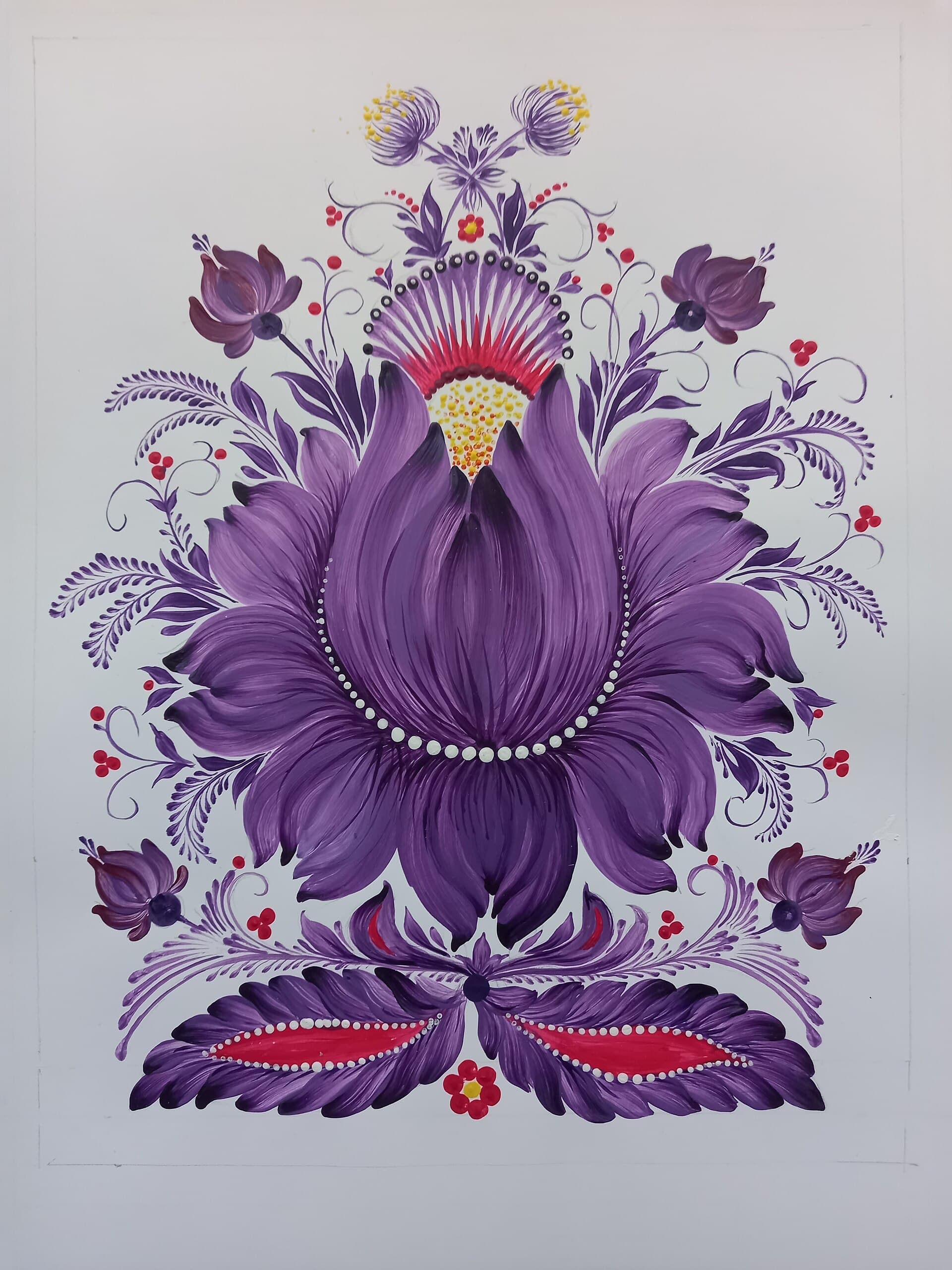
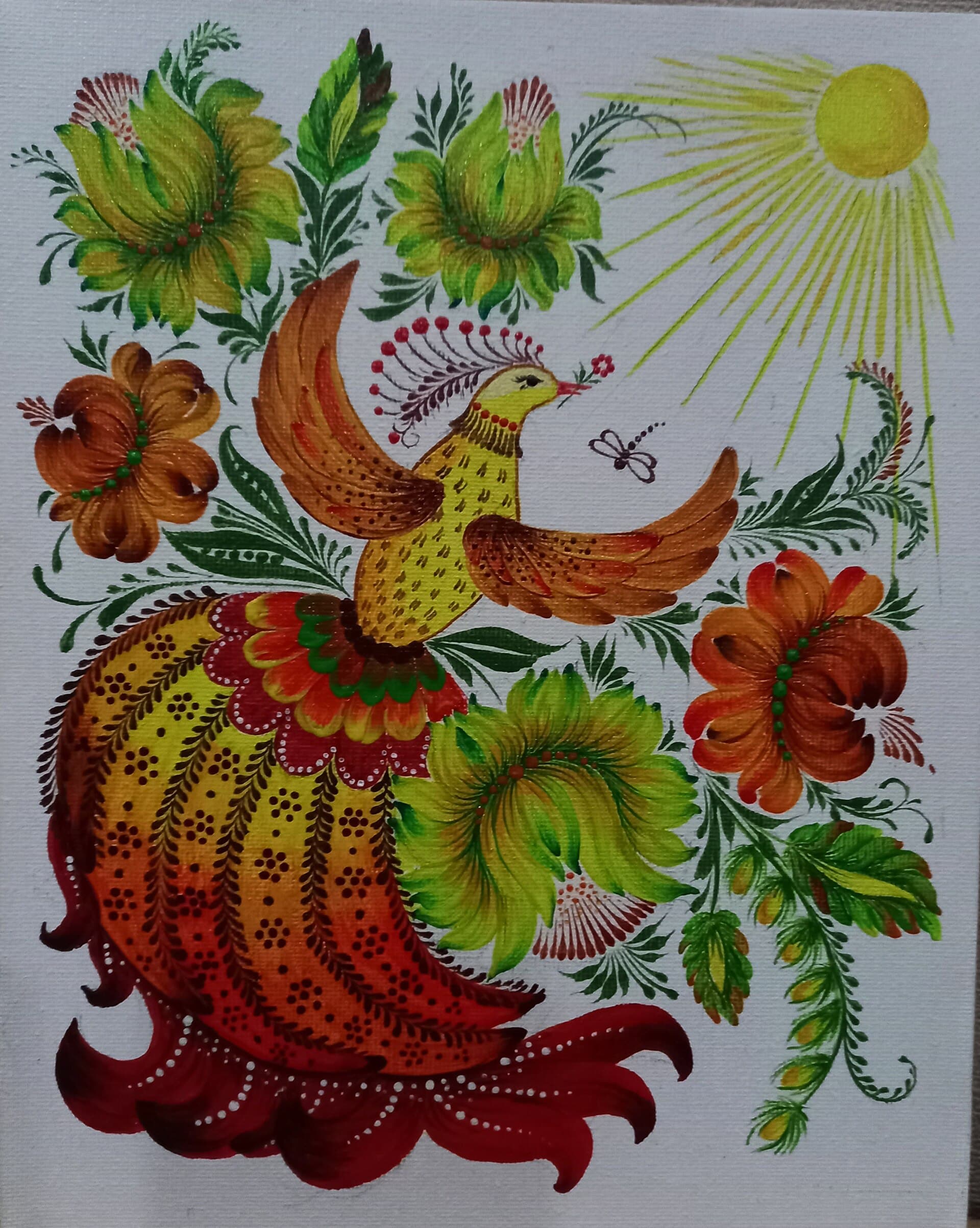
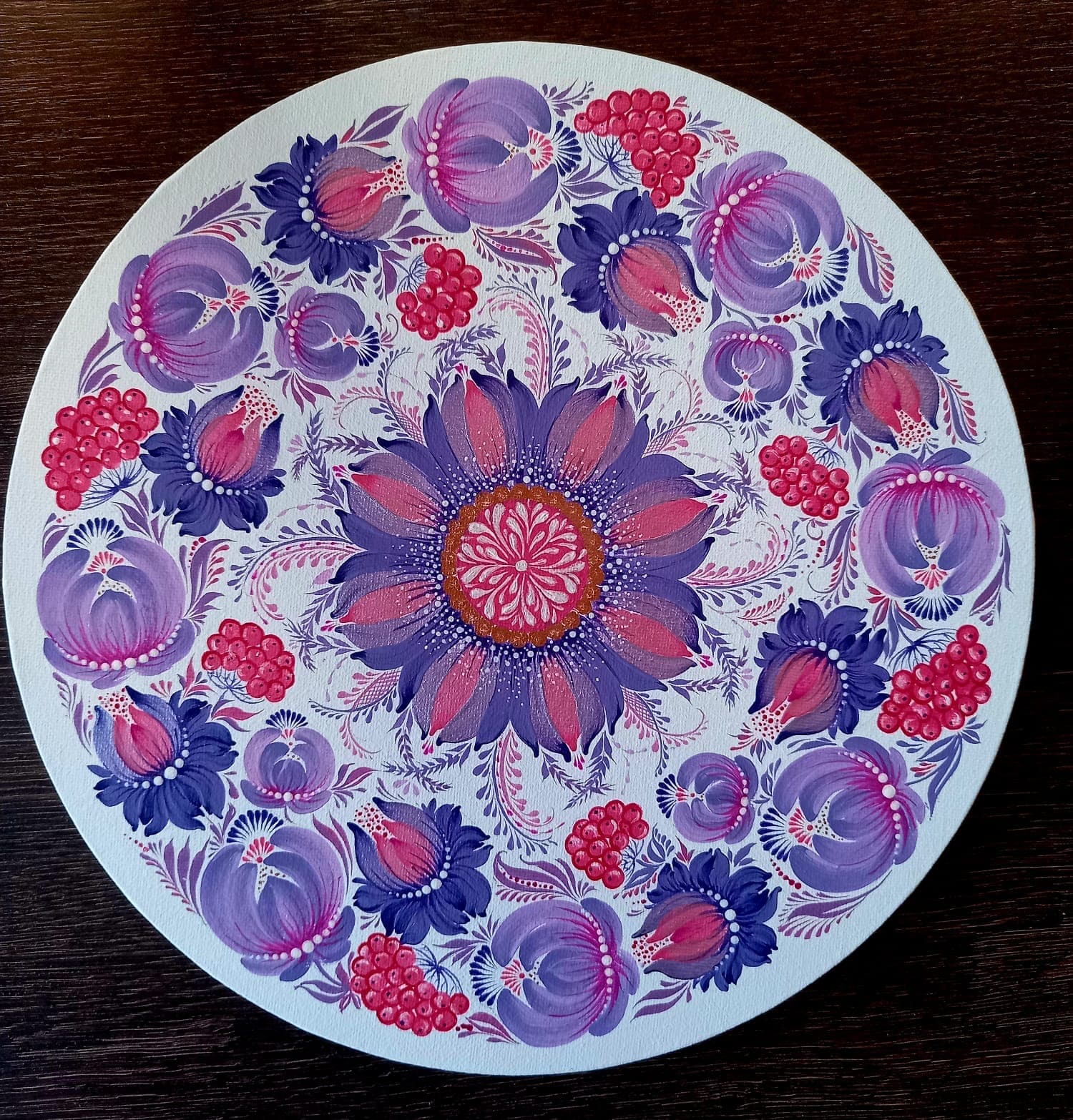
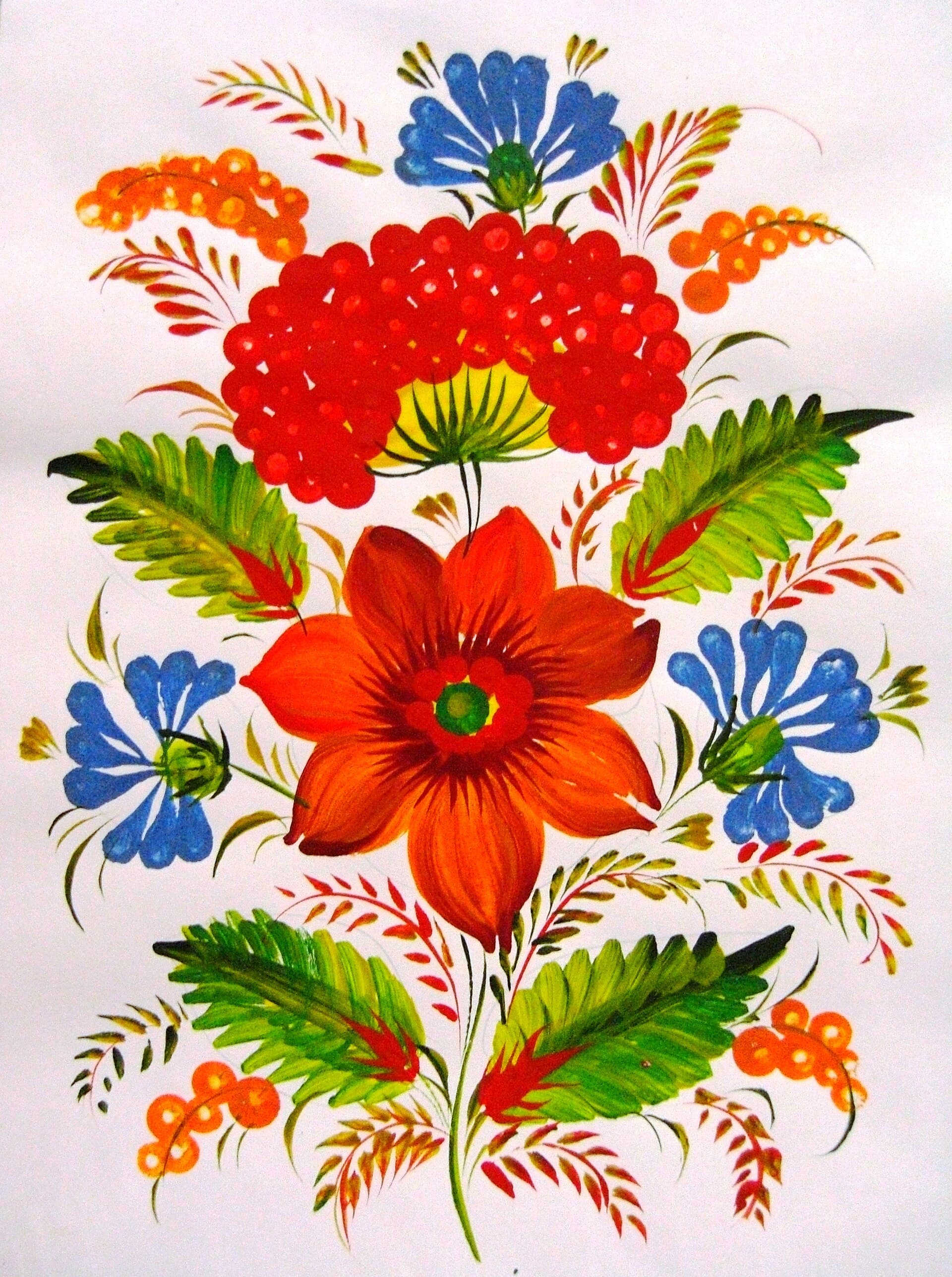
Already in the register: 13 authored pieces

Ochre and green frieze
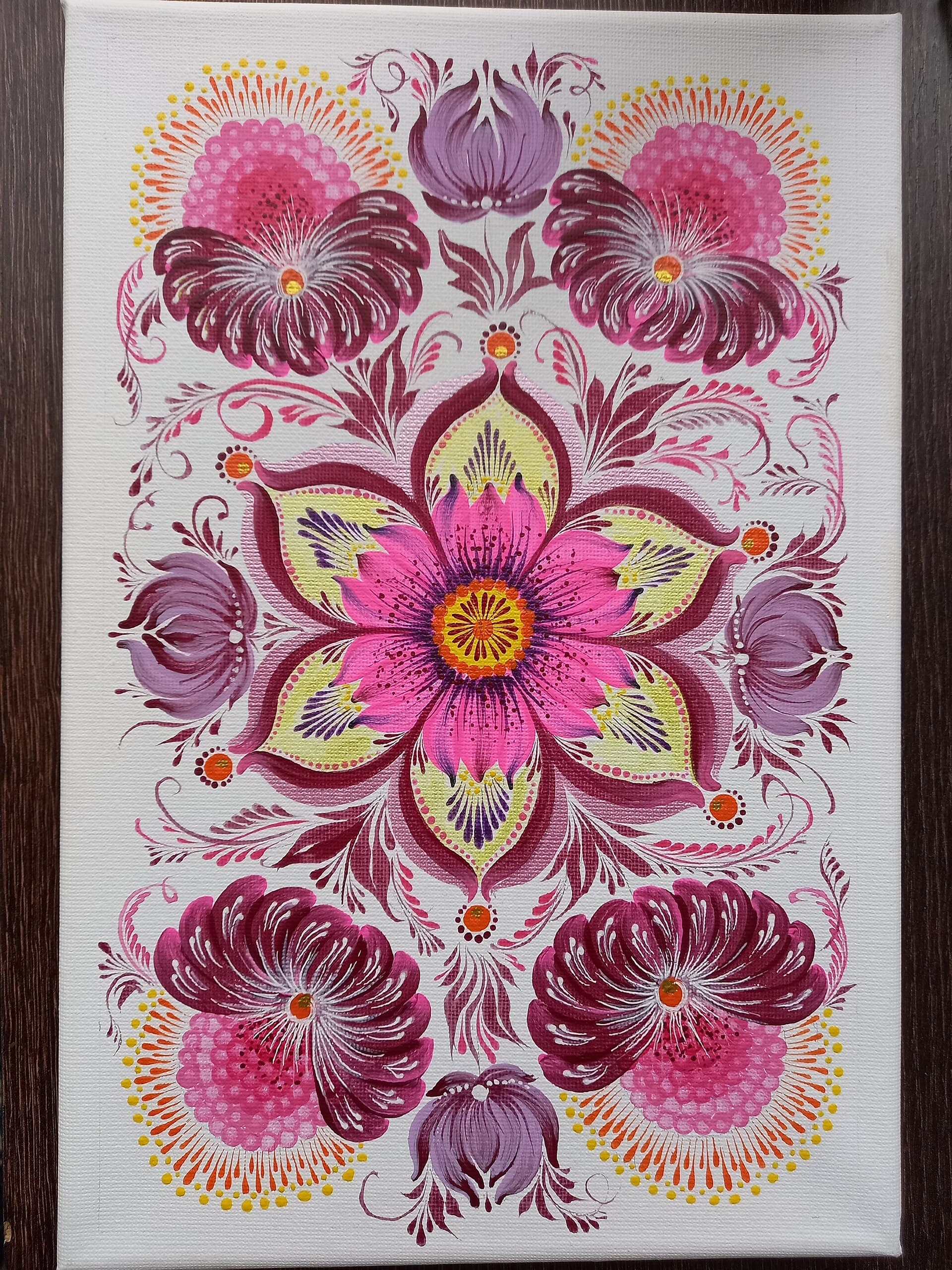
Pink panel
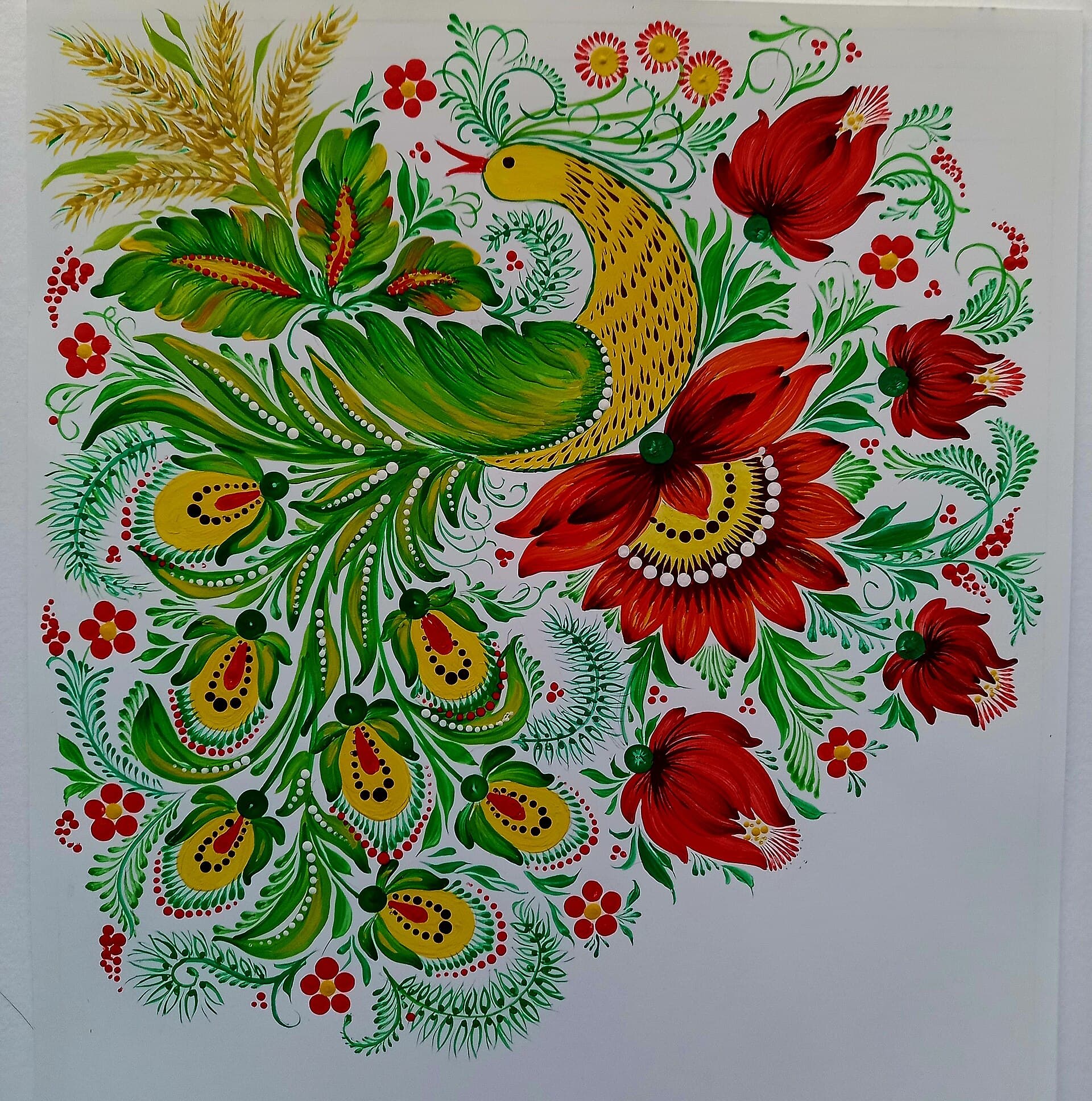
Bird in a green wave
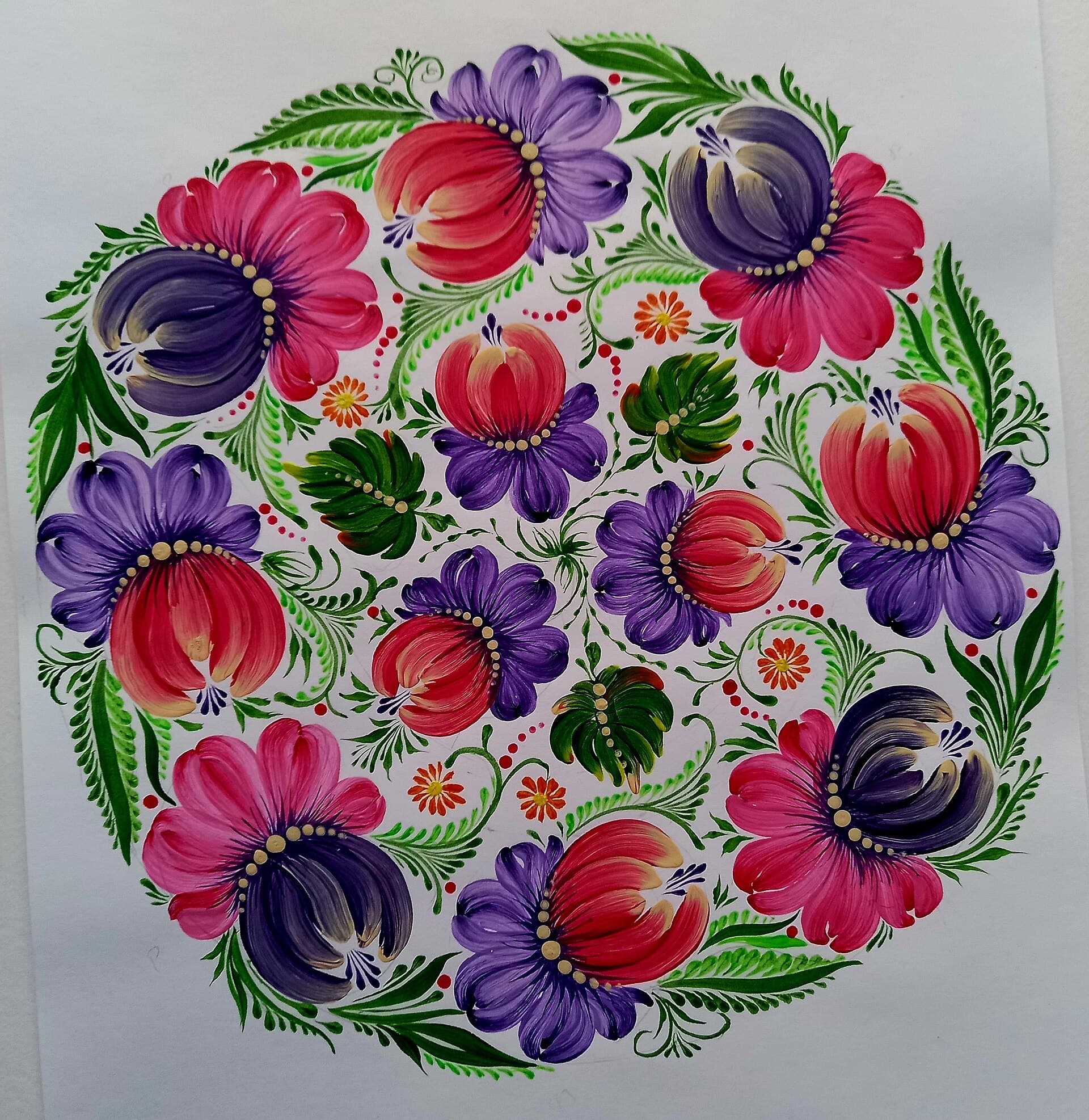
Wreath of tulips and dark blooms
Rose vazon on white
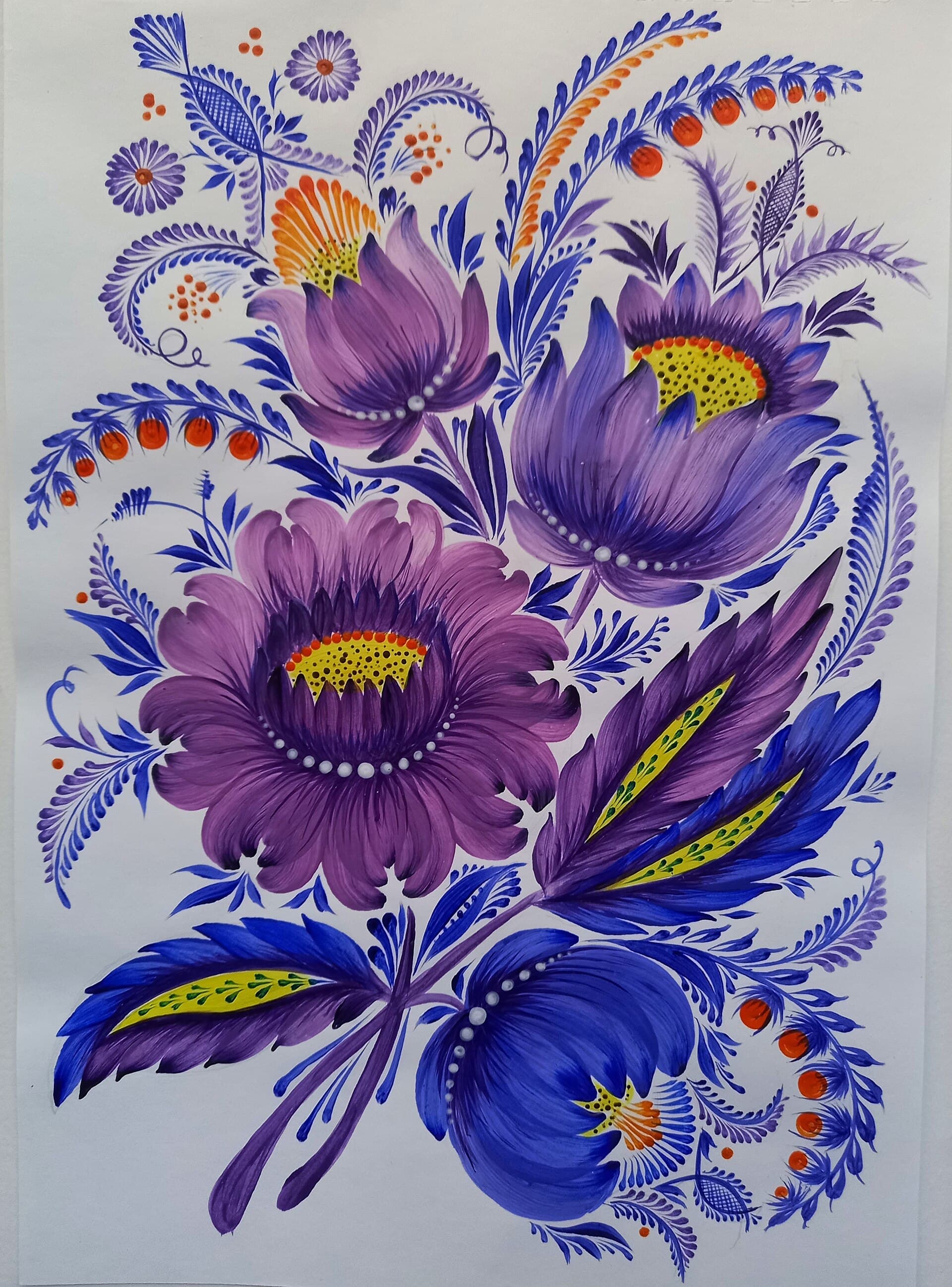
Blue and violet bouquet
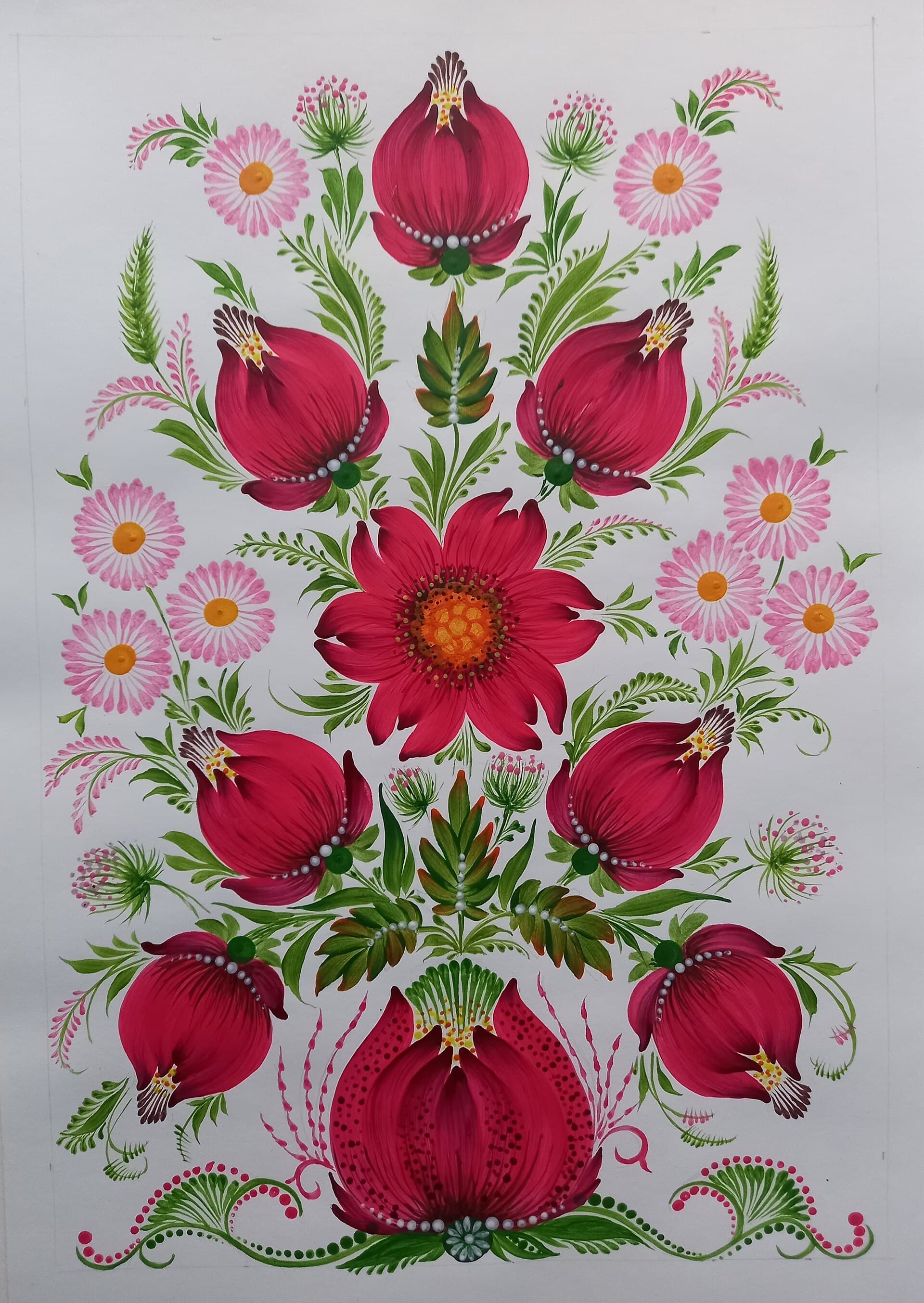
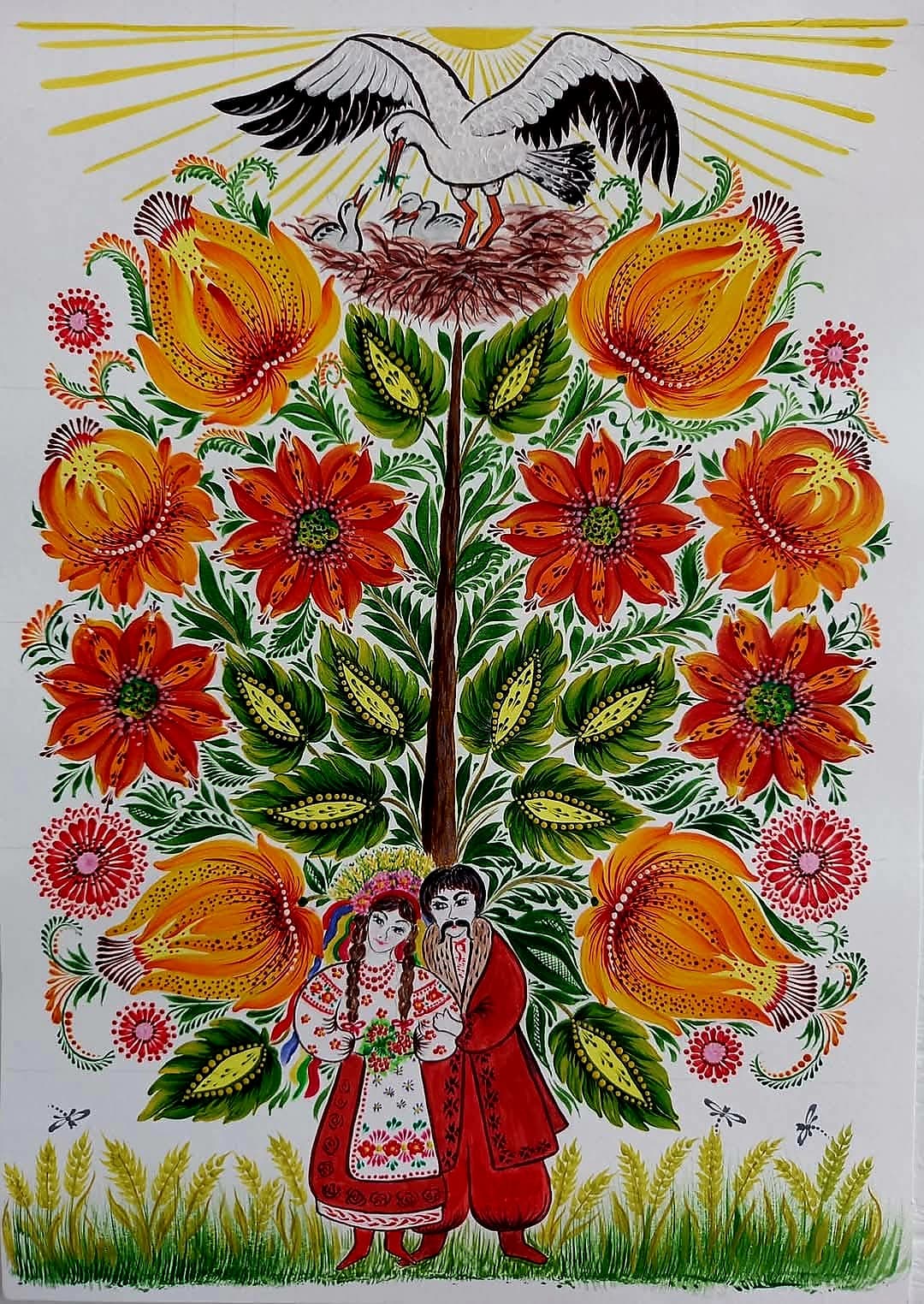
The tree of life with a pair beneath it
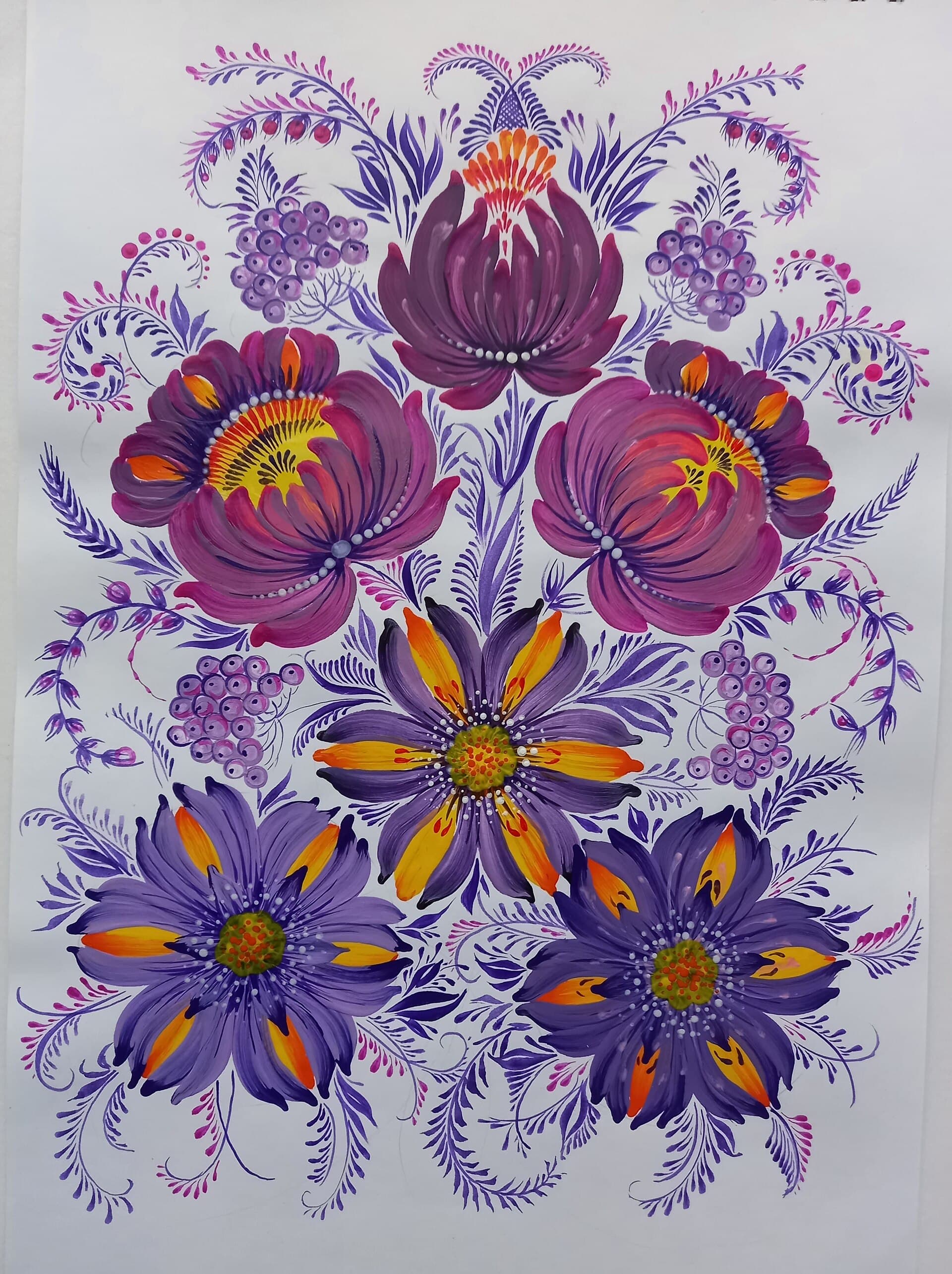
Carpet of poppies and asters
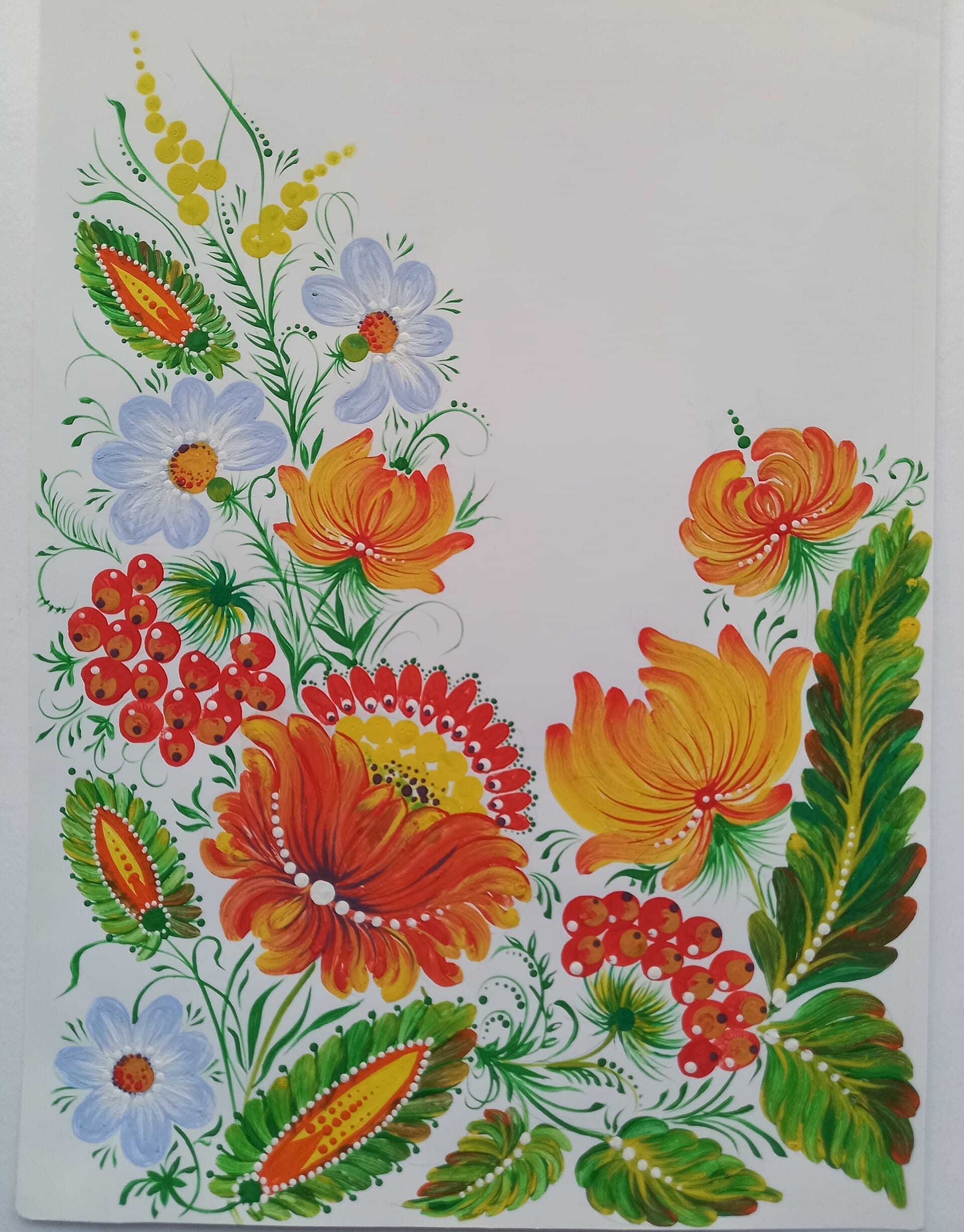
Corner spray with grasses
Violet crown
Firebird over a red bloom
Painted plate, violet and crimson
Poppies and cornflowers
Work on paper and on wood, each piece held with its ground, its credit and its licence. A commission at format 04 adds one more line to this list.
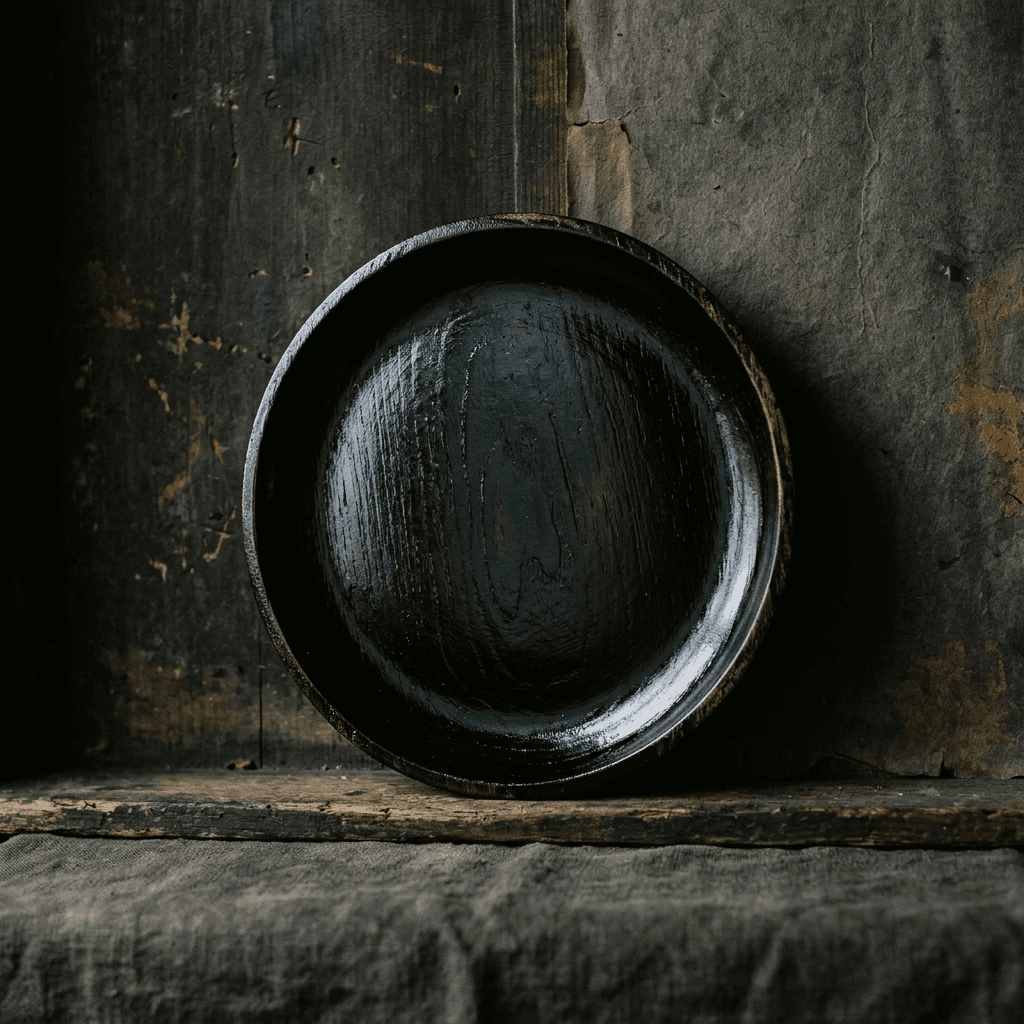
A turned wooden plate under thick black lacquer, standing against a scuffed board wall, with nothing painted on it
A lacquered ground before anything is painted on it · interpretation, photographed for this site

Photographed where they stand

A village wall, a frieze, a market stall, a kitchen board

Formats 01 and 03 with the paint already dry, on surfaces somebody lives with. Every piece here is named with the person who photographed it and the licence the picture was published under.

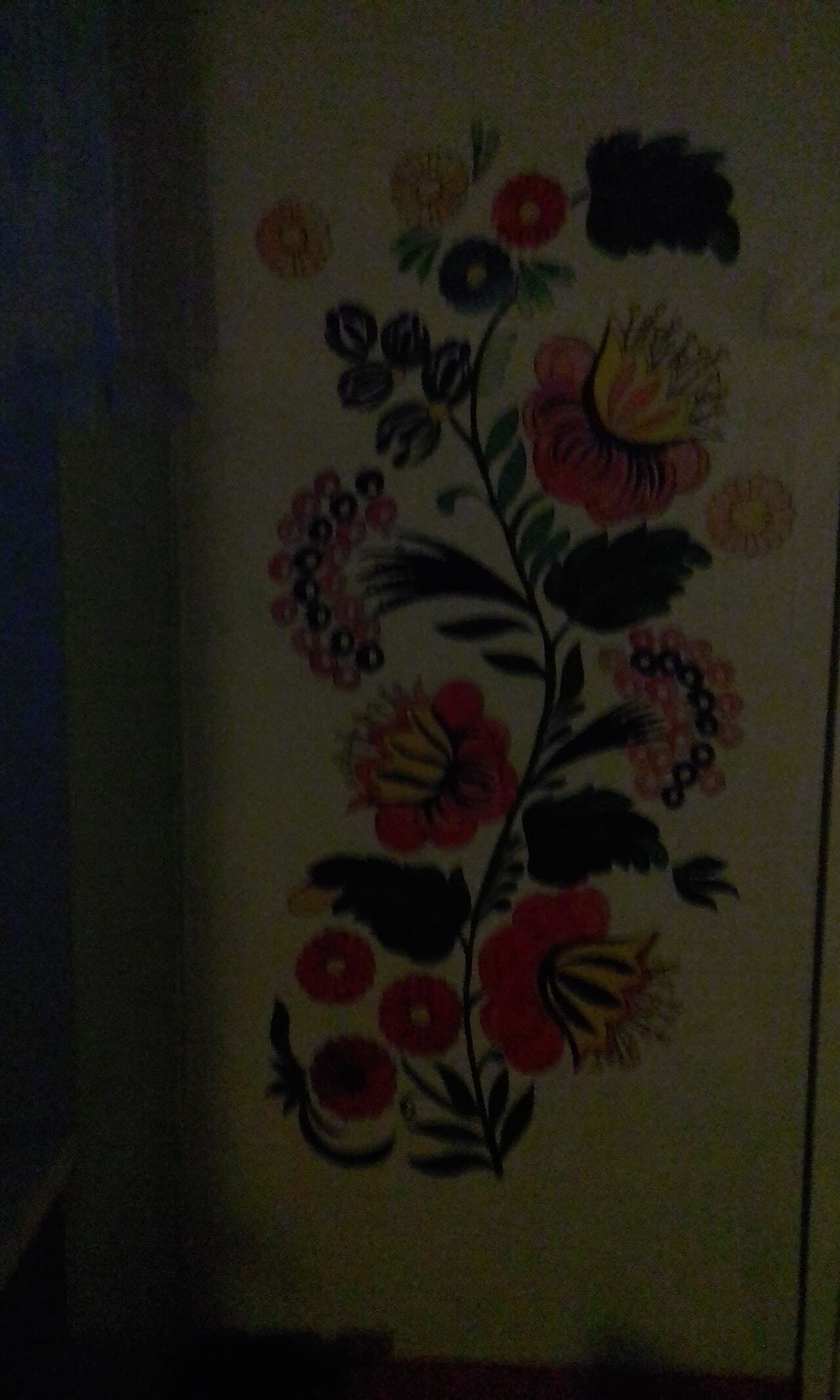
Painting on a wall

Painting on a wall

The tradition back where it started: on a wall.

QovaPhotographer · CC BY-SA 4.0

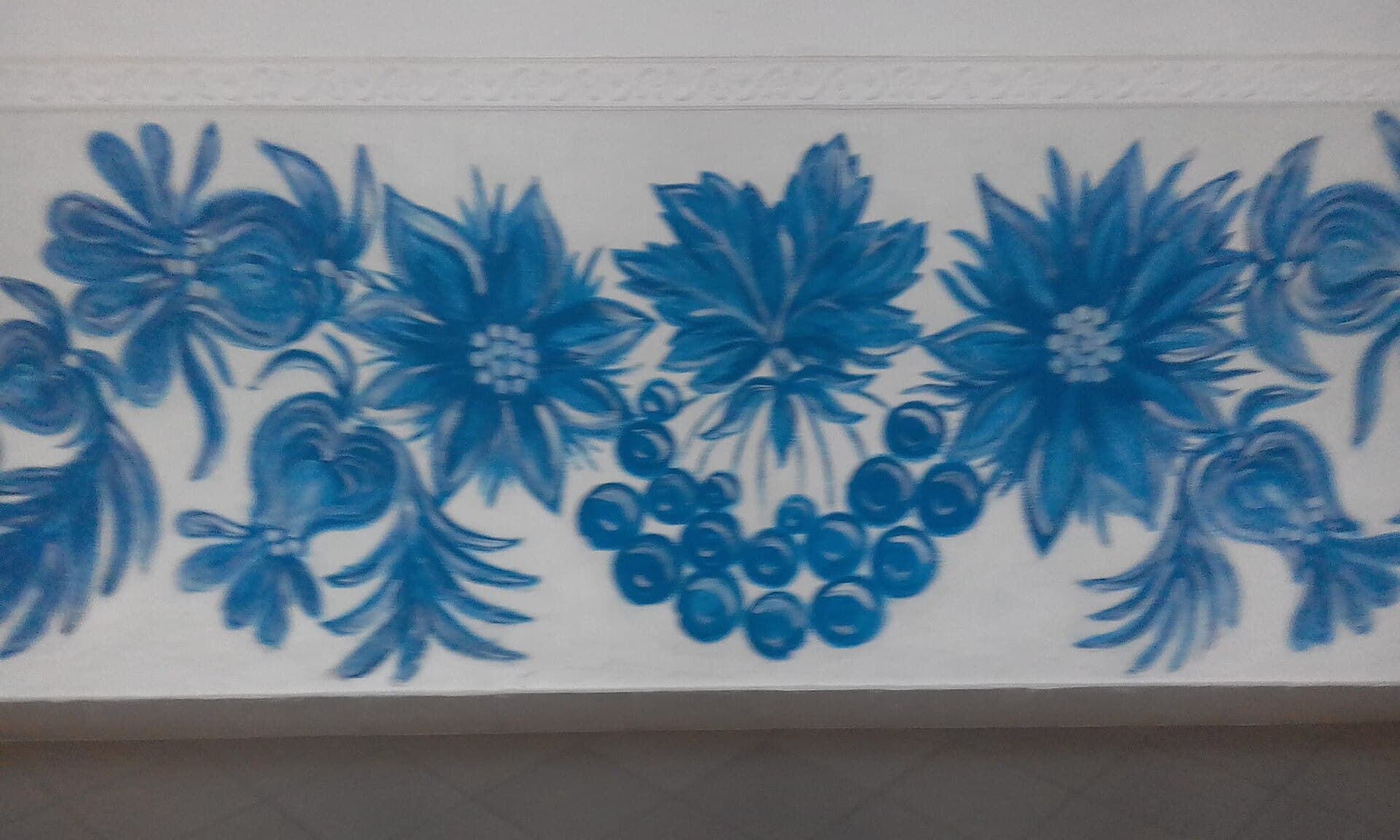
Blue frieze along a wall

Blue frieze along a wall

A running border in a single colour, the simplest whole composition a painter makes.

QovaPhotographer · CC BY-SA 4.0

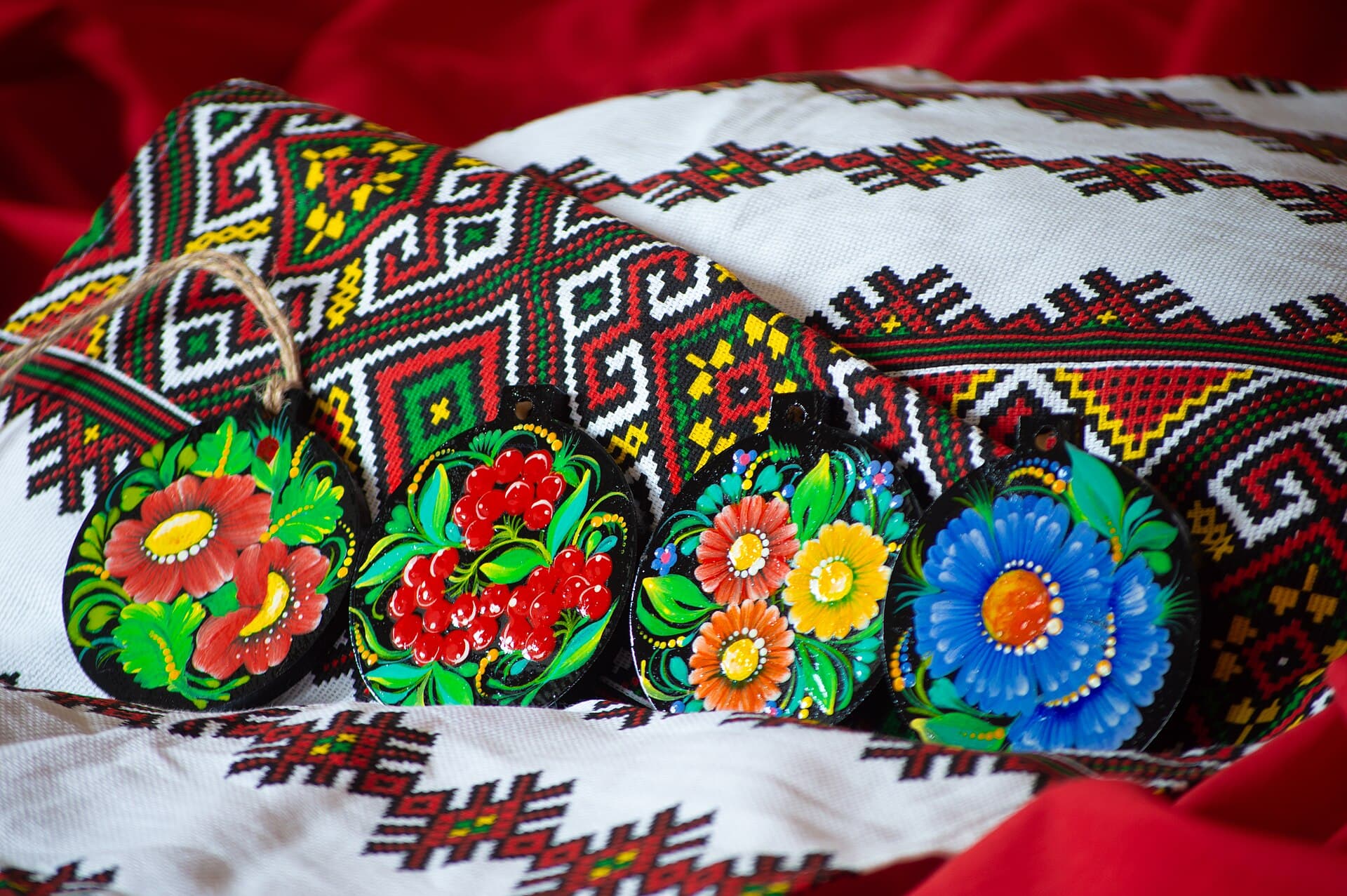
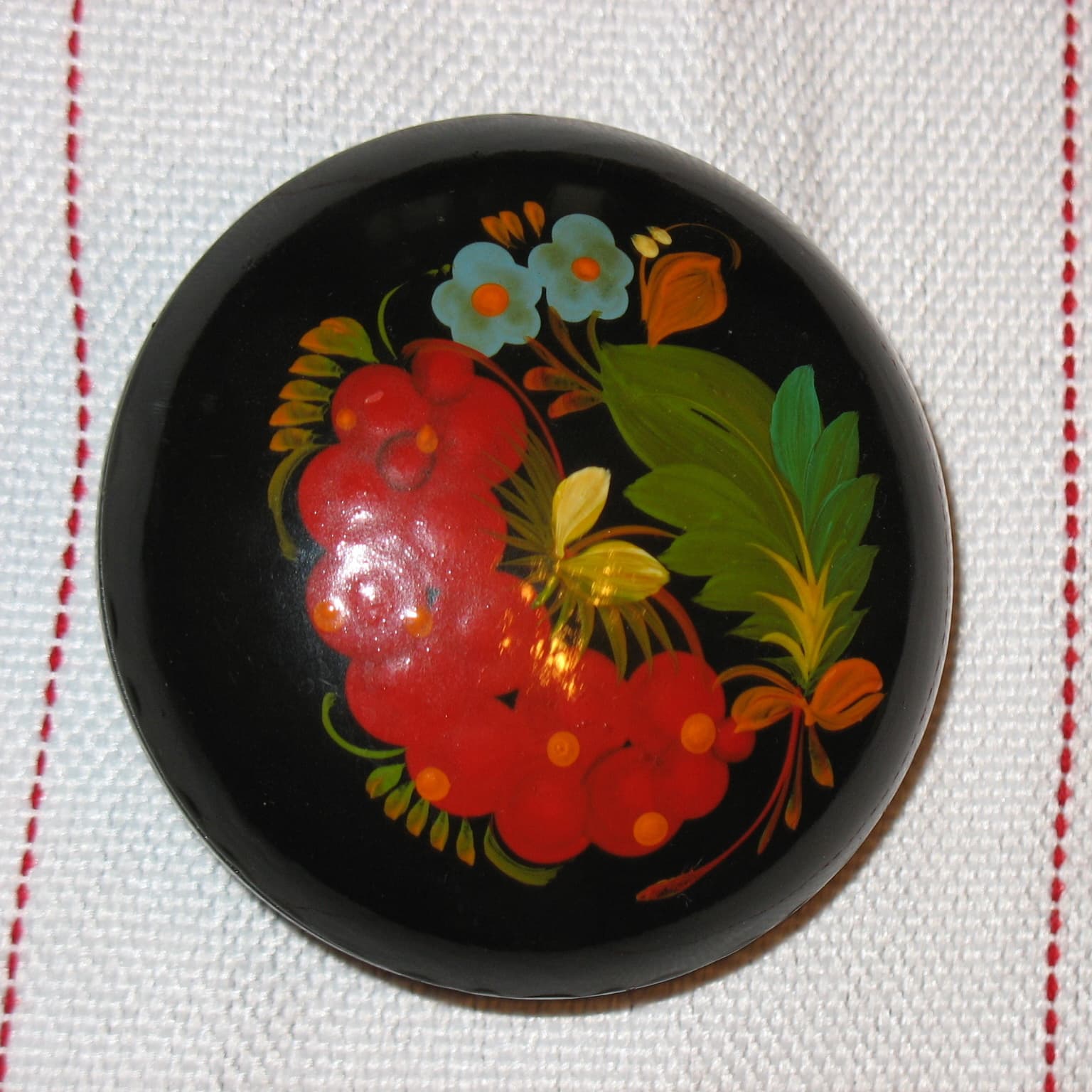
Medallions

Medallions

Small painted medallions laid on an embroidered cloth.

Say09ara · CC BY-SA 4.0 · painter unrecorded

Painted boards on a market stall

Painted boards on a market stall

Boards painted in the traditional manner, offered at a craft stall.

Say09ara · CC BY-SA 4.0 · painter unrecorded

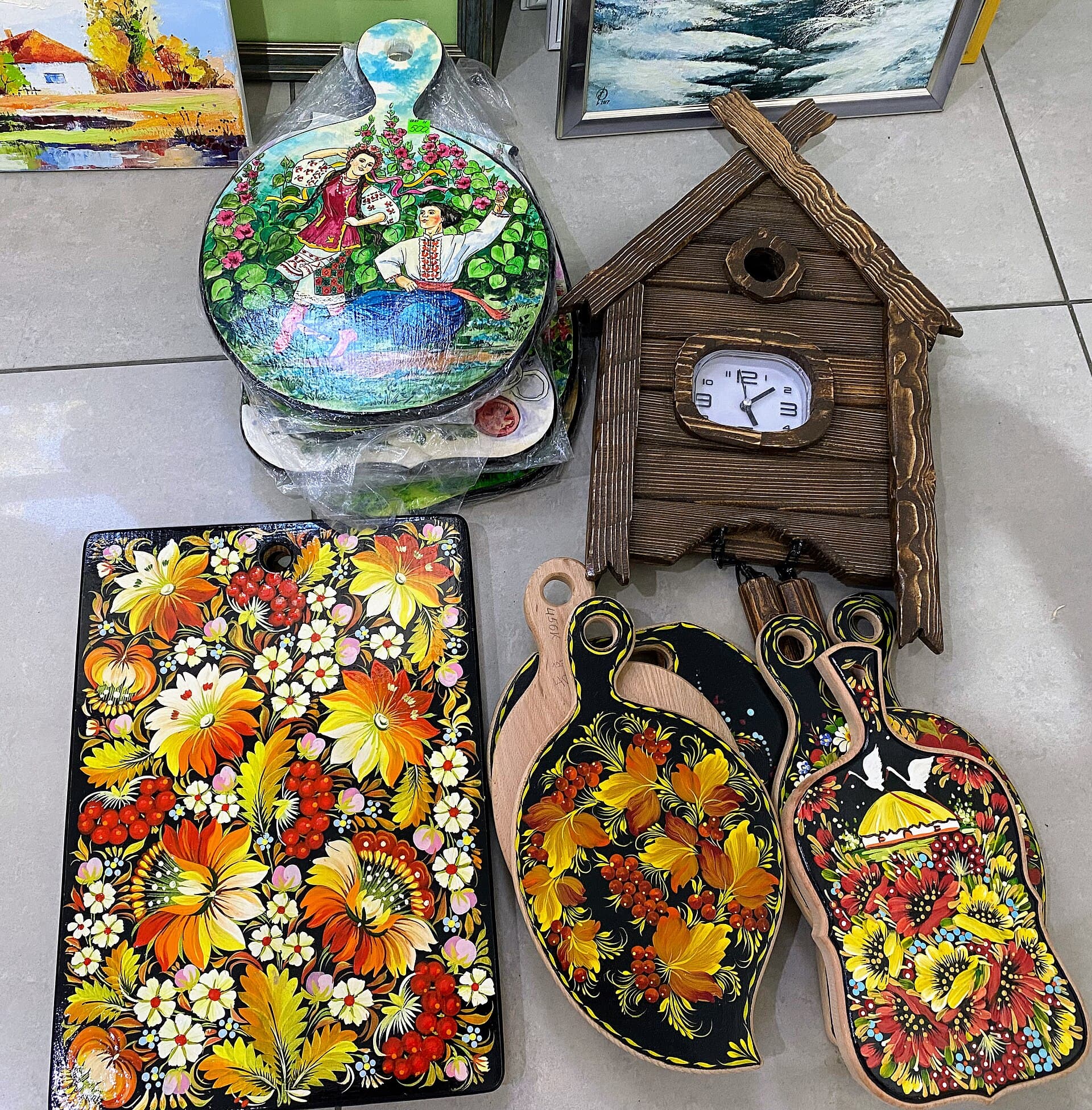
Kitchen boards, Poltava 2025

Kitchen boards, Poltava 2025

Everyday objects still carrying the painting, photographed in 2025.

Mandrivnytsia · CC BY-SA 4.0 · painter unrecorded

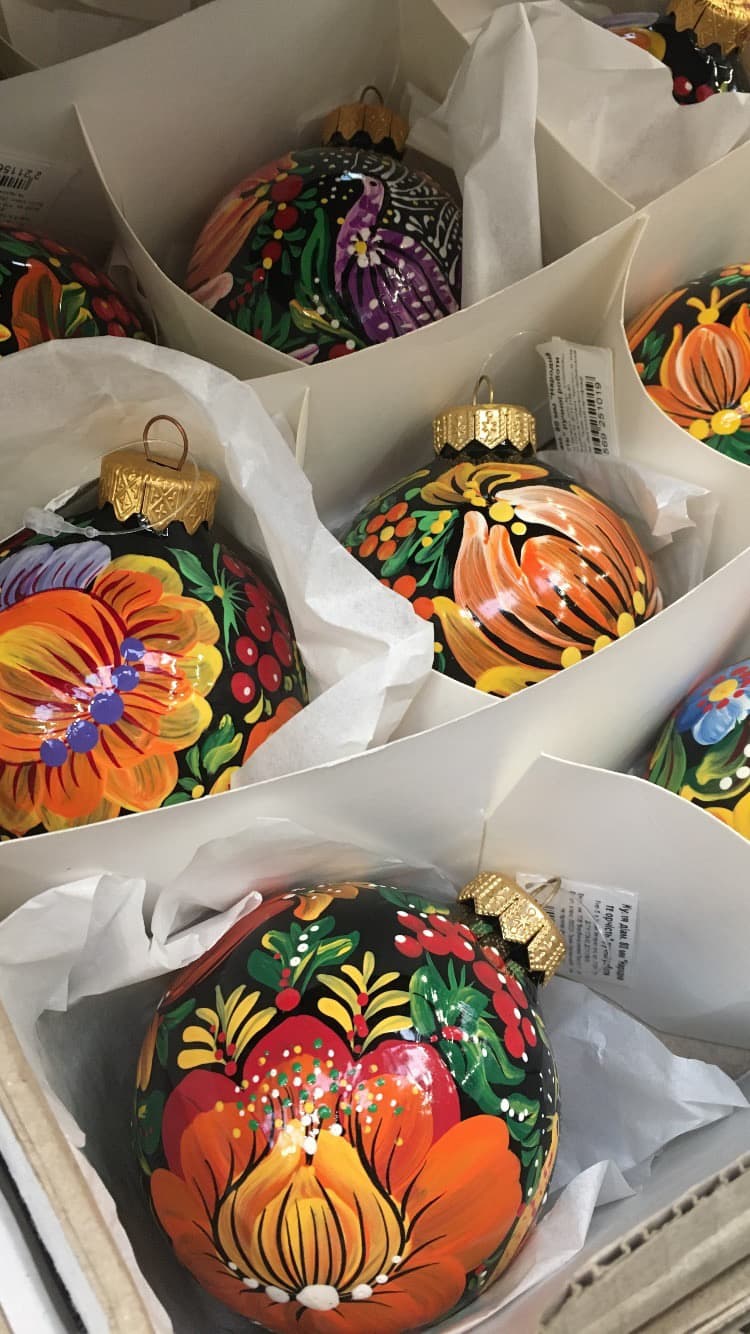
Painted Christmas baubles

Painted Christmas baubles

The painting on a seasonal object, which is how most households meet it today.

Ksu Shmalko · CC BY-SA 4.0 · painter unrecorded

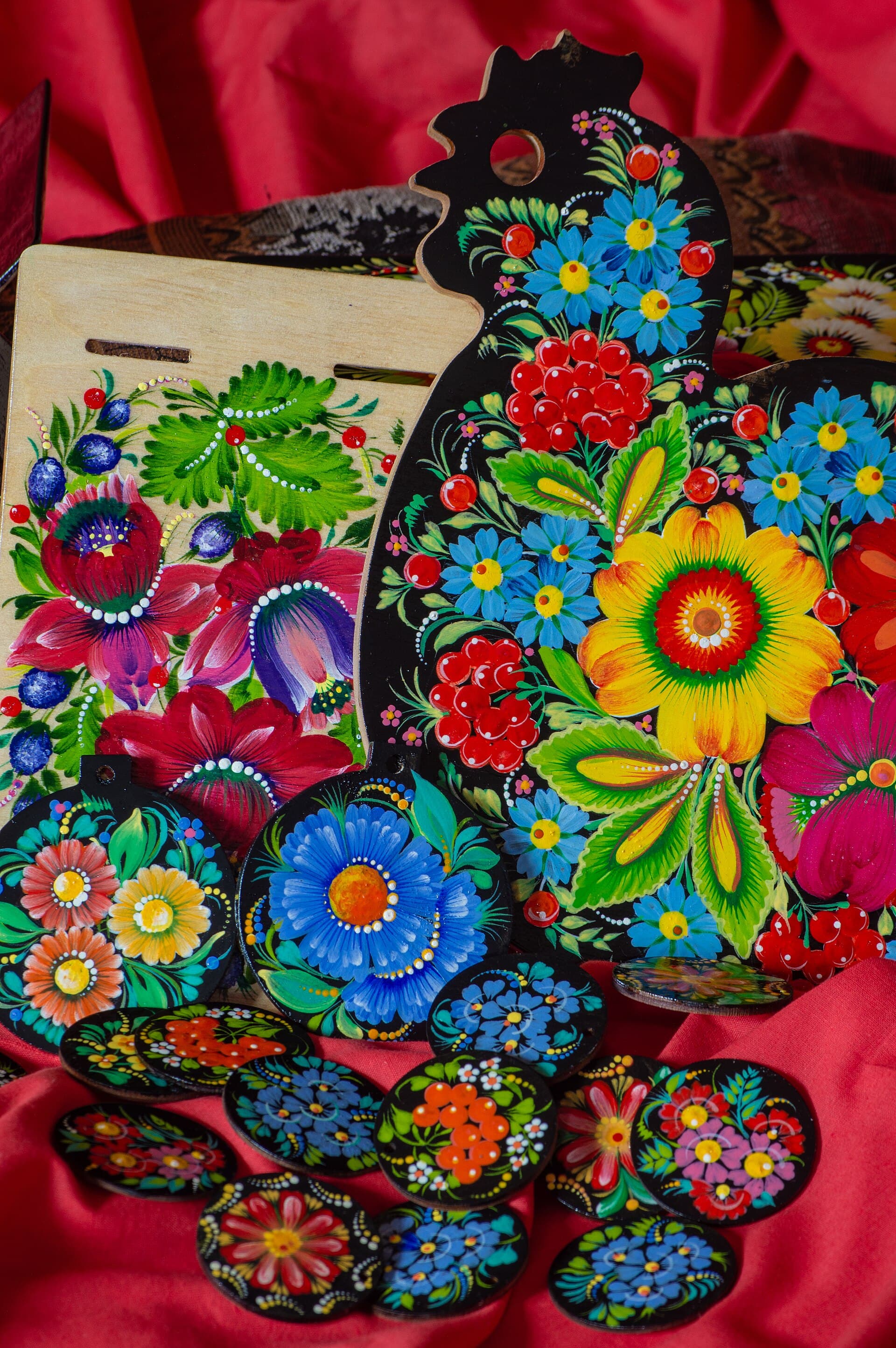
A figured board and medallions

A figured board and medallions

Work in the traditional manner on small everyday forms.

Say09ara · CC BY-SA 4.0 · painter unrecorded

Format 03, close up

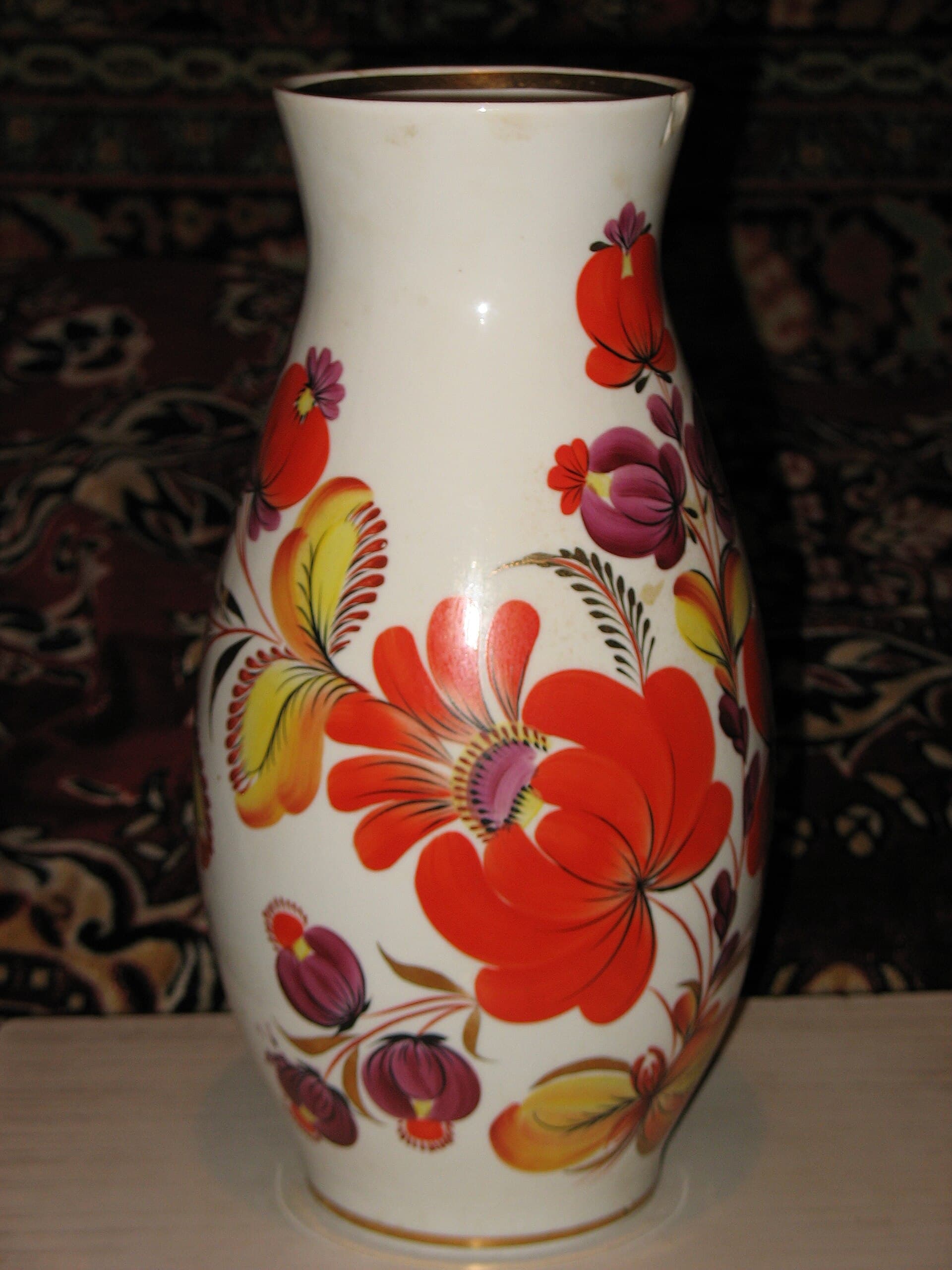
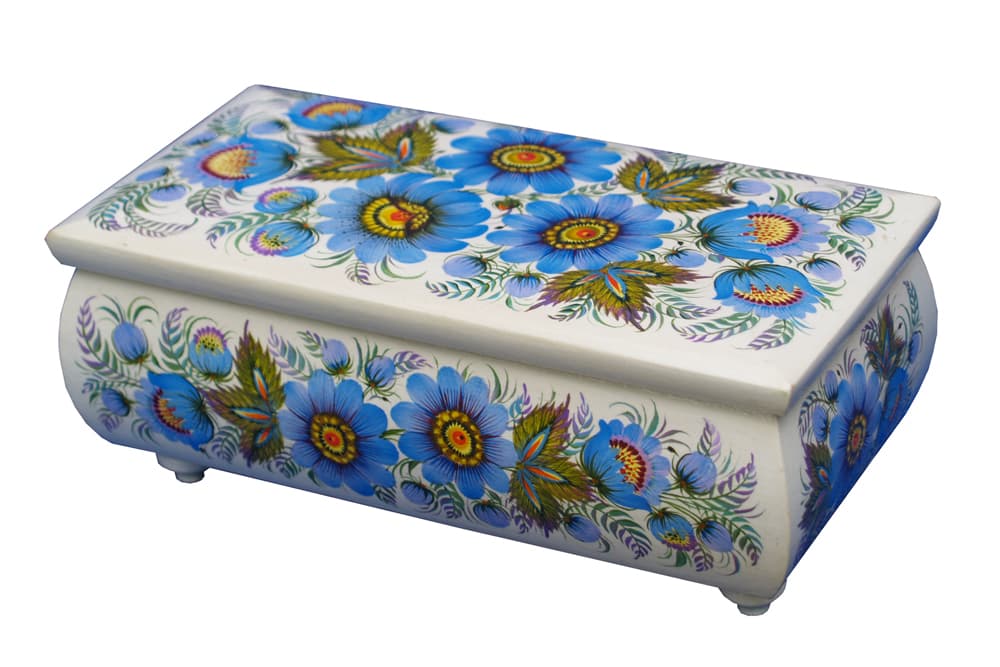
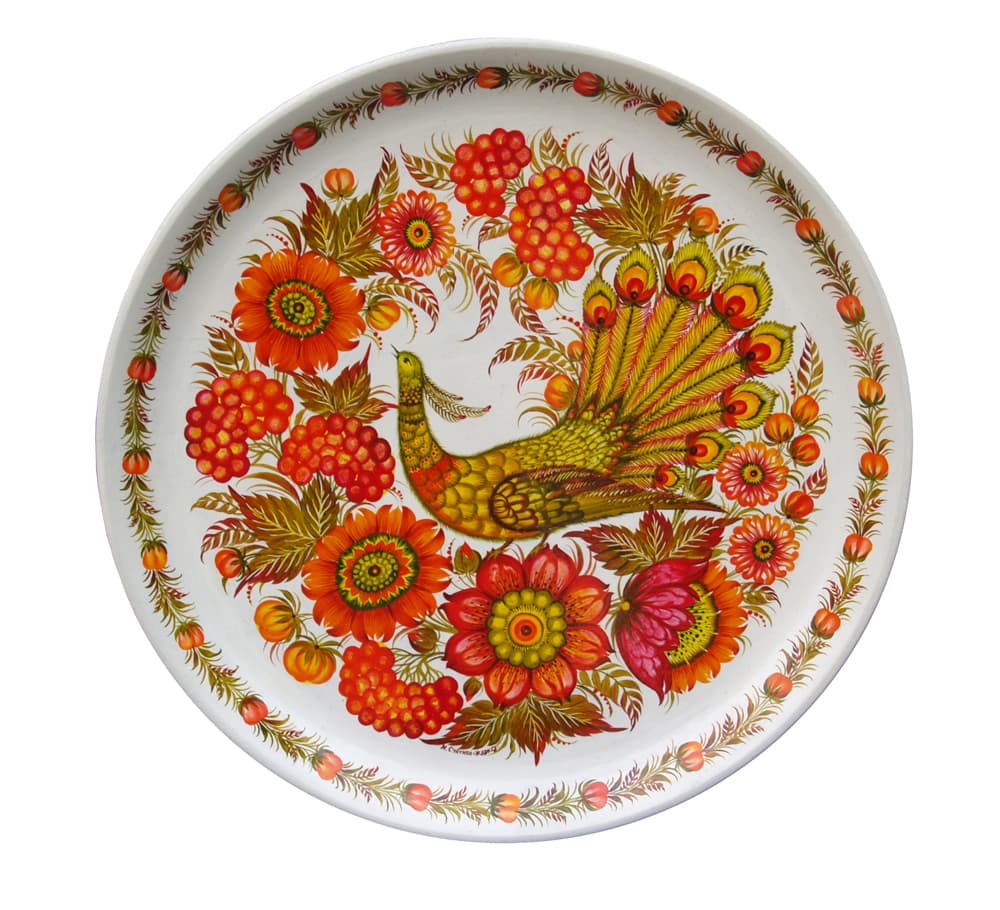
A porcelain vase, a chest, three caskets and a plate

Row 03 says the object travels to the paint. These six show the range that arrives: overglaze on porcelain, a chest worked in a cool blue, a peacock plate ringed by a running border, and three caskets whose black ground dates them to the second half of the twentieth century.

Porcelain vase

Porcelain vase

Painted by Marfa Tymchenko

Overglaze painting on porcelain, made at the Kyiv experimental ceramic-art factory in the second half of the twentieth century.

AnnaTroicka · CC BY-SA 3.0

Chest, «Blue flowers»

Chest, «Blue flowers»

Painted by Nataliia Statyva-Zharko

A painted wooden chest in a cool blue range, away from the red-and-gold the factory made familiar.

Nataliia Statyva-Zharko · CC BY-SA 4.0

Plate, «August»

Plate, «August»

A wooden plate with a peacock at its centre, ringed by a running border.

Zharko140 · CC BY-SA 3.0 · painter unrecorded

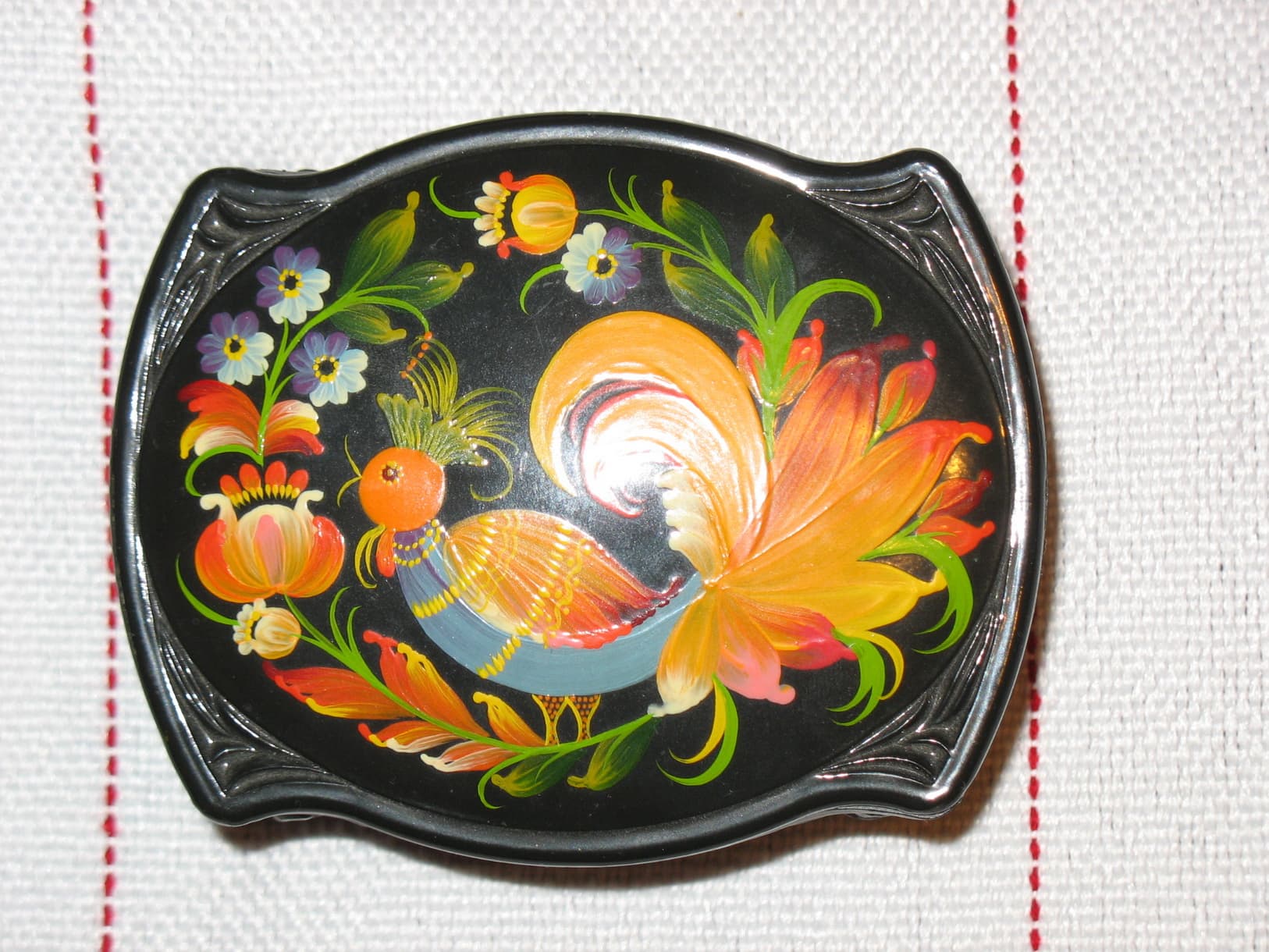
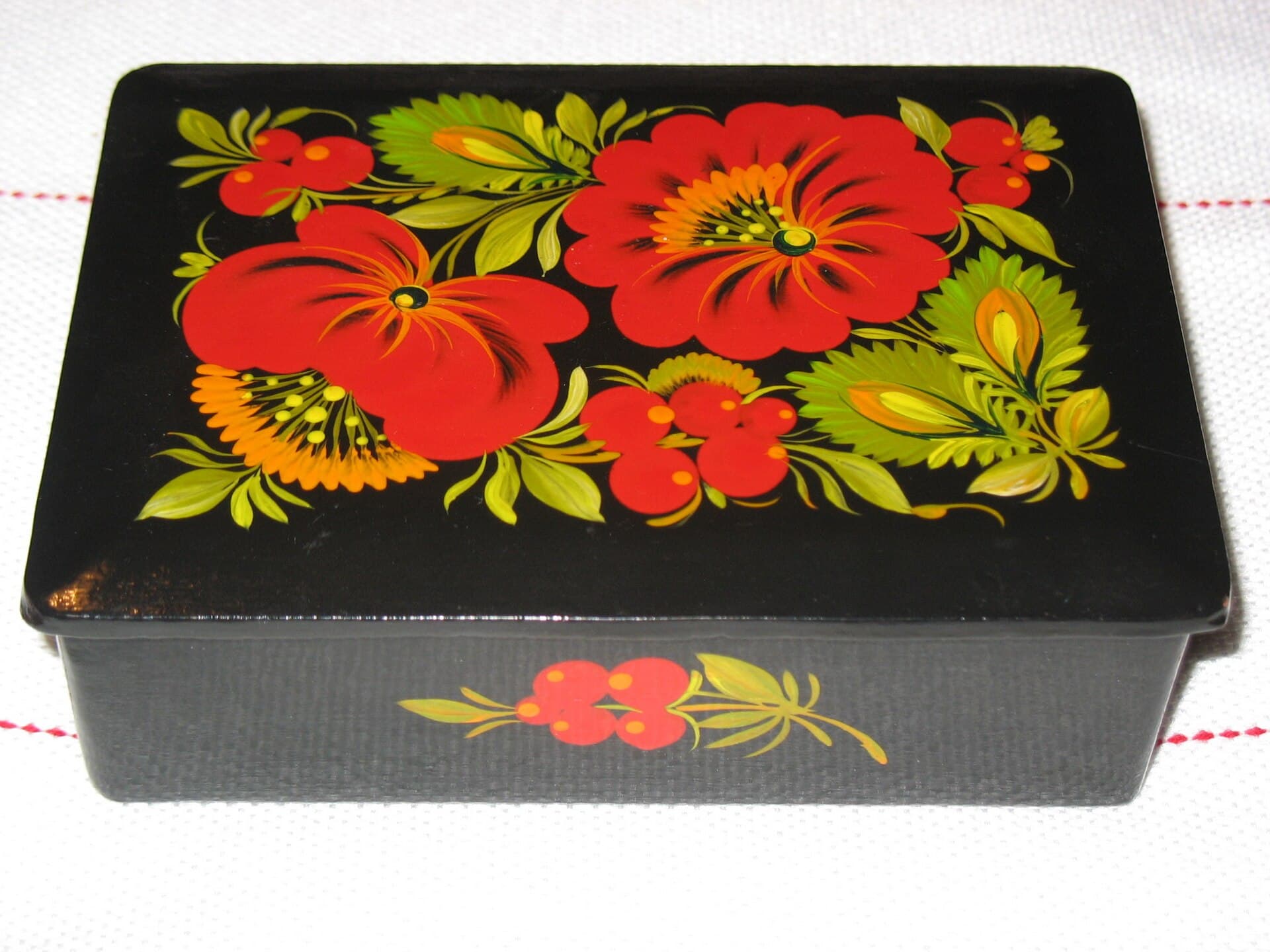
Casket with viburnum, 1980s

Casket with viburnum, 1980s

A wooden casket where the berry clusters show the finger technique clearly.

AnnaTroicka · CC BY-SA 3.0 · painter unrecorded

Casket with a bird, 1980s

Casket with a bird, 1980s

Factory work on a black ground — the look the Druzhba factory made the public image of the craft.

AnnaTroicka · CC BY-SA 3.0 · painter unrecorded

Casket on black, about 1985

Casket on black, about 1985

Ukrainian SSR production. The black ground is an industrial import and was never traditional here.

AnnaTroicka · CC BY-SA 3.0 · painter unrecorded

The finish and the pitch of the colour are chosen against the room the object goes back into. The cloth on the table, the light from the window and the things already standing there set the ceiling on how bright a composition can run, which is why step one asks about the room before it asks about the painting.

An embroidered white linen runner with a red cross-stitch border on a scrubbed wooden table, a glass jar of poppies and cornflowers standing on it in window light
The room a painted object goes back into · interpretation, photographed for this site

How a brief works

Five steps, and the paperwork comes third

Rights and credit are settled in writing before painting starts. That is the whole reason step three sits where it does.

  1. 01

    A conversation

    Half an hour about the room, the object and the people who will live with it. The sketching comes later; this call is for the light, the traffic through the space and what the painting is for.

  2. 02

    A sketch and a quote

    A drawing of the composition laid over your own photograph, a price split into painting days and materials, and a finish date. 40 per cent of the quoted price falls due on signature and holds your dates in the calendar; the balance is invoiced on handover. Moving the dates is free while the sketch is still being drawn.

  3. 03

    A written agreement

    Rights, credit, the territory and term of any reproduction, what happens to photographs of the work, and what happens if the wall is later painted over. This is signed before a brush is loaded.

  4. 04

    The painting

    On site for a wall, in the studio for an object. Petrykivka is laid straight onto the surface with nothing drawn underneath, which is why the composition is agreed at step two — the marks themselves are made without correction.

  5. 05

    Handover and the record

    The author signs the work. A record goes into the archive here: photographs, the date, the ground, the paints used and the name of the person who painted it. You get a copy of that record with the invoice.

Halyna Nazarenko, who has shown Petrykivka in more than a dozen countries, described the arrangement she moved to after years of handling everything herself (translated from Ukrainian): «an artist should only paint, and should not have to deal with all the organisational questions». The brief, the agreement, the schedule and the archive record are this platform’s job.

A pale cat-hair brush head being bound to a peeled wooden stick with linen thread on a battered workbench, small scissors and a spool of thread lying beside it
Step four: the brush is bound before any paint is opened · interpretation, photographed for this site
Four shallow ceramic saucers of thick paint — wine red, ochre, sage green and deep blue — beside a jar of cloudy water and a spotted rag on a dark studio table
Step two: the paints counted into the quote · interpretation, photographed for this site
A cracked egg yolk in a white dish next to a heap of ochre powder and a stone muller on a grinding slab, a torn sheet of handmade paper underneath
Yolk and ground earth, the binder the trade used before tubes · interpretation, photographed for this site

Licensing, honestly

What a brand may do with a painted pattern

A licence here is narrow on purpose, and it is written down before the painting exists.

A licence covers

The products named in the agreement, in a named territory, for a named term. The painting is delivered as a photograph of hand-painted work at an agreed resolution, with the author credited on the product and in the campaign around it. The fee starts at CAD $1,500 for one product family in one territory for one year, and 5 per cent of net sales runs alongside it for as long as the products are on sale. Renewal is a new conversation with a new fee.

A licence never covers

Sub-licensing it onward. Altering the composition. Cutting a motif out to sit on something else. Registering any part of it as a trademark. Using it as training data for an image model.

The name of the tradition is separate from any of this. Ukraine registered “Petrykivka painting” (Petrykivskyi rozpys) as a geographical indication on 26 October 2020 — registration № 3121, for souvenirs, tableware and fast-moving consumer goods in Dnipropetrovsk Oblast. A licence from one painter carries no claim over that name.

The name travels with the work

Valentyna Panko, daughter of Fedir Panko and founder of his museum in Petrykivka, put the distinction the way the trade has always put it (translated from Ukrainian): «I believe the logo belongs on mass-produced souvenirs, and the signature on authored works, because artists should be known». A trademark says the place. A signature says the hand.

A “Petrykivka” trademark designed by Liudmyla Horbulia was registered in January 2013 and given to the village community as a mark of authenticity. It marks the place. Naming the painter is the other half of the job, and the trade skips it routinely: the Kytytsia catalogue runs from 160 to 7,900 ₴ and names no artist on a single listing.

Printed and generated imitations

A digital Petrykivka download sells for $5.26 and print-on-demand paper plates for $15.84, both observed on 16.09.2026. Heritage Crafts in the United Kingdom classifies Petrykivka as Endangered, and cheap imitation and digital reproduction sit among the pressures it names. Panko heard the demand for it in person (translated from Ukrainian): «Sometimes people come and tell us they have no need for our artistry, they just want something bright, busy and cheaper».

Ornament on this site is published as the work of a named author, with the ground, the paints and the date recorded beside it. An image model can produce something that reads as Petrykivka from across a room and fails every test a painter uses up close. The tests are written out on the tradition page, and a licence signed here gives no one permission to skip them.

The 2013 trademark and its donation to the village community are recorded in the English Wikipedia article on Petrykivka painting; that one claim rests on a single source, and it is flagged here as such.

A tall stack of deckle-edged handmade paper on a white table by a garden window, one sheet standing upright on top, pink ranunculus and eucalyptus lying beside it
A licensed pattern starts as one of these sheets, painted once by hand · interpretation, photographed for this site
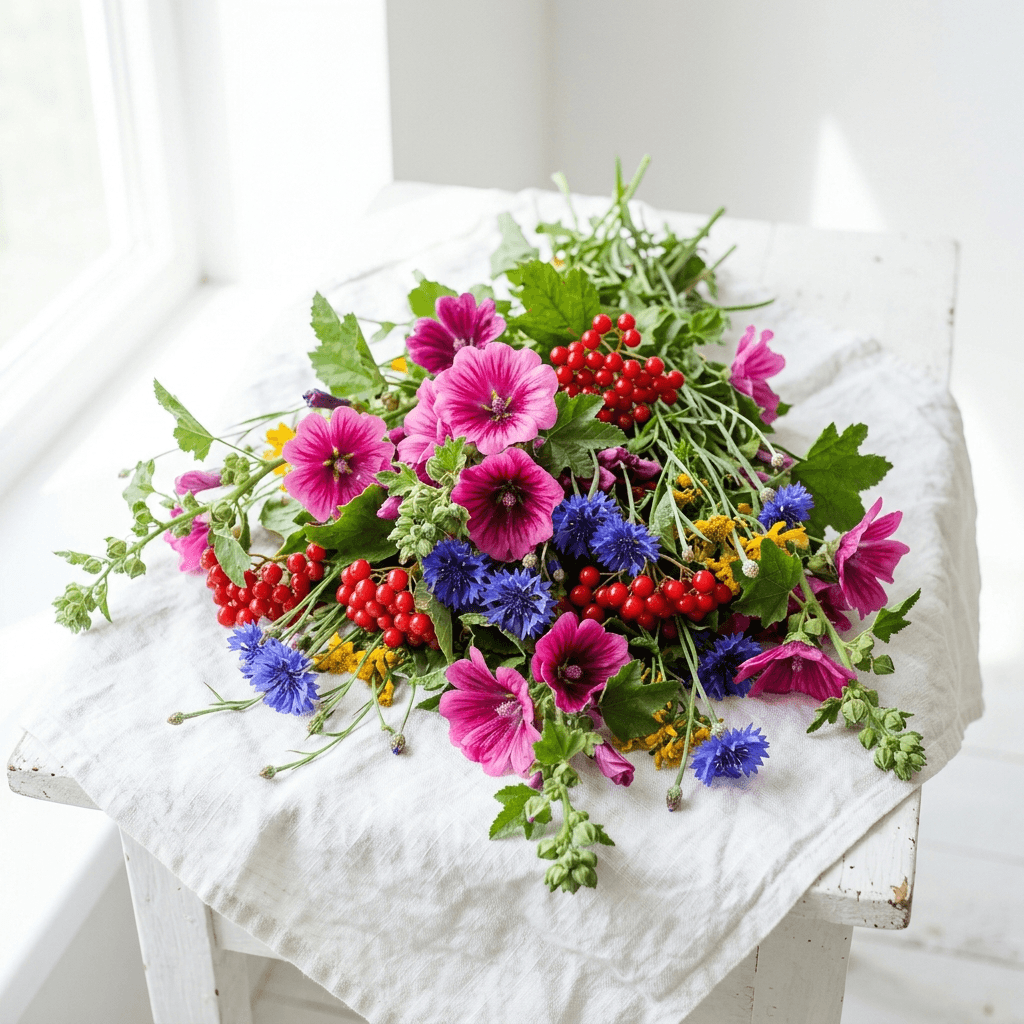
Cut mallow, cornflowers, tansy and clusters of red kalyna berries spread over white linen in bright daylight
Mallow, cornflower and kalyna, where the motifs come from · interpretation, photographed for this site

Start a brief

Tell us about the surface

Measurements, what it is made of, the light it sits in, and the date you need it finished by. A reply comes from the person who would paint it.

Writing directly works just as well: hello@petrikivka.com. Oksana works out of the Greater Toronto Area, and travel within 150 km of it sits inside the quoted price. Further out than that, travel and accommodation are charged at cost, with the figure named in the quote before you sign. A reply arrives within 3 working days.

The corner of a whitewashed cottage room with a moulded plaster shelf, a dark clay bowl and a torn sheet of handmade paper on it, dark beams crossing overhead
A limewashed corner, the surface most wall briefs start from · interpretation, photographed for this site

Petrykivka · Oksana Pikush

Write to Oksana

What it's about