Tradition · the vocabulary
Every stroke has a name, and the name says what the hand does

Petrykivka is taught mark by mark. Learn the four strokes and you can read any composition in the tradition, tell a painted band from a printed one, and follow what a master is doing while she does it.
Before the names, the marks
Eight paintings to read the vocabulary off
Every mark defined below is already sitting in these eight pictures. Look at them now, read the list, then come back up: the comb along a leaf edge, the grain running down a stem, one petal turning from carmine to ochre inside a single stroke.
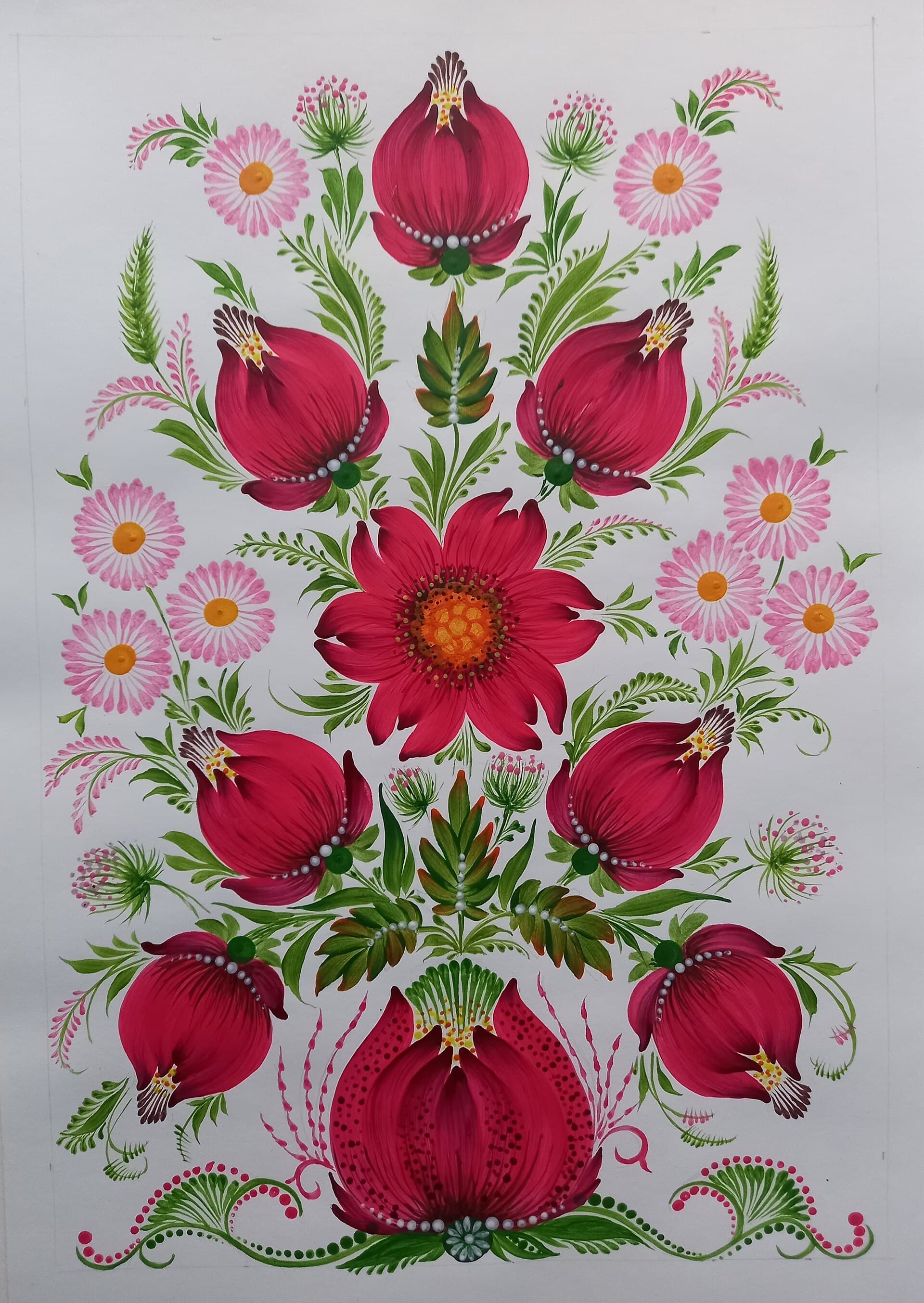
Rose vazon on white
The vertical vazon in its plainest form, on the historic white ground.
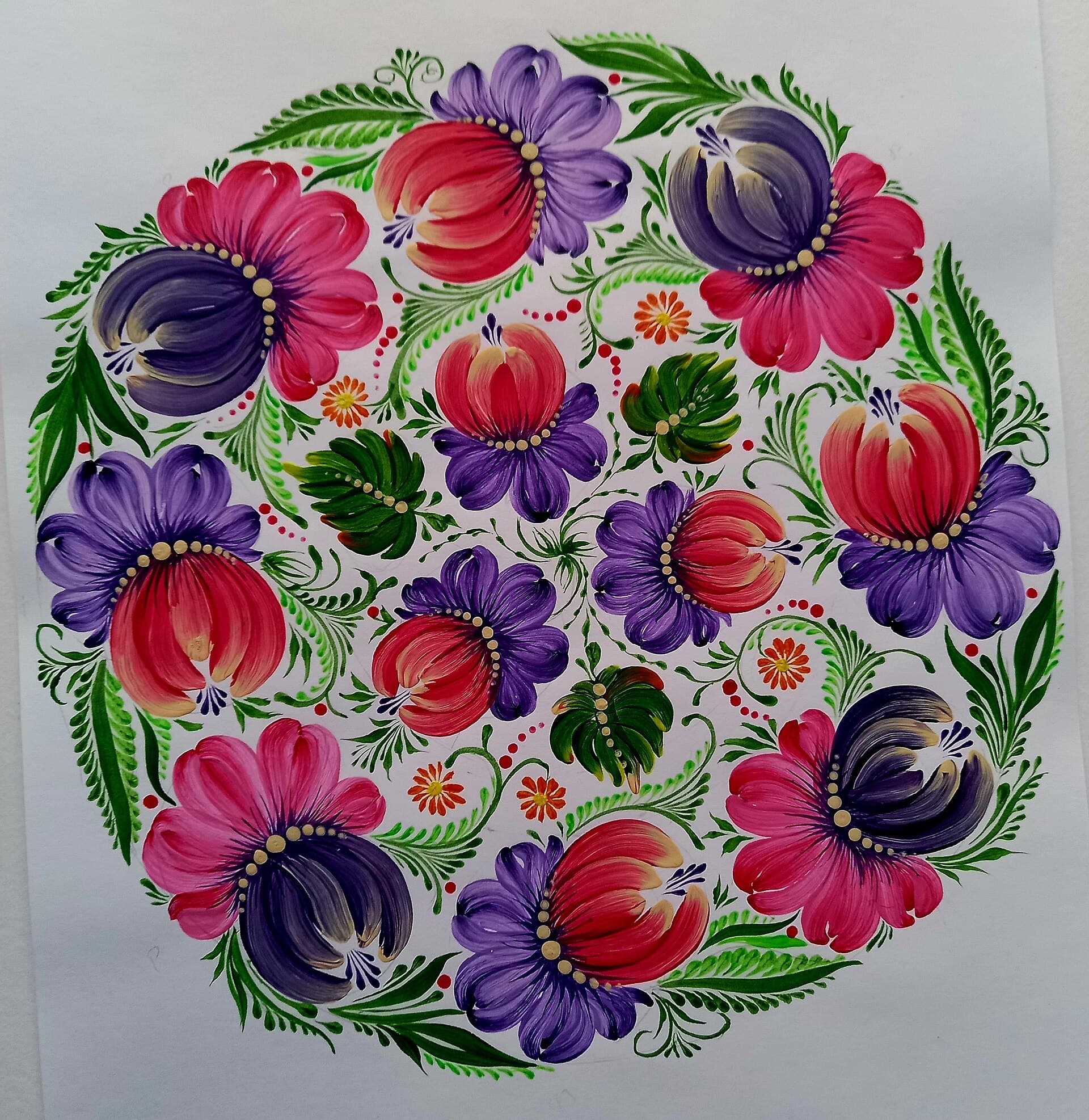
Wreath of tulips and dark blooms
A closed round composition built from alternating tilts, which is what keeps a wreath from going mechanical.
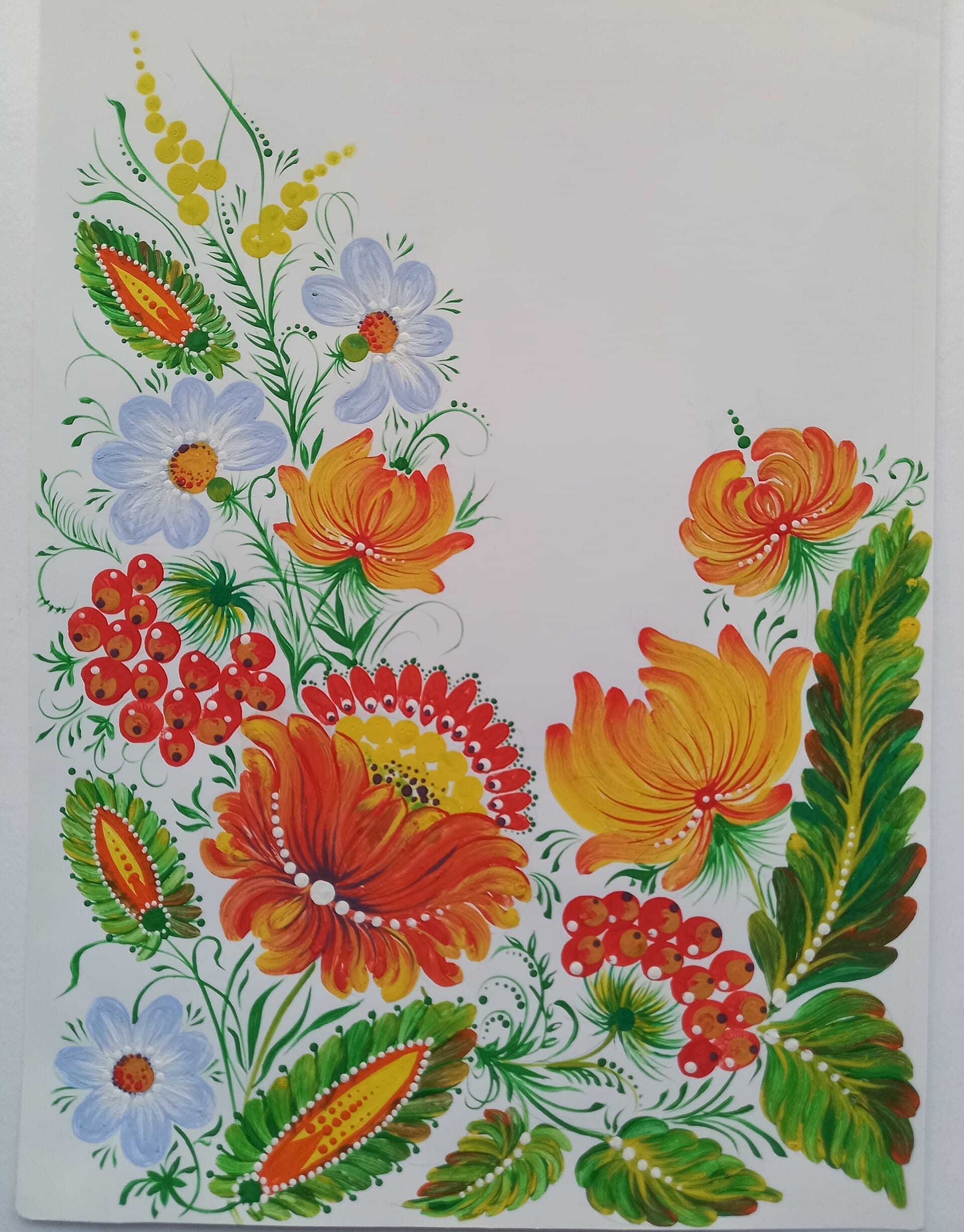
Corner spray with grasses
A corner composition, the form a painter uses on a chest lid or a door panel.
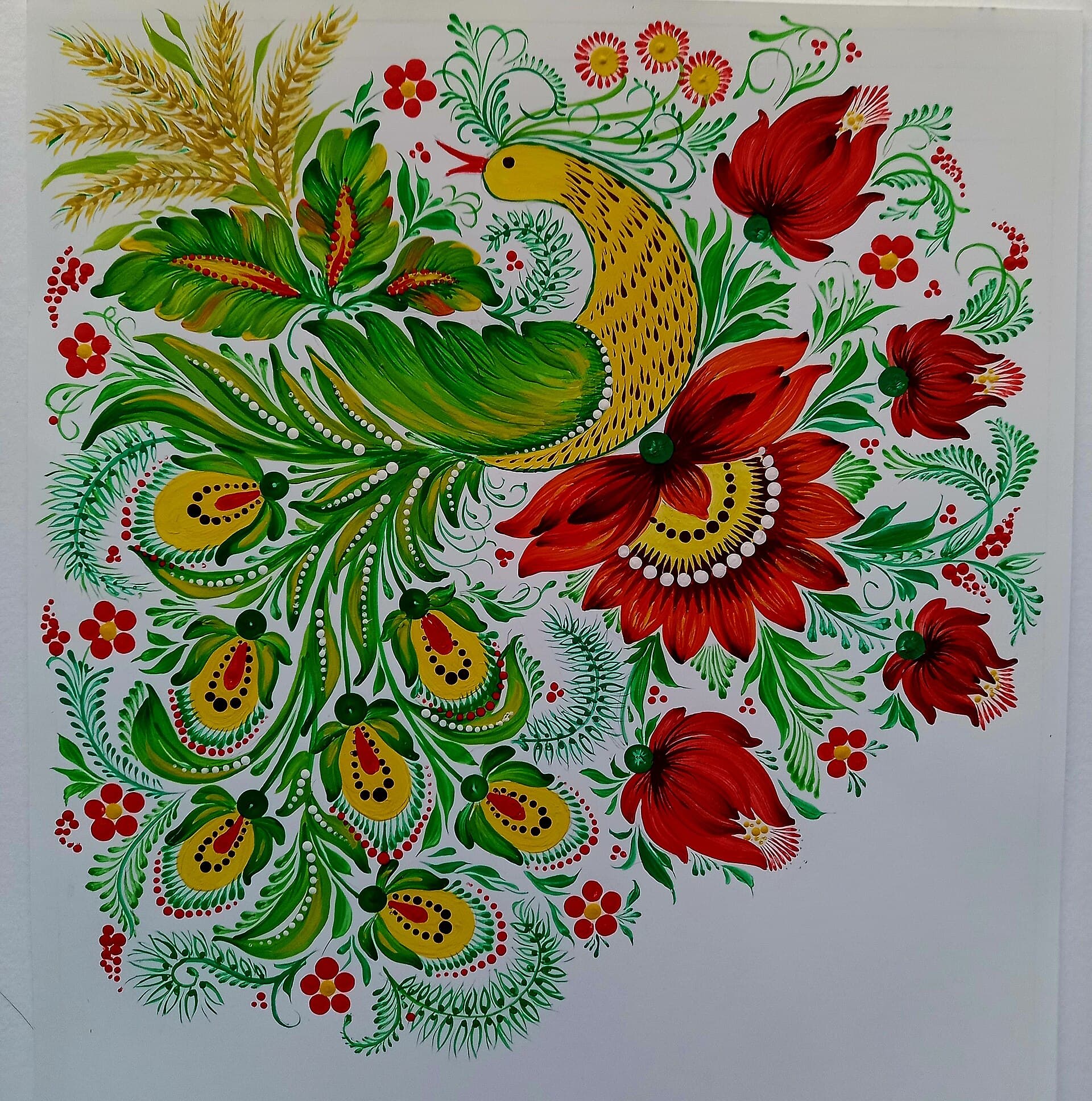
Bird in a green wave
A bird set into a single sweep of leaves, with grains ranked along every stem.
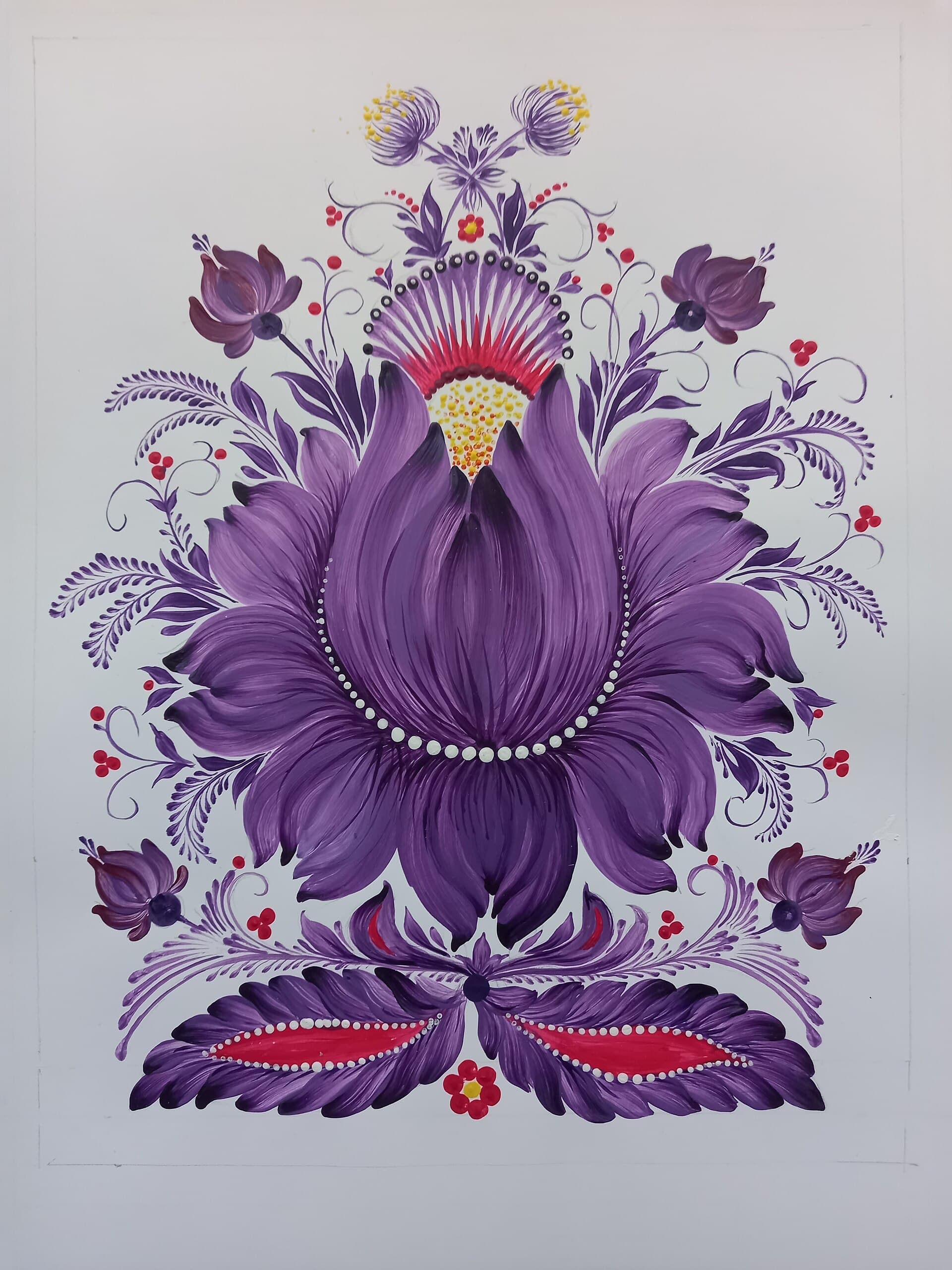
Violet crown
A single dominant bloom with beaded berries set by finger along its throat.
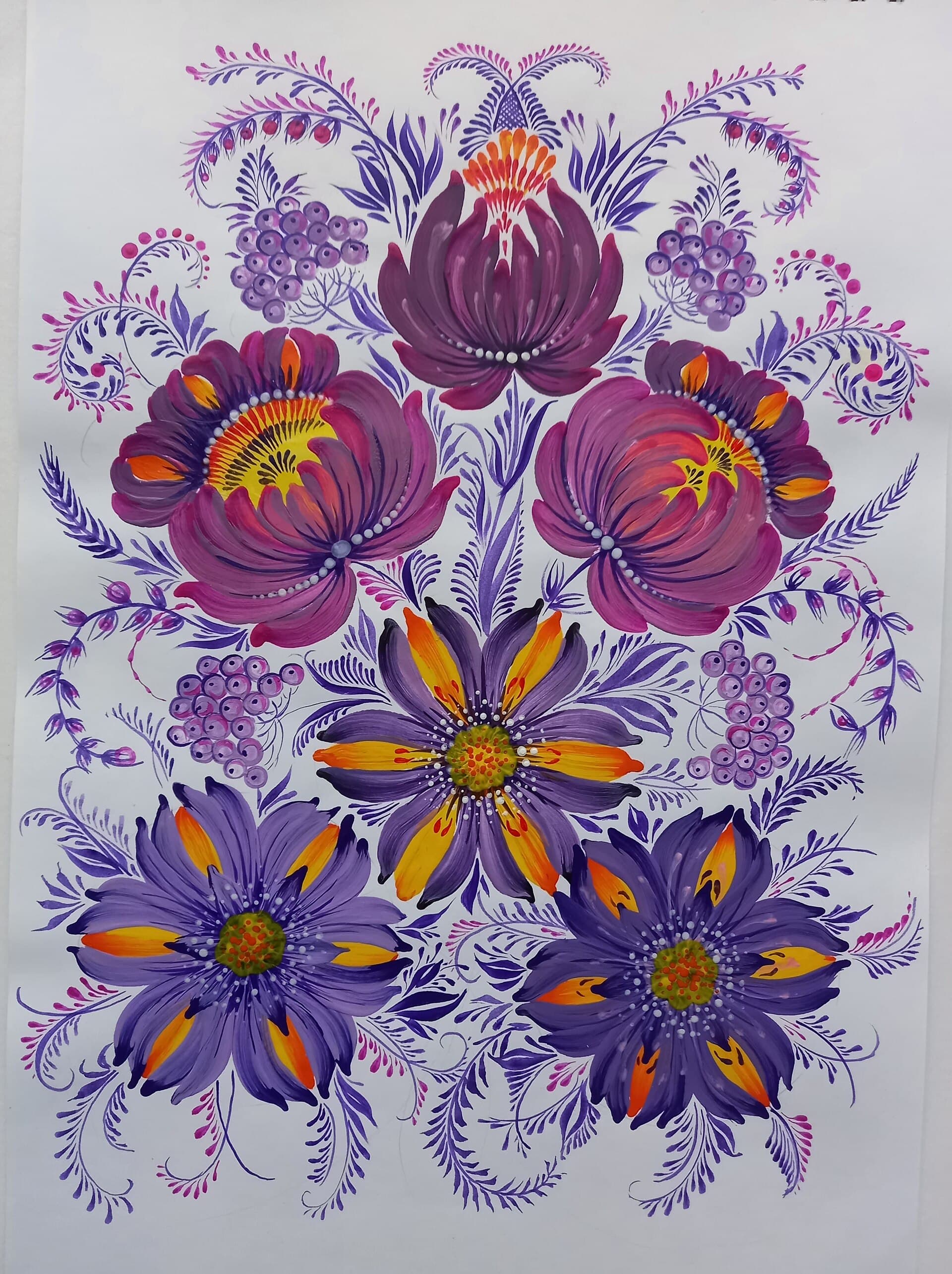
Carpet of poppies and asters
The kylymok — a field composition that fills its rectangle evenly from edge to edge.
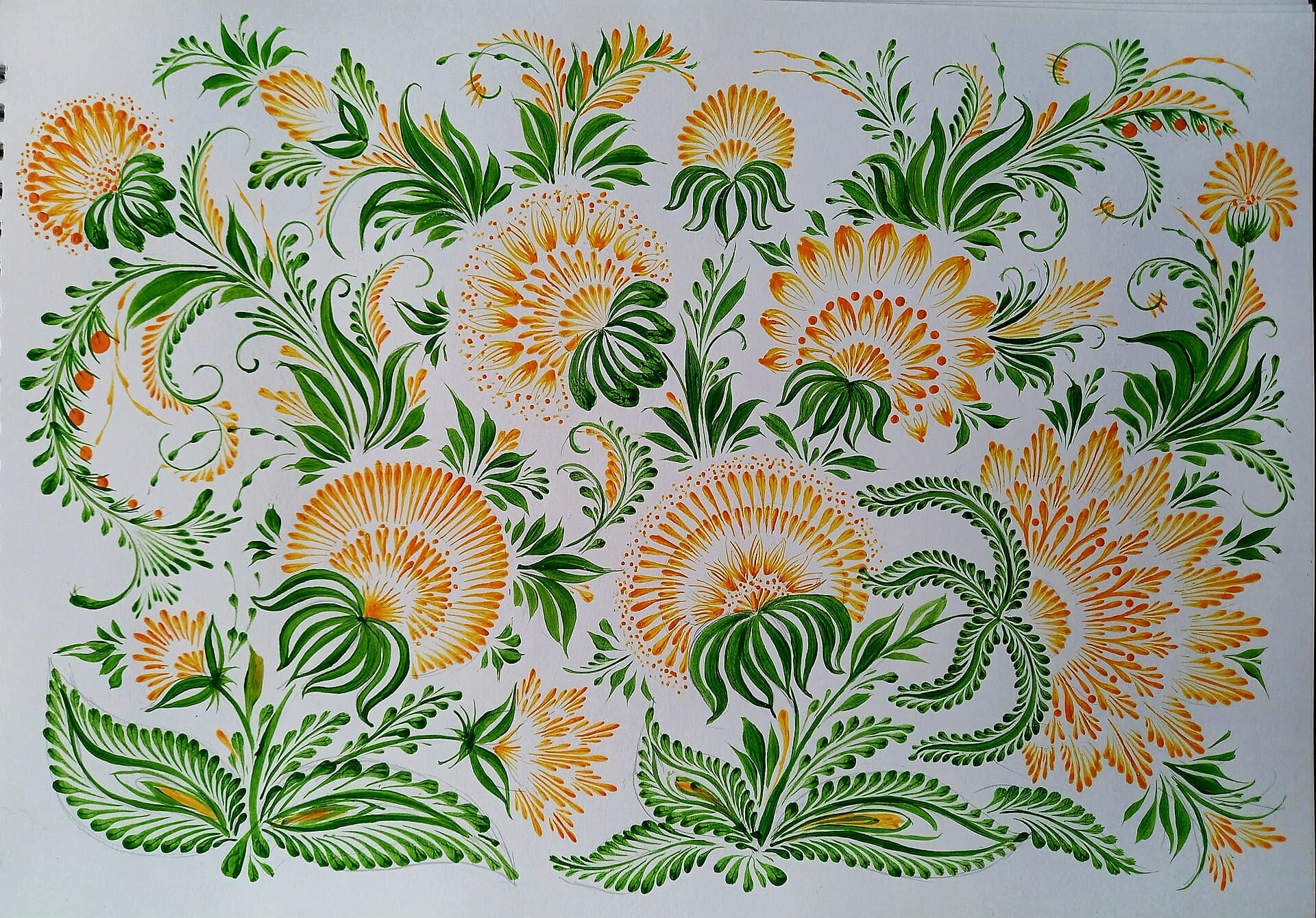
Ochre and green frieze
A horizontal band in the ochre-green range, close to what a painter would run along a wall.
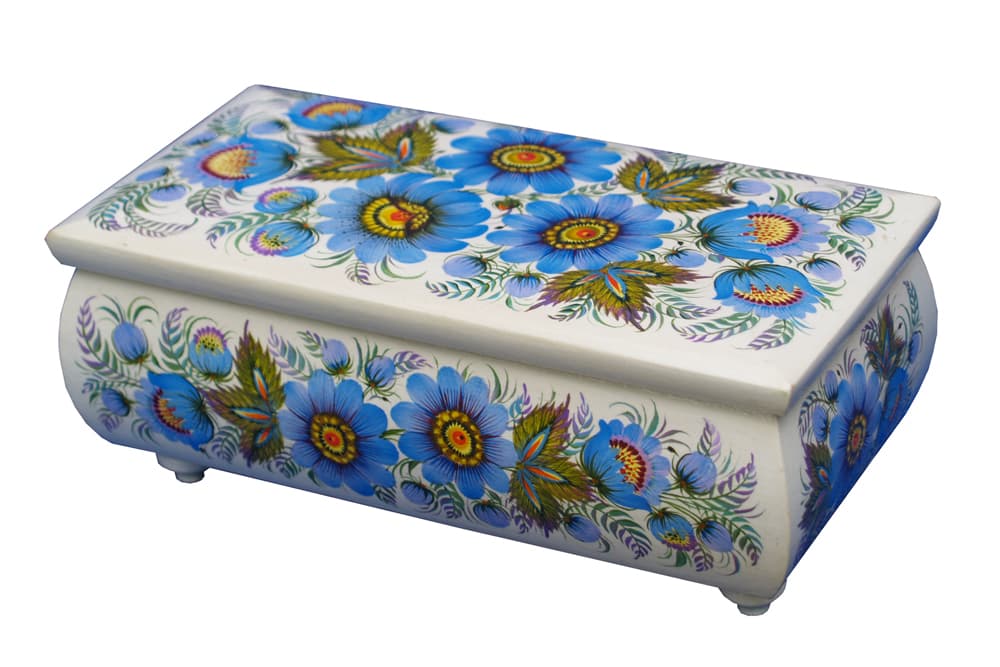
Chest, «Blue flowers»
Painted by Nataliia Statyva-Zharko
A painted wooden chest in a cool blue range, away from the red-and-gold the factory made familiar.
5 entries
The strokes
Four marks carry the whole tradition. A student practises them on a palette until the pressure curve happens without thinking.
hrebinets
the comb
Land the brush with pressure first, then lift and drag it away into a hair-thin whisker. Lay several side by side and the row of tapering teeth reads as a comb.
Also written hrebinchyk.
zerniatko
the little grain
The exact inverse of the comb: touch lightly, then press. Rank them along both sides of a stem with the points outward and the figure becomes an ear of grain, which is where the name comes from.
kryvenke zerniatko
the crooked grain
The same grain laid on an arc, which needs the fine brush. Two of them joined at their rounded ends, whiskers springing from one point, make a half-open bud.
horishok
the hazelnut
Two curved comb-strokes set facing each other like brackets, with the gap between them filled by a grain. The closed form reads as a hazelnut. This is the first element a student builds rather than simply lays down.
perekhidnyi mazok
the transition stroke
A dry brush takes colour A into its body and colour B on the tip, and one pull lays a continuous gradient across the mark. This is the most identifiable move in the whole tradition, and the hardest thing for a printed or vector imitation to reproduce.


7 entries
The elements
Forms assembled out of those marks. Several of them exist nowhere in nature.
tsybulka
the little onion
Built from elongated crooked grains. The name comes from its resemblance to the imprint of an onion cut in half. Artists call it the emblem of the whole art, and there is a monument to it in the centre of Petrykivka.
kucheriavka
the curly one
A flower whose signature is a twisted, curled comb-stroke. It belongs to the group of Petrykivka flowers that have no counterpart in nature.
petushynnia
the fine tracery
The web of very fine lines that, in the painters' own words, gives a composition its transparency and weightlessness. This is what the cat-fur brush exists for.
The name stays in transliteration. The English word “rooster” is a false friend here: petushynnia names the linear web of fine lines, and the bird has no part in it.
pupianok
the half-open bud
Two crooked grains joined at their rounded ends, with the whiskers issuing from a single point.
lystok
the leaf
The characteristic leaf is an acanthus form, which Petrykivka masters call paporot (fern). The local name and the botany part company, and the local name wins.
kalyna / yahoda
viburnum / berry
Set with the fingertip, in clusters. The berry is a technique of the hand rather than a stroke of the brush.
kolosok
the ear of grain
The figure that appears when grains are ranked along both sides of a stem.
2 entries
The compositions
The arrangements the elements are gathered into, on paper, on an object or along a wall.
bihunets
the runner
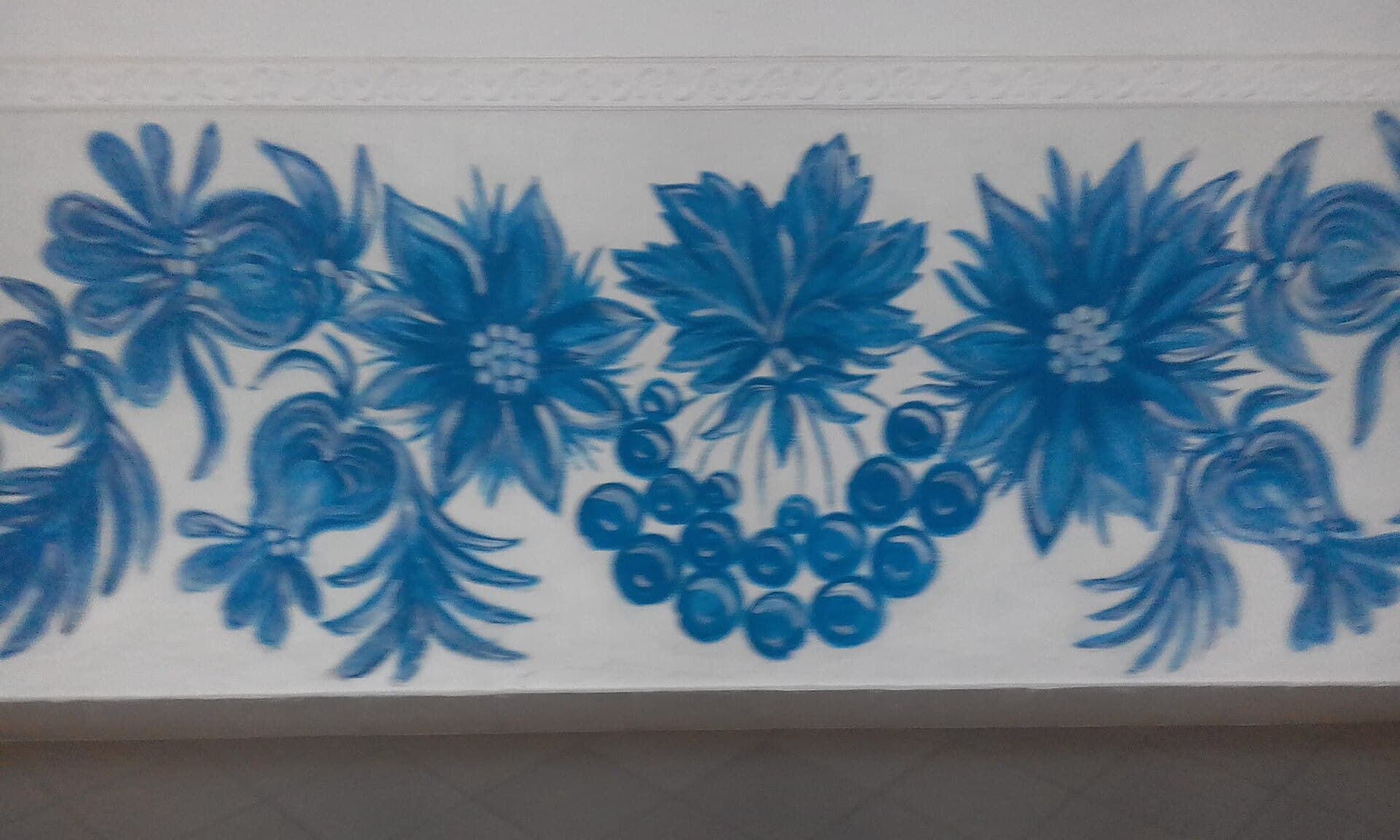
Flowers set at equal intervals with the tilt changing each time, joined by a light wavy line, with long-whiskered leaves on either side. The changing tilt is what keeps a border from going mechanical, and it is a reliable way to tell a painted runner from a repeated vector one.
In architecture the same band becomes the frieze, known in the village as lyshtva.
vazon
the vase
One of the main compositions alongside hilochka (the sprig), buket (the bouquet) and kylymok (the little carpet): a growing arrangement rising from a vessel, filled out with the smaller elements.
The order it is taught in
What a beginner does, in sequence
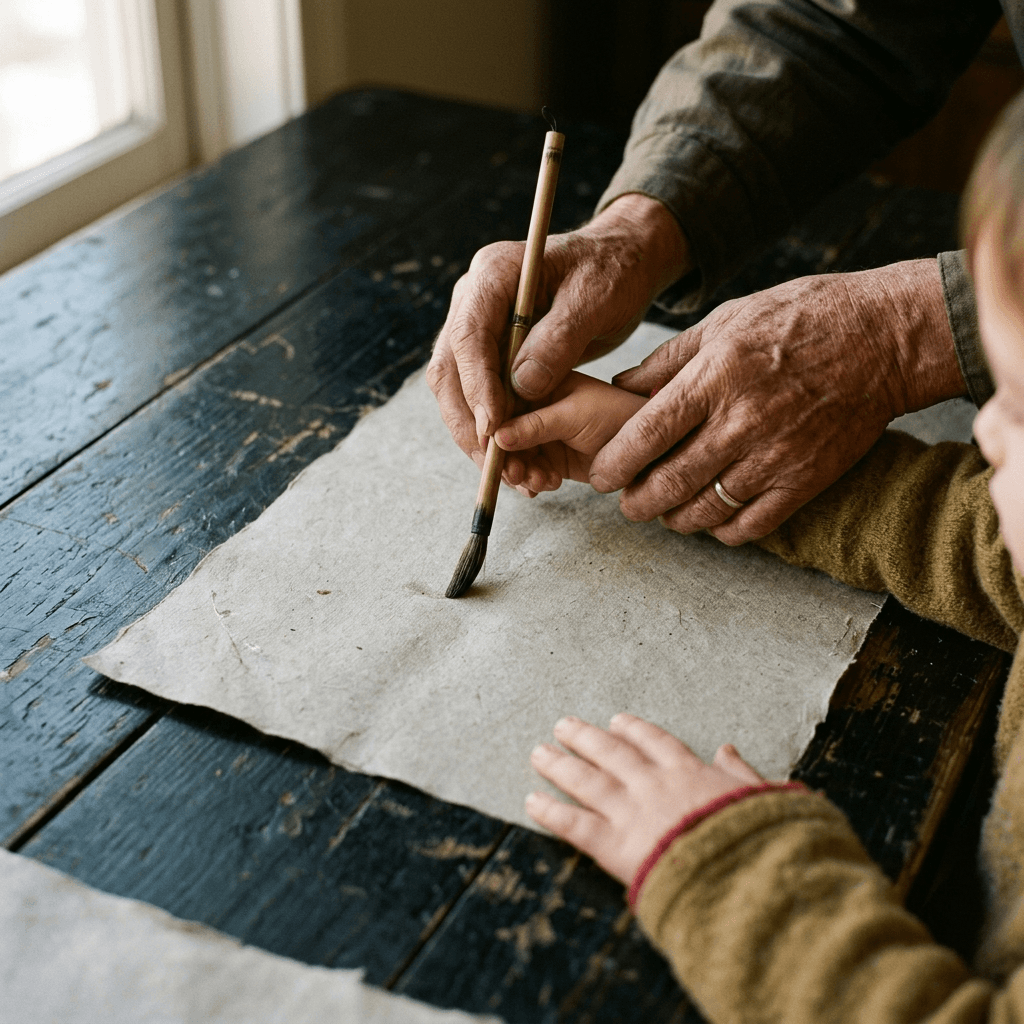
This is the classroom order used in Ukraine, and it is the order the lessons here follow.
- 01zerniatko (the little grain) on a palette, until the pressure curve is automatic
- 02hrebinets (the comb), the same stroke run backwards
- 03kryvenke zerniatko, the grain laid on an arc
- 04horishok (the hazelnut), the first compound element
- 05perekhidnyi mazok, one brush carrying two paints
- 06travychka (the grass), kolosok (the ear of grain), pupianok (the bud), yahoda (the berry)
- 07lystok (the leaf), tsybulka (the little onion), kucheriavka (the curly one) and the named garden flowers
- 08bihunets (the runner), the first whole composition


The hunting ground
Find every named element in these 26 pictures
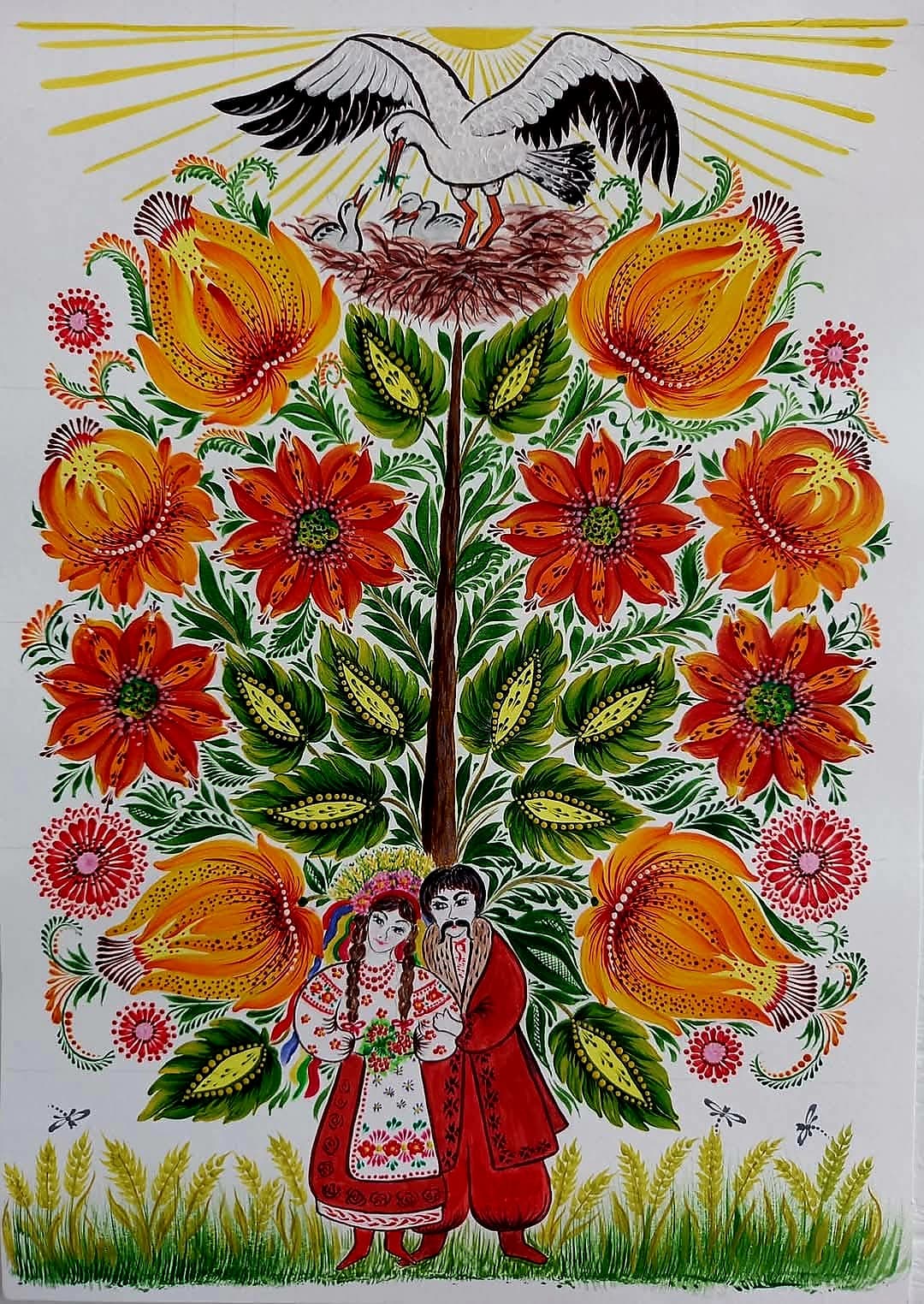
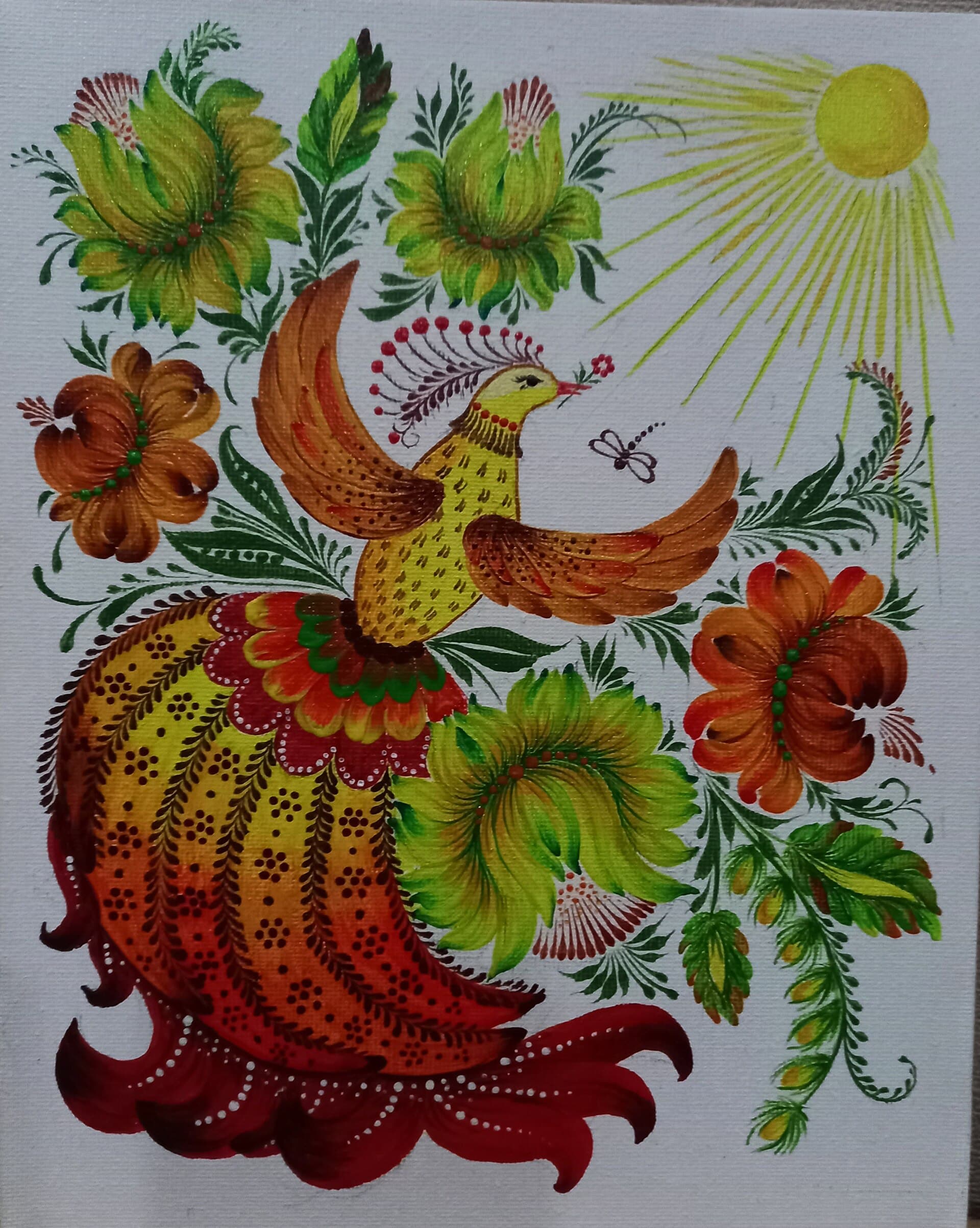
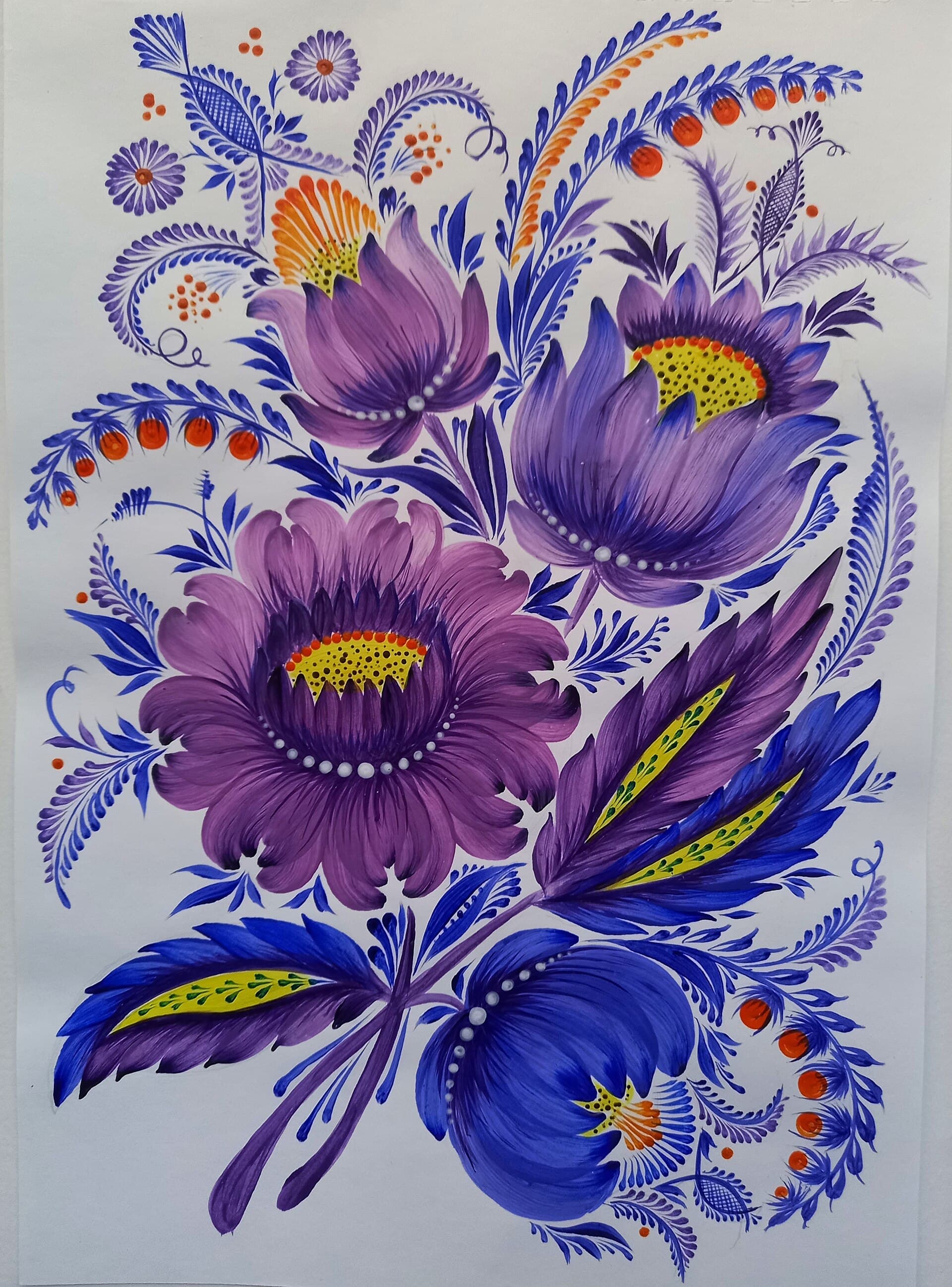
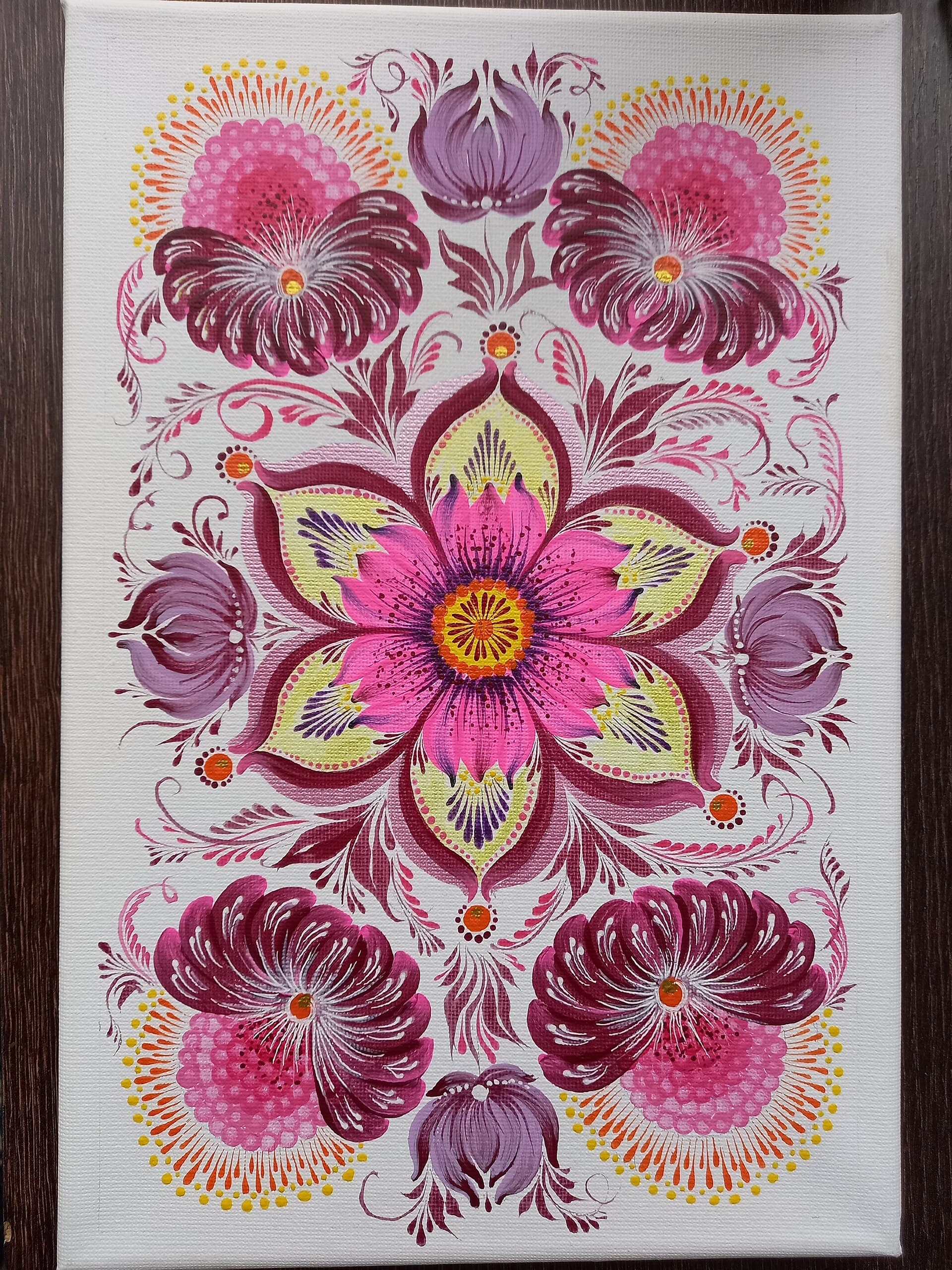
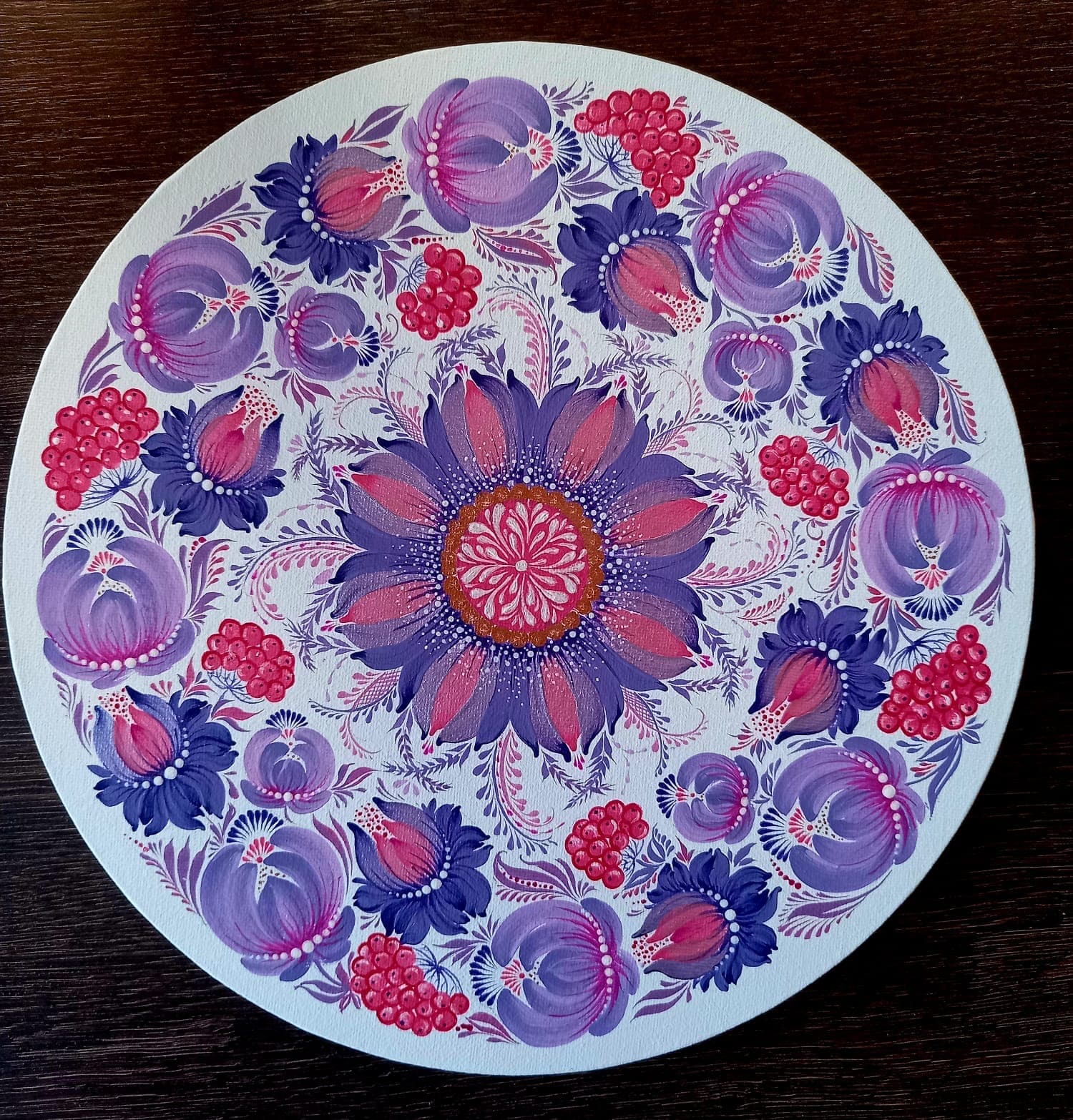
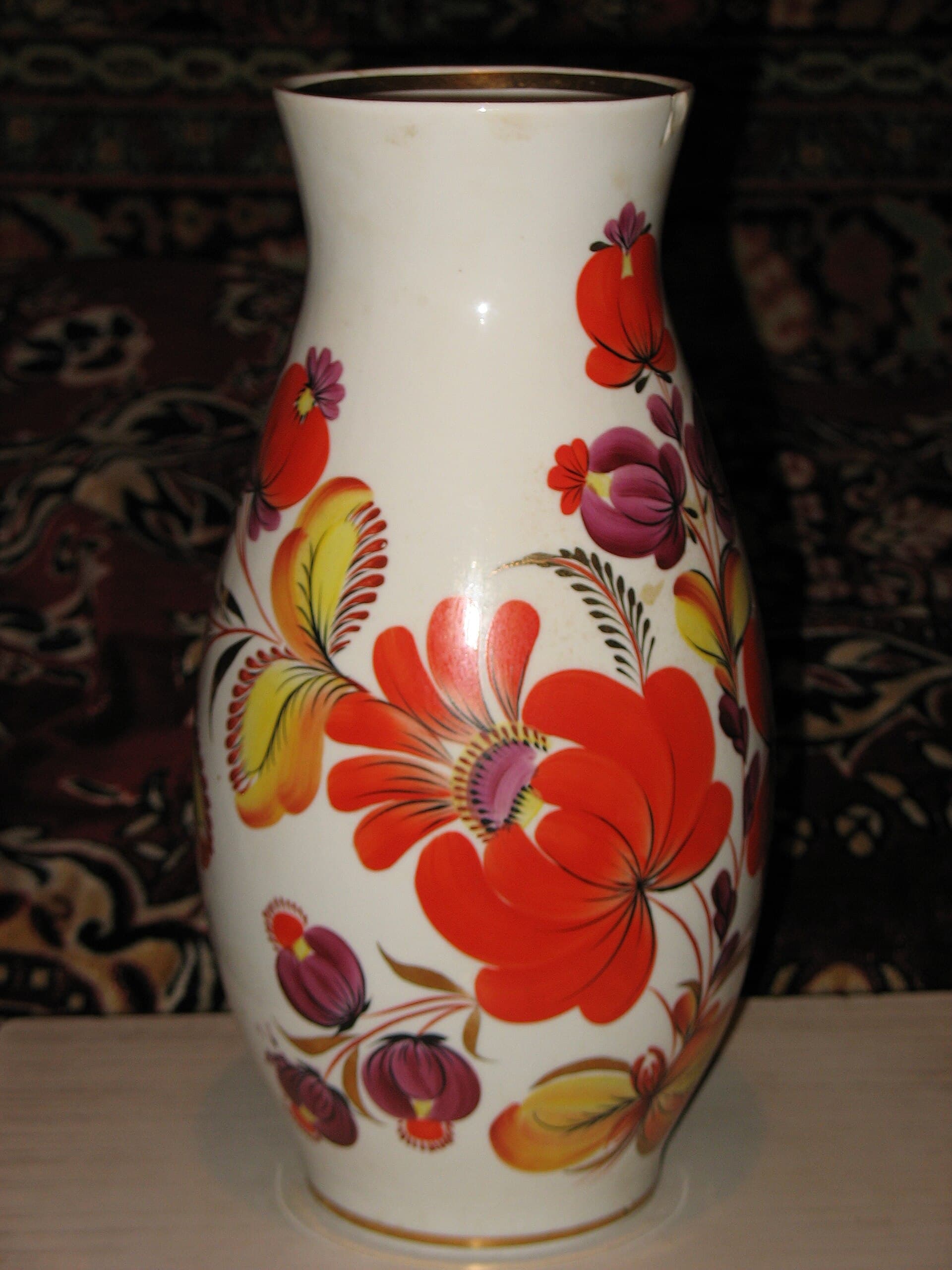
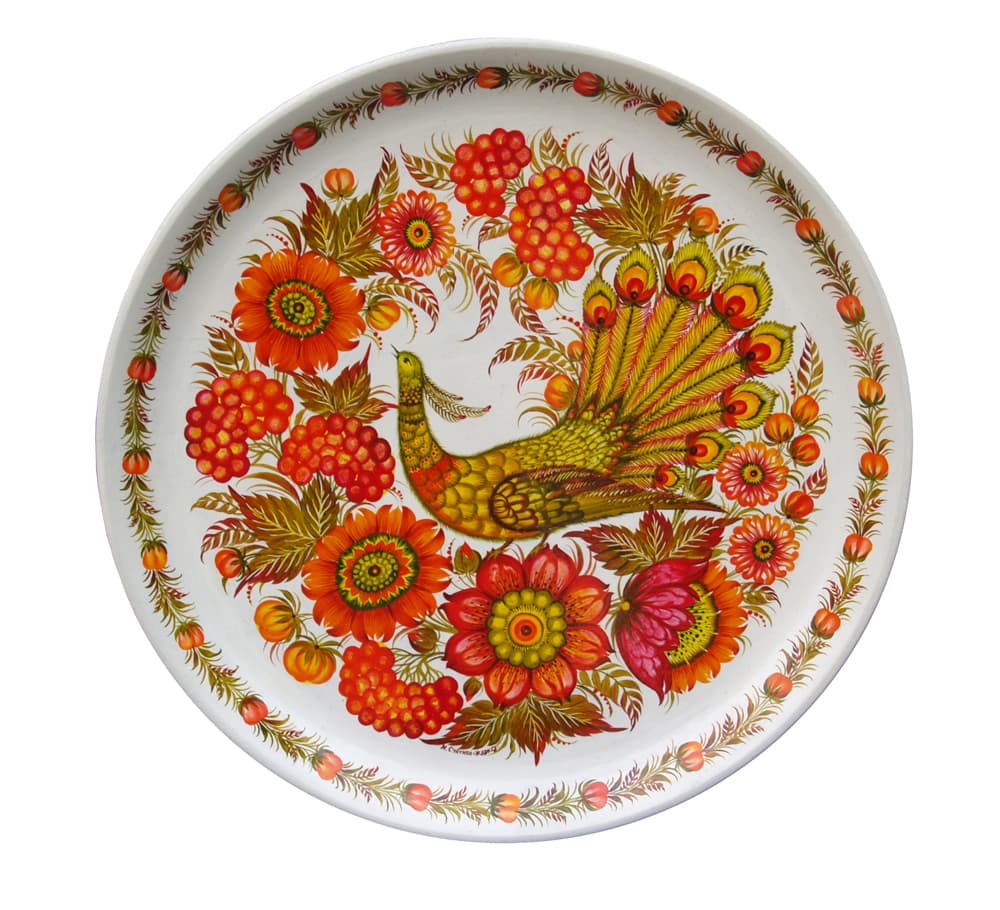
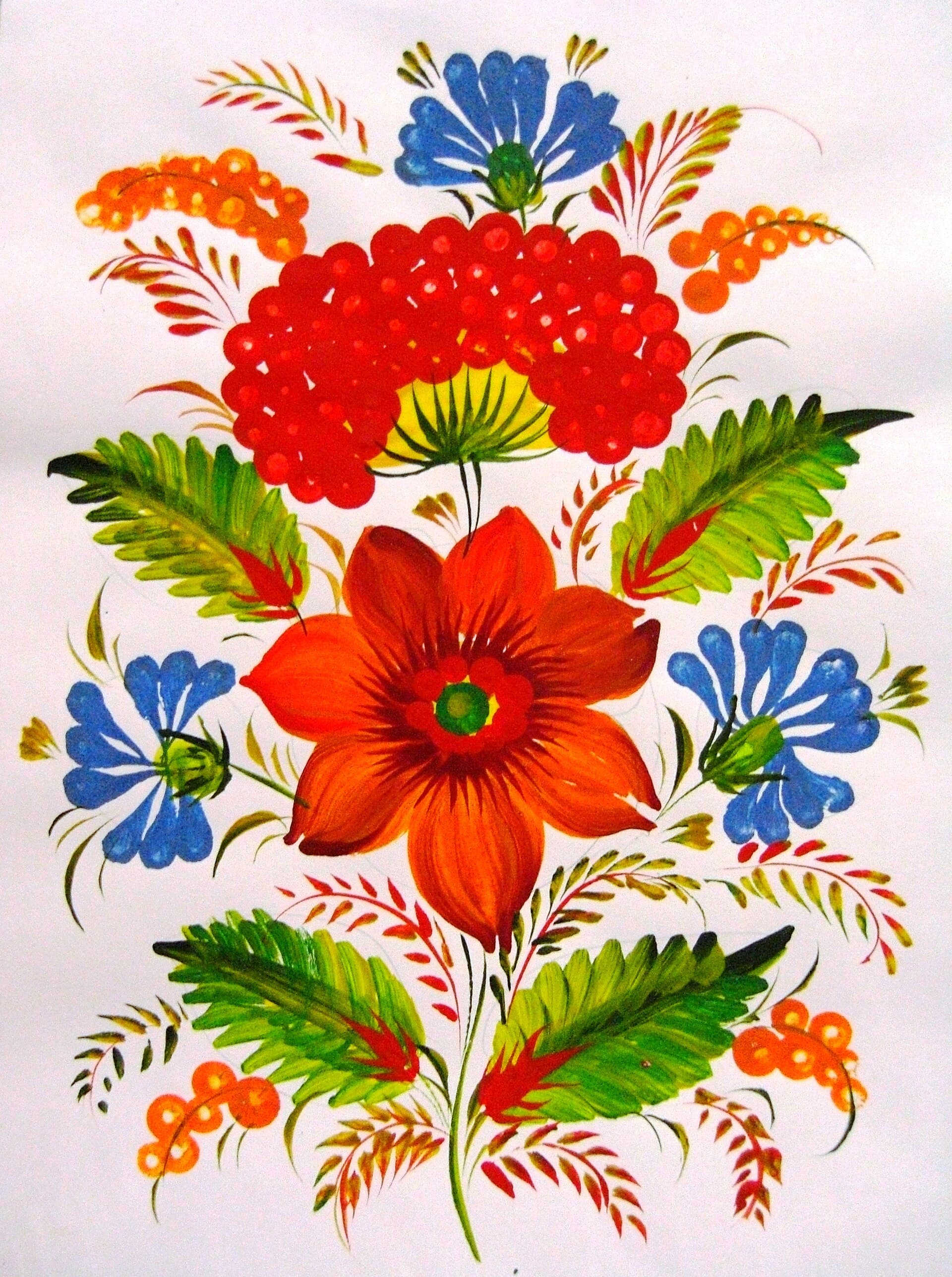
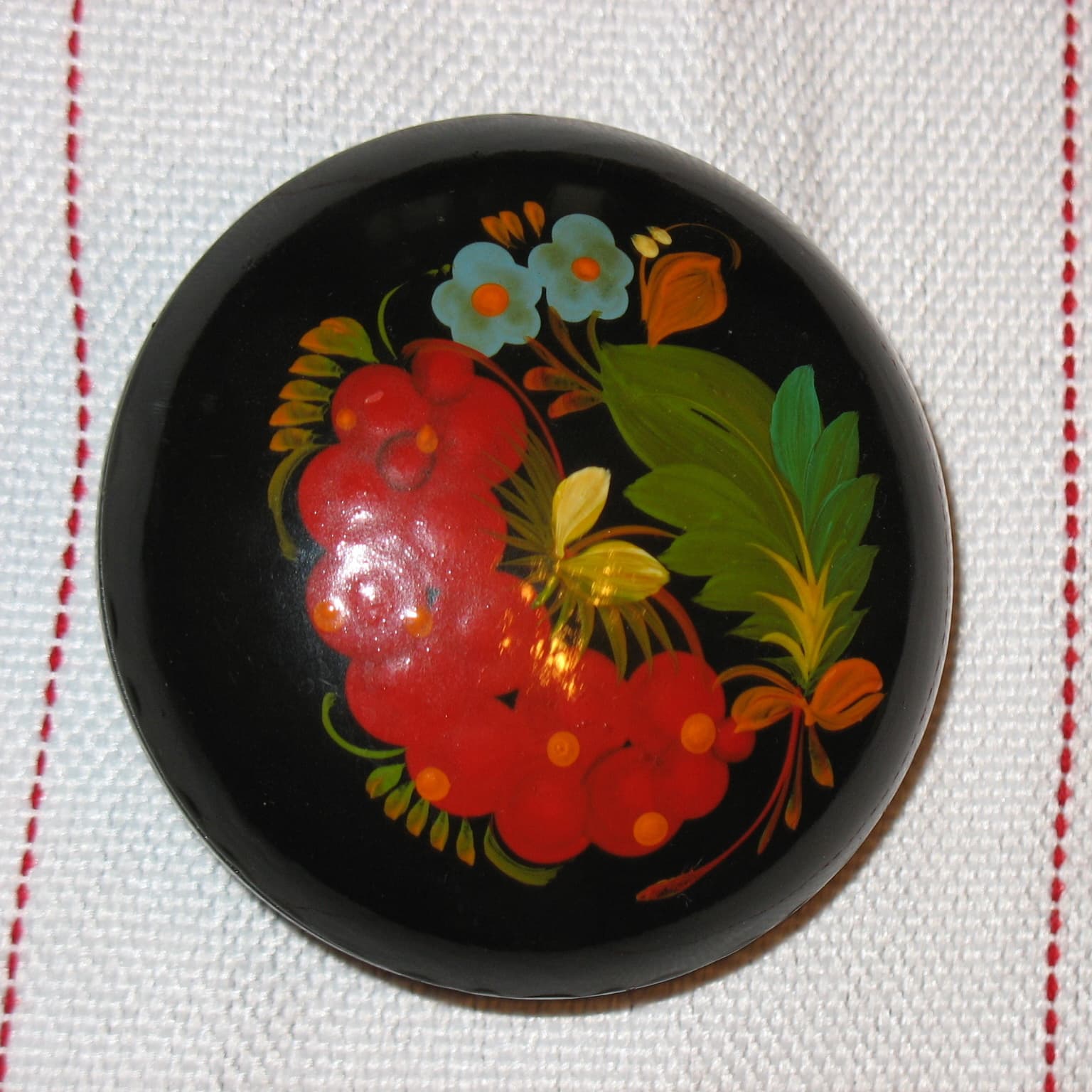
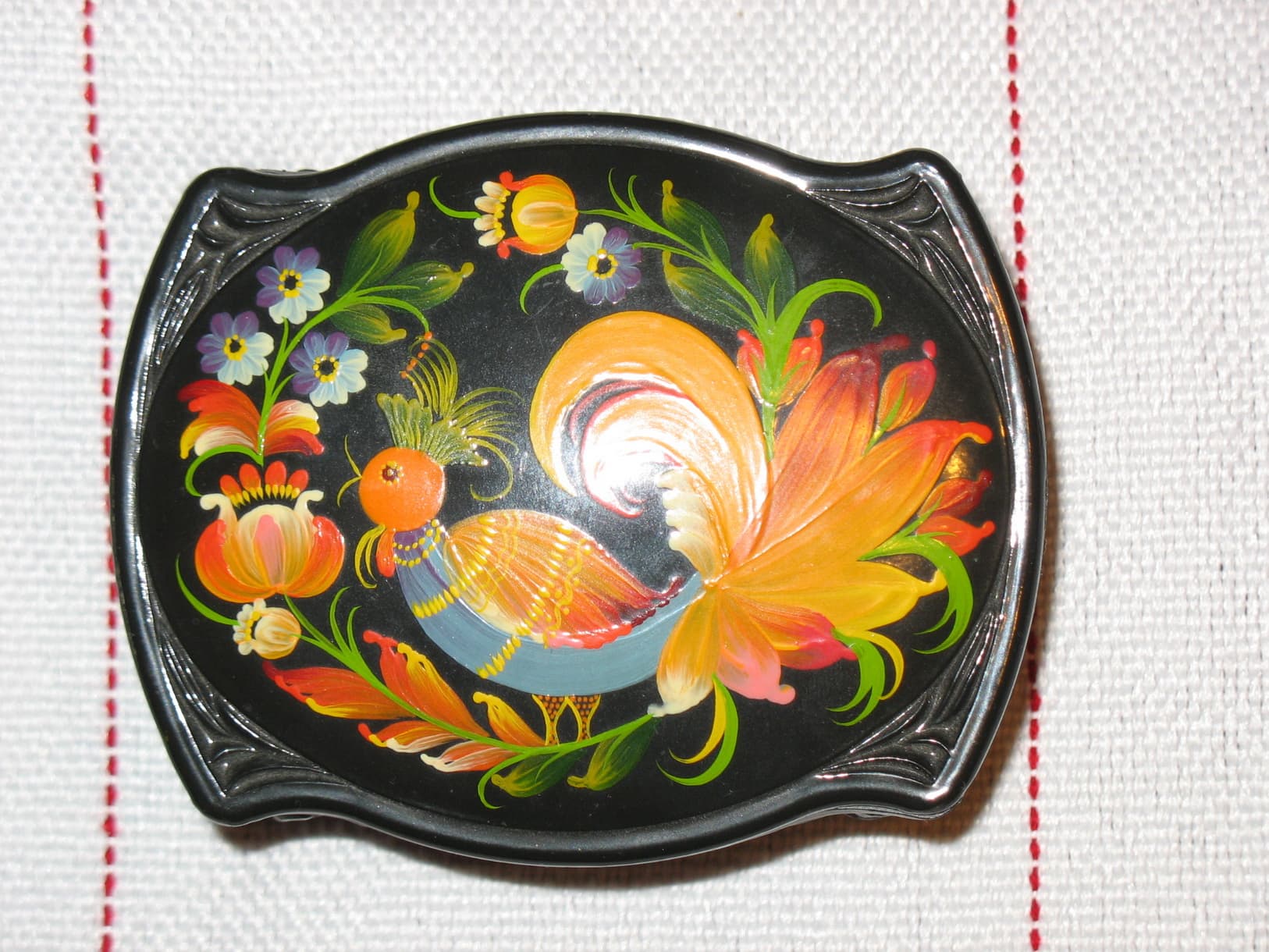
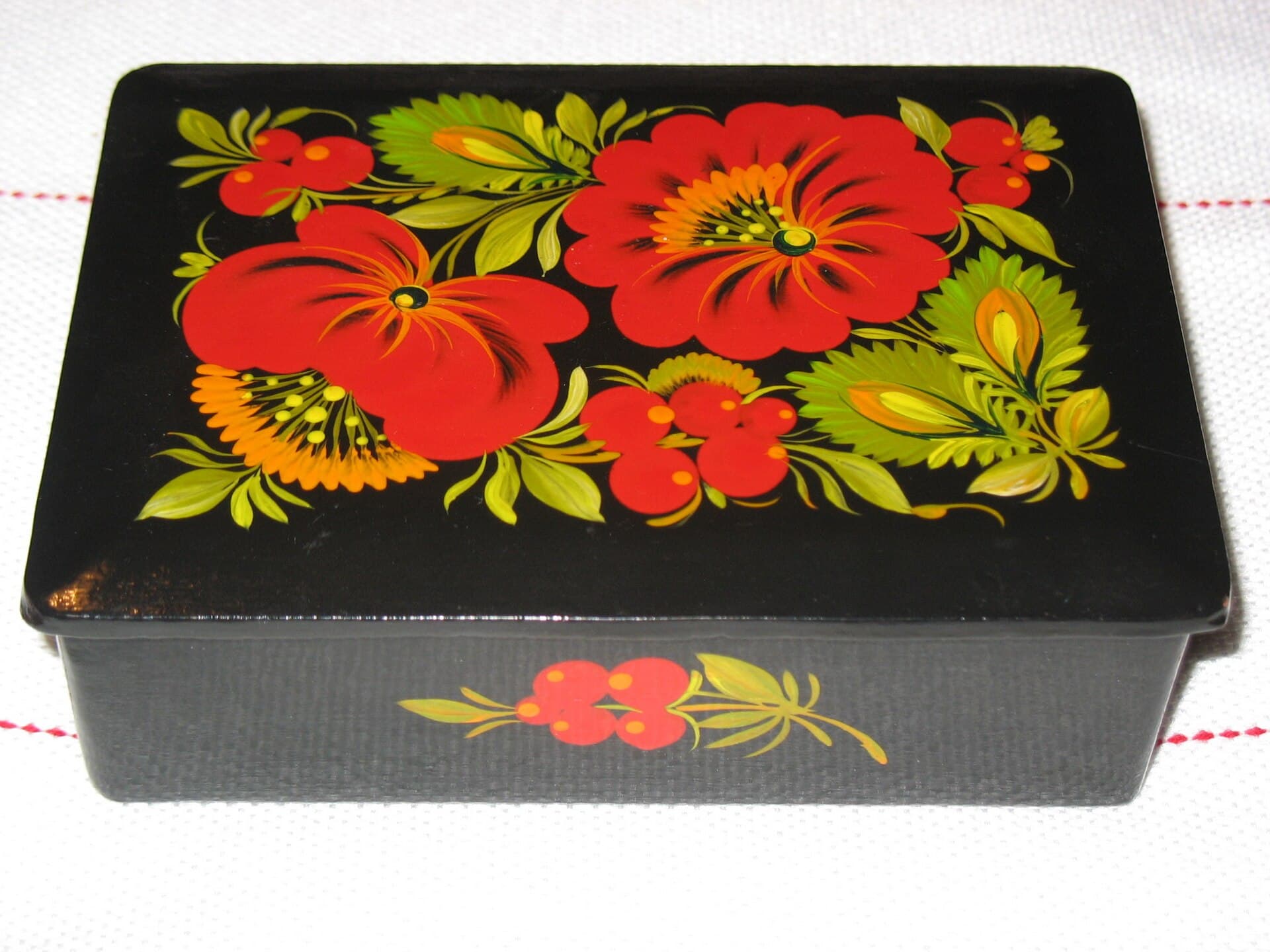
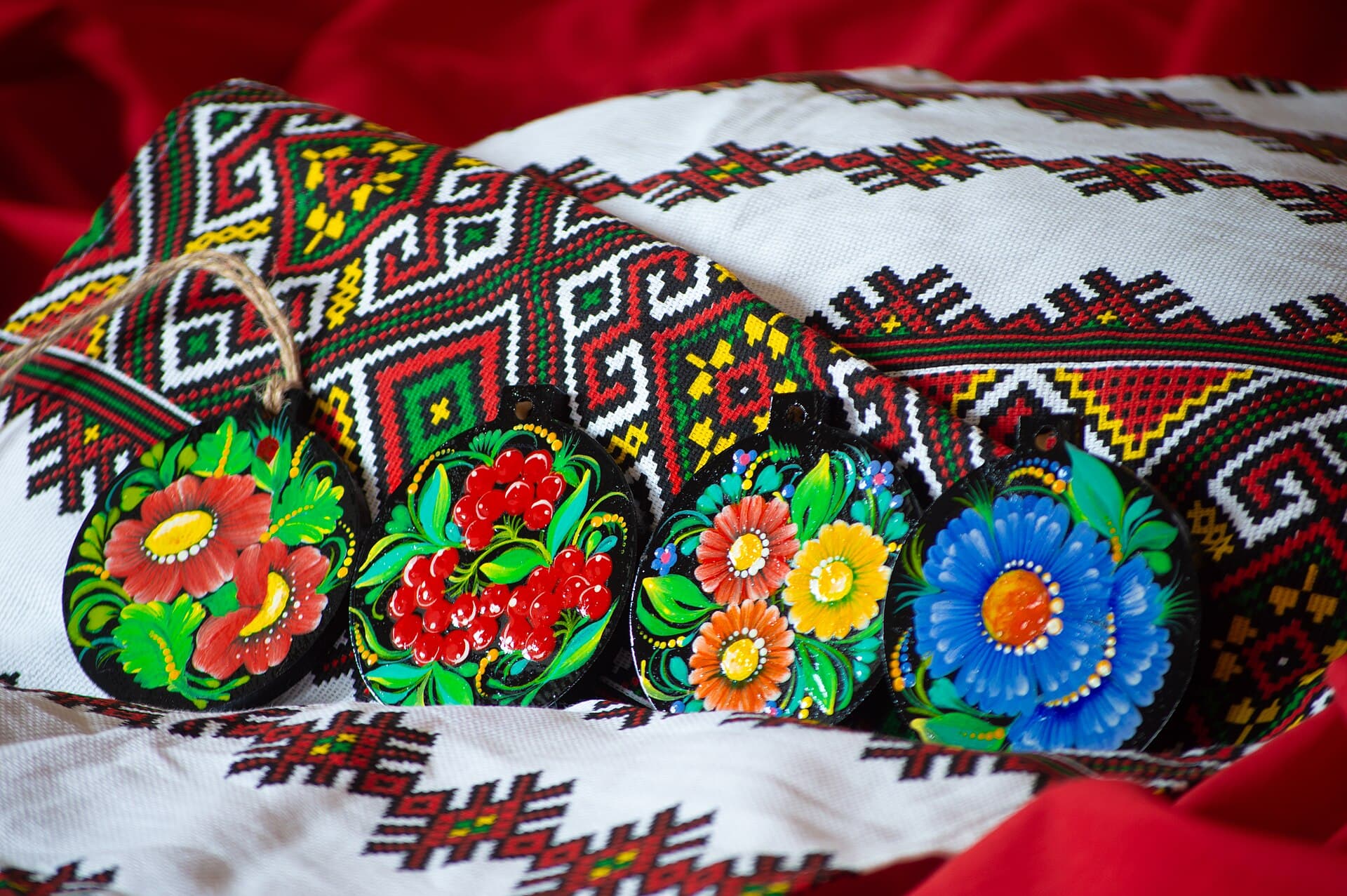
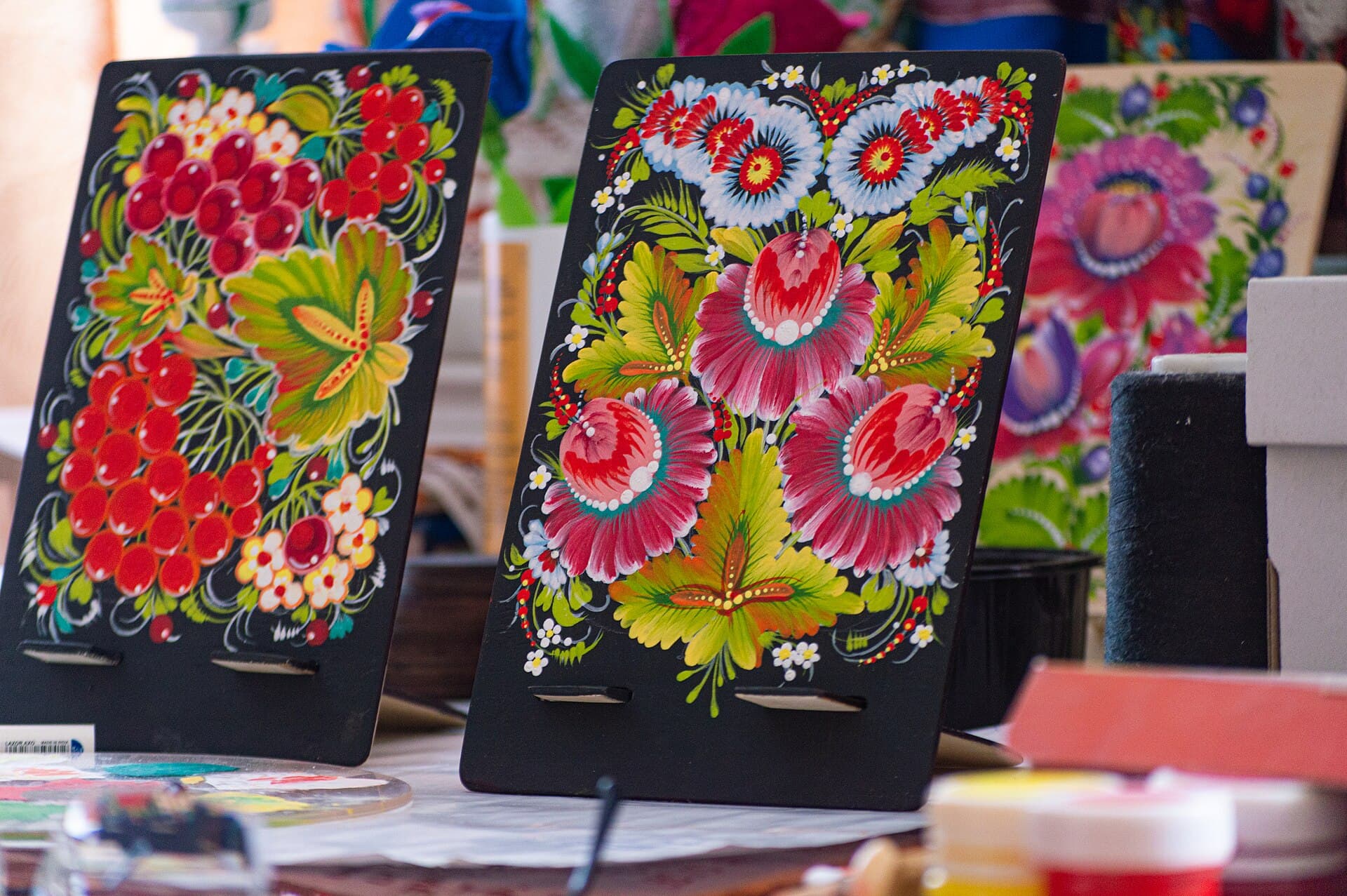
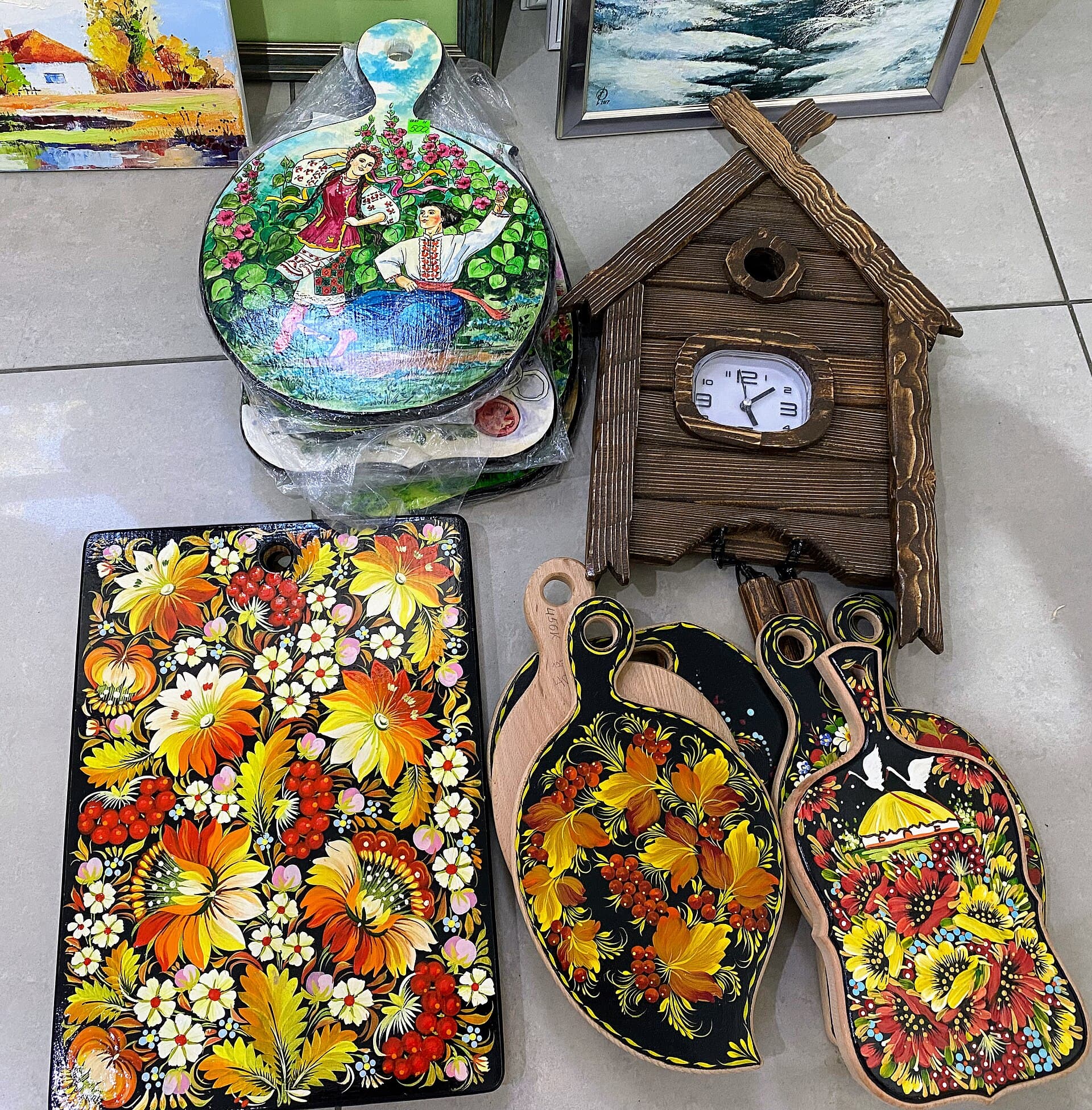
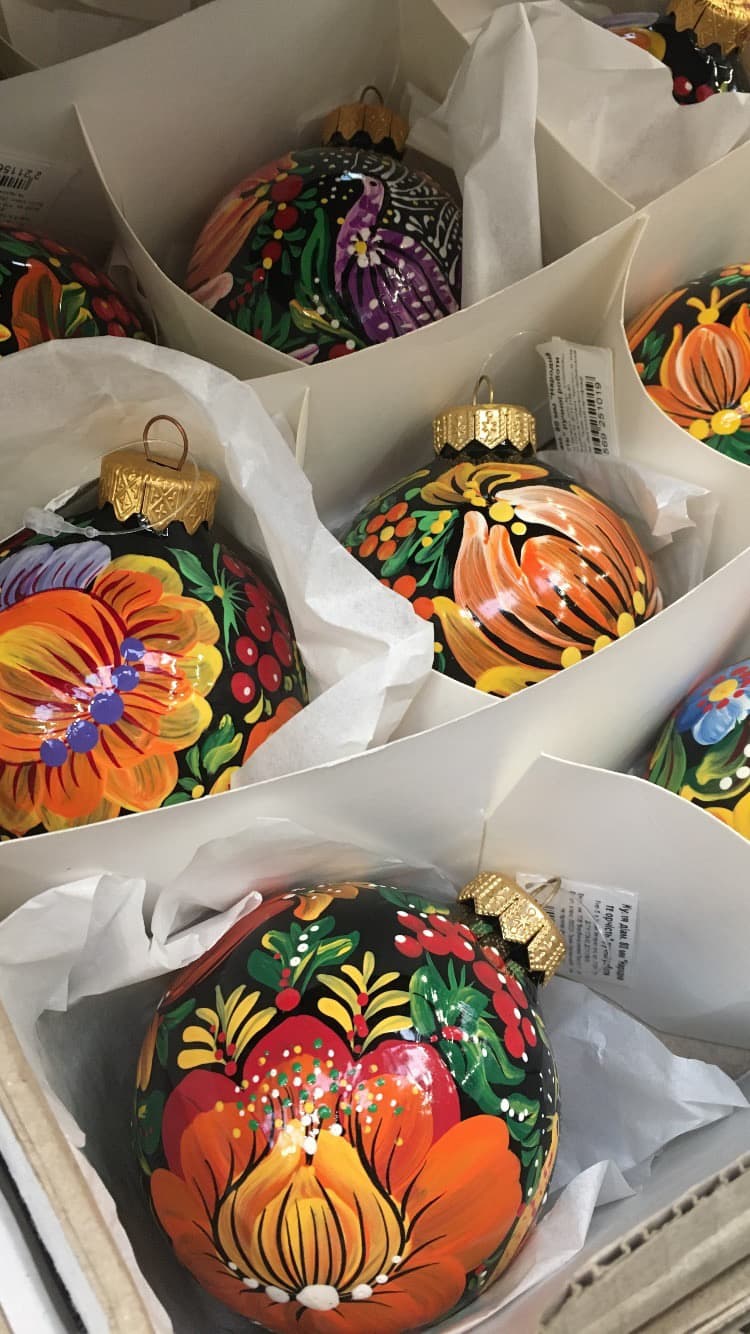
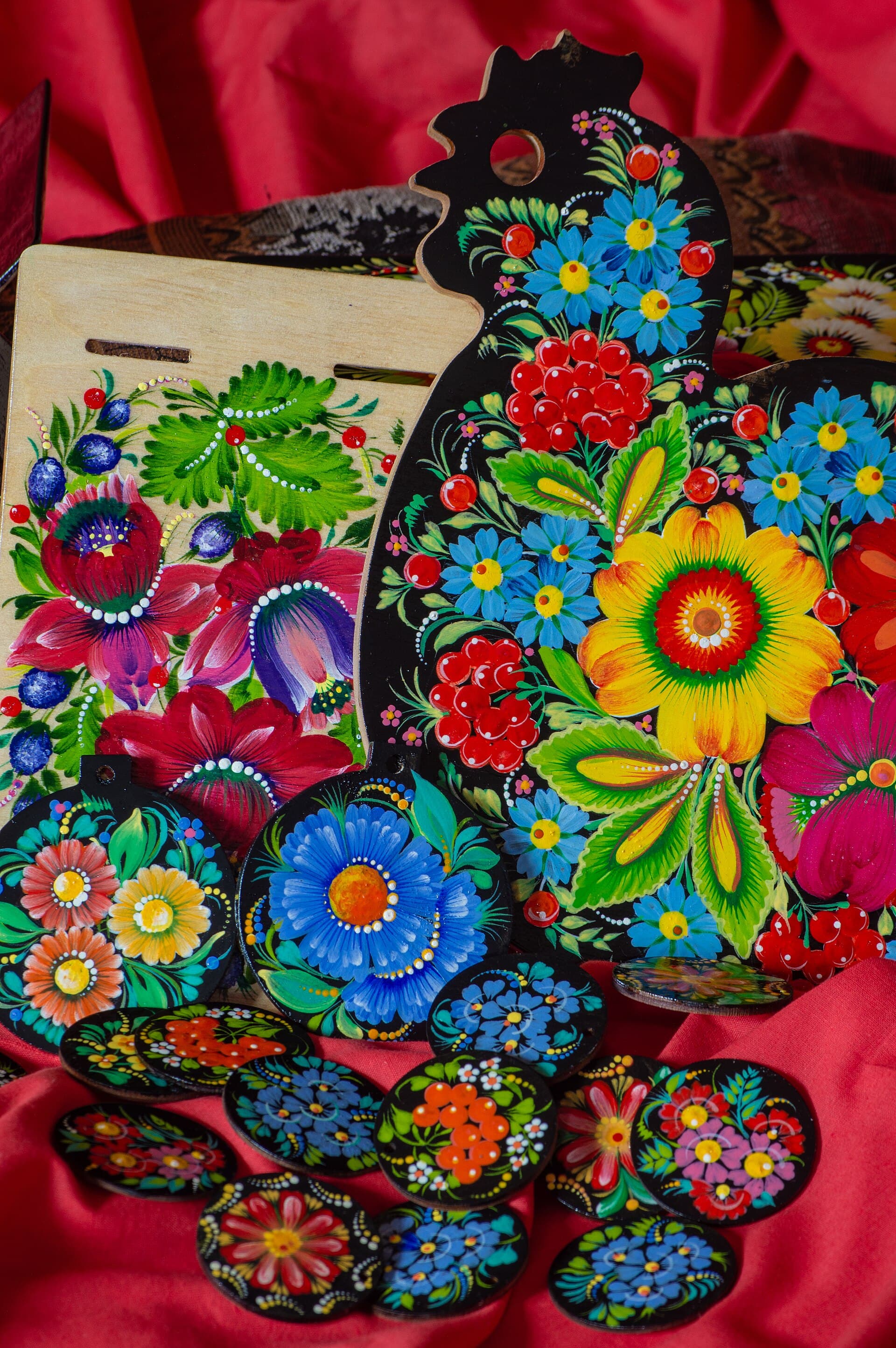
The list above is a set of eyes. Go through these and name what you see: hrebinets along an edge, kucheriavka spiralling out of a corner, bihunets running the length of a lid, vazon standing in the middle of a sheet. Open any of them in the gallery for its painter, its credit and its licence.

An honest note
Where these names came from
The strokes carried no special names for most of the tradition’s life. The termszerniatko, hrebinchyk and horishok were brought into use in the twentieth century by the art historian Borys Butnyk-Siverskyi (1901–1983), and they have since been taken up by masters and by the schools. The vocabulary is genuine and it is in daily use. It is also, in part, a scholarly codification of something that was passed on by hand and by eye.
One term is deliberately absent. Yahidka (the little berry) circulates online as the name of a stroke, and the sources reached for this page give the berry as a technique of the finger and the motif as kalyna or yahoda. It stays out of the list until a master confirms the usage.
